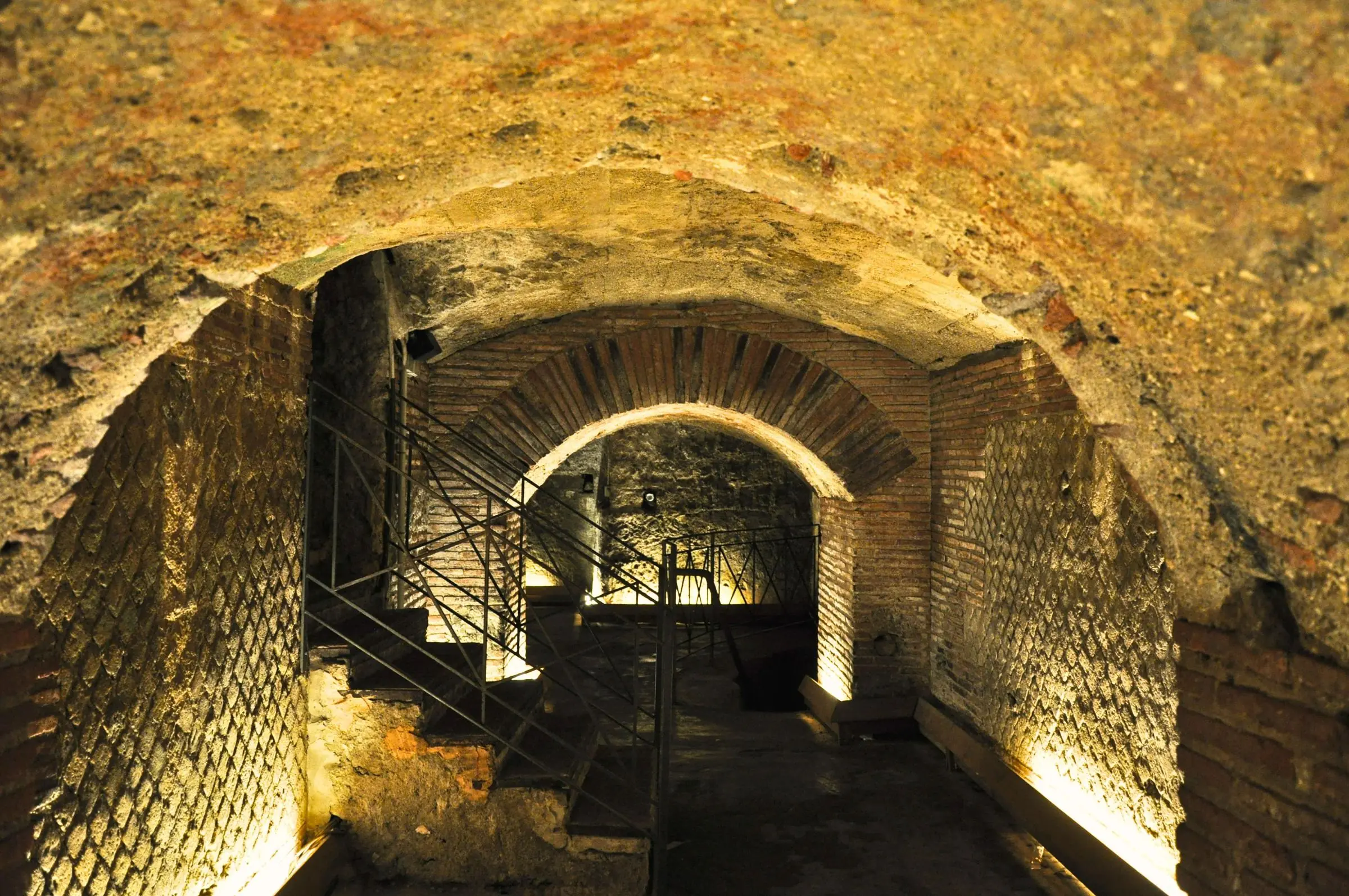
When you walk down Via dei Tribunali in the heart of the Centro Storico, the noise of scooter engines, street vendors, and clinking espresso cups is constant. But directly beneath the pavement, under the foundations of the Basilica di Santa Maria Maggiore alla Pietrasanta, lies a completely silent, subterranean world.
The Lapis Water Museum (Museo dell’Acqua) is a relatively recent addition to Naples’ underground circuit. While the traditional Naples Underground focuses heavily on dry tunnels and tight squeezes, the Lapis Museum is entirely dedicated to the city’s historic relationship with water. By restoring water to the ancient Greco-Roman cisterns and installing a modern LED lighting system, the curators have recreated the atmosphere of the original aqueduct.
If you want to understand how a city of millions survived on a porous sponge of volcanic rock, this is where you need to go. Here is exactly how to plan your visit, what to look out for, and how to navigate the 40-meter descent into the tuff rock.
The Lapis Museum operates with timed entry slots to prevent overcrowding in the cisterns. If you are visiting between Friday and Sunday, or during peak summer months, secure your entry time a few days prior.
Is the Lapis Museum Right for You?
Naples has several underground sites, and choosing between them depends on your travel style and physical constraints.
- For the Claustrophobic: If you want to see the underground but panic at the thought of tight spaces, the Lapis Water Museum in Naples is your best option. Unlike the standard Napoli Sotterranea, which requires walking through shoulder-width, pitch-black tunnels with a candle, the Lapis Museum features wide corridors, high vaulted ceilings, and excellent lighting.
- For Families: The visual nature of the museum—specifically the illuminated water pools and the glass elevator ride—keeps younger children engaged much longer than a standard archaeological dig.
- For Time-Poor Travelers: A visit here takes about 60 to 75 minutes. Because it is located right on Via dei Tribunali, it is incredibly easy to slot into a busy morning itinerary between visiting the Sansevero Chapel and grabbing a pizza.
5 Highlights of the Lapis Water Museum
The museum is curated to guide you chronologically and thematically through the history of the Naples subsoil. Here are the five specific areas to pay attention to during your walk.
1. The Archaeological Elevator Descent
Most underground tours in Naples begin with a grueling walk down hundreds of damp, uneven stairs. The Lapis Museum bypasses this with a modern, glass-walled archaeological elevator.
As you descend 40 meters (about 130 feet) below the Basilica of Pietrasanta, you can physically see the layers of history in the rock walls. You pass the foundations of the 17th-century church, down through the medieval rubble, past the Roman structural supports, and finally into the yellow Neapolitan tuff rock laid down by ancient volcanic eruptions. It takes about 40 seconds to reach the bottom, and the drop in temperature is immediate.
2. The State-of-the-Art Illumination
For decades, these cisterns sat empty and dry. When the Lapis Museum project began, the curators made a deliberate choice to pump water back into the system to show how the Bolla aqueduct actually functioned.
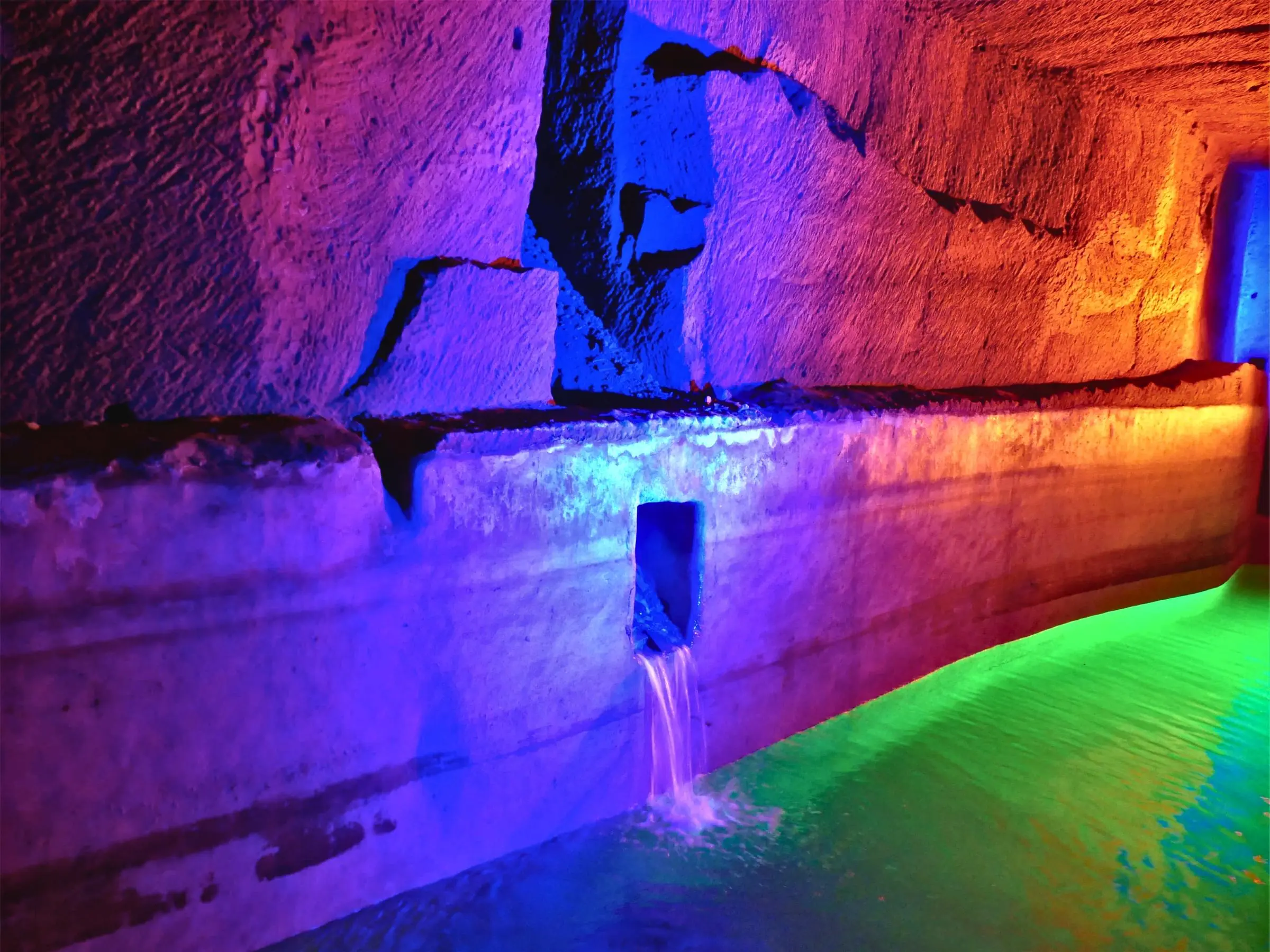
To highlight this, they installed a dynamic LED lighting system. The lights are cast from below the water’s surface, reflecting the ripples onto the high vaulted ceilings of the tuff rock caverns. The lighting shifts in color to highlight different architectural features, such as the waterproof cocciopesto (a Roman mortar made of lime and crushed pottery) that lines the walls to prevent the water from seeping out.
3. The Prince’s Pool (Piscina del Principe)
The visual centerpiece of the museum is the Prince’s Pool. This massive cistern was historically used to supply water to the aristocratic palaces in the area above.
Today, it is filled with crystal-clear water and illuminated by soft blue and green lights. The surface of the water acts like a mirror, creating a perfect reflection of the vaulted ceiling above. Because the water is completely still, it creates an optical illusion that makes the cavern look twice as deep as it actually is. There is a dedicated viewing platform here where guides usually pause to explain the hydraulic engineering of the Greco-Roman architects.
4. The Underground Streams and Aqueducts
As you walk along the metal grates and stone pathways, you will hear the constant sound of running water. These are the active streams of the ancient aqueduct system.
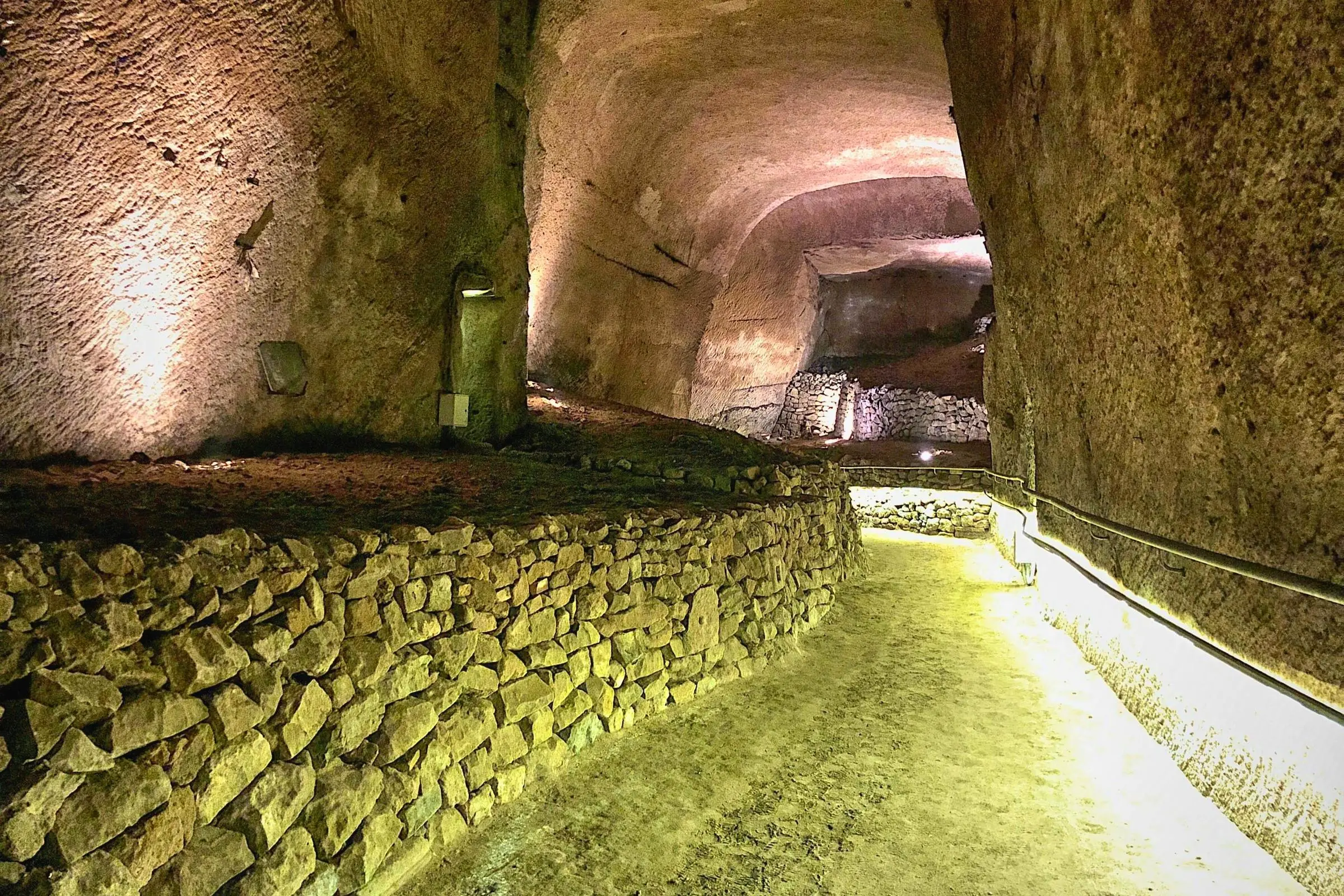
The Greeks originally dug these caverns to extract tuff rock for building the city walls of Neapolis. The Romans later repurposed the empty quarries into a massive network of cisterns, connecting them with tunnels to form an aqueduct. You will see the narrow vertical shafts (called pozzi) that lead up to the surface. Historically, citizens would lower buckets down these shafts from their courtyards to draw fresh water. You can still see the deep grooves worn into the stone edges by centuries of pulling up heavy ropes.
5. WWII Shelter Artifacts
In 1885, following a devastating cholera epidemic, the city permanently shut off the underground aqueduct system. The caverns sat abandoned until the outbreak of World War II.
As Naples became the most bombed city in Italy, citizens broke through the sealed wells and descended into the dry cisterns to survive the air raids. The Lapis Museum has preserved a section of the tunnels exactly as they were left in 1943. You will see rusted children’s toys, old hair pomade bottles, makeshift electrical wiring, and graffiti scratched into the tuff rock by people waiting for the sirens to stop. It is a stark, sobering contrast to the serene water pools you see earlier in the tour.
Local Tip: Look closely at the walls in the WWII section. You can often spot caricatures of political figures from the 1940s, as well as tallies marking the number of days families spent underground.
Ticket Options and Tours
You have a few options for visiting the Lapis Museum, depending on whether you prefer to explore independently or want the context of an expert guide.
Lapis Museum Entry Ticket
- Access to the glass archaeological elevator
- Self-paced walk through the illuminated cisterns
- Access to the WWII shelter exhibits
- Downloadable audio guide app
City and Lapis Museum Tour with Archaeologist
- 2.5-hour experience
- Guided walk through the Centro Storico
- Expert archaeologist guide inside the Lapis Museum
- Detailed explanations of Roman hydraulic engineering
If you are planning to visit multiple historical sites in the area, you might also consider a combined ticket. For example, the Lapis Museum + Pompeii + Naples City Digital Audio Guide bundles your underground access with entry to the famous archaeological park down the coast.
Logistics: How to Visit
Getting There
The entrance to the Lapis Museum is located inside the Basilica di Santa Maria Maggiore alla Pietrasanta, situated at Piazzetta Pietrasanta on Via dei Tribunali.
- By Metro: Take Line 1 to Dante station. From there, it is a flat, 7-minute walk down Via Port’Alba and Via dei Tribunali. Alternatively, get off at Museo station and walk down Via Duomo.
- On Foot: If you are already exploring the Centro Storico, you cannot miss it. Look for the massive brick bell tower (Campanile della Pietrasanta) which dates back to the 11th century and is one of the oldest in Italy.
Practical Advice for the Underground
- Temperature: The temperature underground sits at a constant 16°C (60°F) with high humidity, regardless of the weather on the surface. Even if it is 35°C (95°F) outside in August, bring a light sweater or jacket.
- Footwear: You will be walking on metal grates, damp stone, and uneven tuff rock. Leave the sandals and heels at the hotel; wear flat, rubber-soled sneakers with good grip.
- Facilities: There are restrooms available inside the Basilica complex before you take the elevator down. There are no facilities once you are in the aqueduct.
Itinerary: A Morning in the Centro Storico
Because the Lapis Museum takes just over an hour, it pairs perfectly with the surrounding historical sites. Whether you explore on your own or join a Naples guided historic center walking tour, here is a highly efficient way to structure your morning.
Centro Storico Morning Route
⏱️ Total: 3 hSansevero Chapel
Start your day early at the Sansevero Chapel to see the Veiled Christ before the heavy crowds arrive. (Pre-booking is mandatory here).
Walk to Via dei Tribunali
Take a short walk through the narrow alleys to Piazzetta Pietrasanta.
Lapis Water Museum
Take the elevator down and explore the illuminated aqueducts and WWII shelters.
Pizza Portafoglio
Emerge back onto Via dei Tribunali and grab a pizza a portafoglio (folded pizza) from Di Matteo or Sorbillo for a quick, authentic street food lunch.
Keep Planning: If you are fascinated by Naples’ subterranean history, read our guide to the Galleria Borbonica, a massive military tunnel built for the King, or explore the ancient burial sites at the Catacombs of San Gennaro.
Where to Stay Nearby
Staying in the Centro Storico puts you within a 10-minute walk of the Lapis Museum, the Duomo, and the best pizzerias in the city. It is loud and chaotic, but it is the most authentic place to base yourself. Use the map below to find accommodations near Via dei Tribunali.
Frequently Asked Questions
How does the Lapis Museum differ from Napoli Sotterranea?
The traditional Napoli Sotterranea (Naples Underground) involves walking through very narrow, dark tunnels with candles, and focuses heavily on the dry tuff quarries. The Lapis Museum is much more spacious, uses a modern elevator instead of stairs, and is uniquely focused on water, featuring illuminated pools and active streams.
Is the Lapis Museum wheelchair accessible?
Partially. The archaeological elevator makes the initial 40-meter descent accessible, which is a massive advantage over other underground sites. However, the terrain at the bottom includes some uneven stone and metal grating. Visitors with severe mobility issues should contact the museum directly to confirm current conditions.
Do I need to book tickets in advance?
While you can sometimes buy tickets at the door on quiet weekdays, it is highly recommended to book tickets online in advance for weekends and summer months, as entry is staggered to prevent overcrowding in the tunnels.
Is it safe for people with claustrophobia?
Yes, generally. Compared to other underground tours in Naples, the Lapis Museum has very high vaulted ceilings, wide walkways, and excellent LED lighting. You do not have to squeeze through tight, dark corridors.
How long does the visit take?
A standard visit takes between 60 and 75 minutes. If you are taking a guided tour with an archaeologist, expect to spend closer to 90 minutes underground.
Can I take photos inside?
Yes, photography is allowed and encouraged. The LED lighting on the water makes for excellent photos, particularly around the Prince’s Pool. Just be sure to turn off your flash, as it ruins the atmospheric lighting for other guests.
For more information on Italy’s ancient aqueduct engineering, you can read the Roman Aqueducts historical overview or check the official Naples Tourism portal for seasonal event updates at the Basilica.