Walking down the narrow, scooter-filled artery of Spaccanapoli in the Centro Storico, the noise can be overwhelming. But just steps away from the chaos sits the Monastero di Santa Chiara. Founded in 1310 by King Robert of Anjou and his wife Sancia of Majorca, this religious complex is a masterclass in architectural endurance.
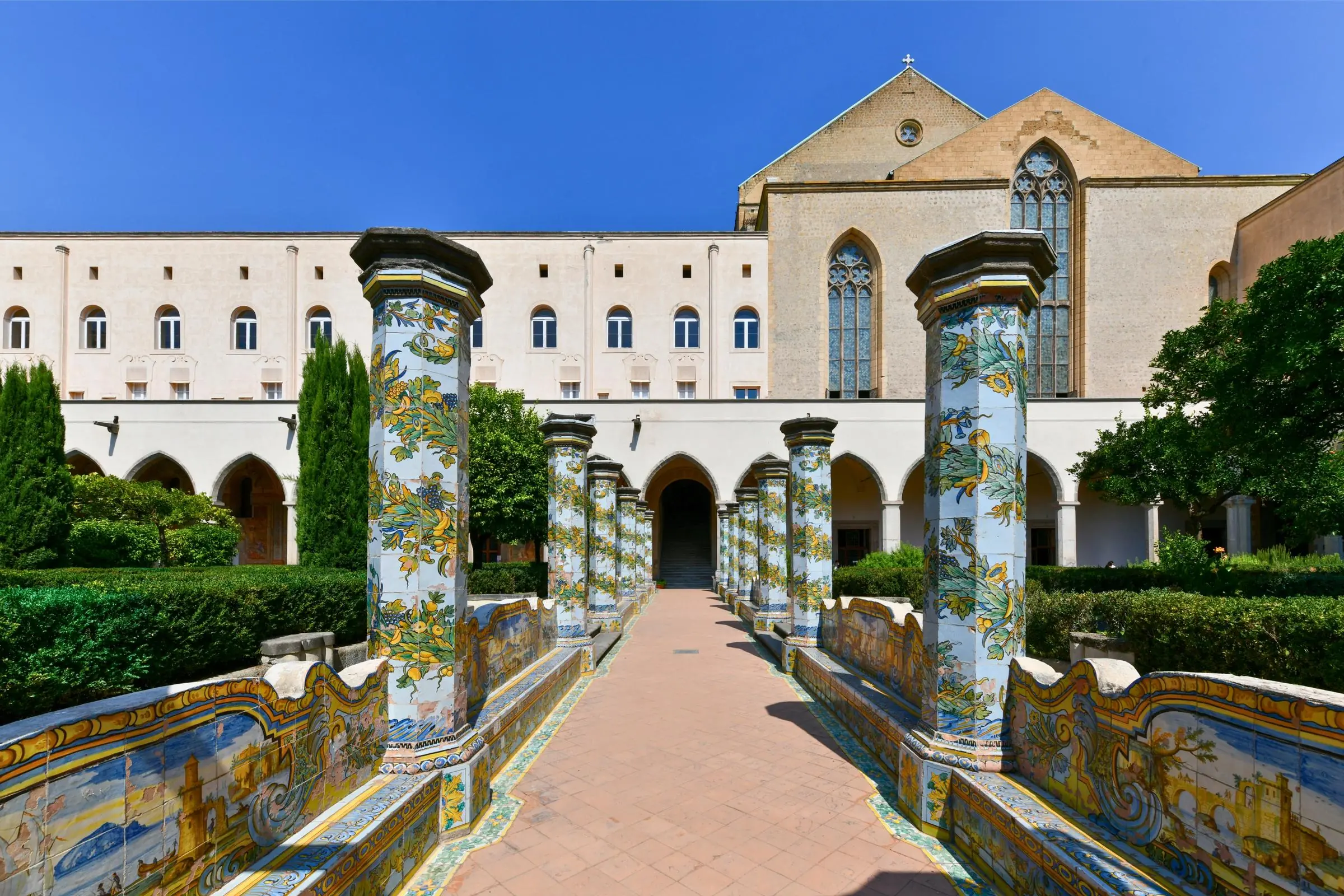
While the main church is a stark monument to medieval Gothic design—heavily restored after devastating World War II bombings—the real draw for most visitors is hidden behind the church walls: the Cloister of the Clarisses. Transformed in the 18th century, this garden is lined with vibrant, hand-painted Majolica tiles that depict lemons, grapes, and pastoral scenes.
Whether you are here to photograph the ceramics, study the royal tombs, or simply find a quiet bench under a citrus tree, here is how to navigate the complex.
Is This Right For You?
Who should visit Santa Chiara?
Quick Visits
- How to do it: You can see the main highlights in about 45 minutes. Skip the upstairs museum and head straight for the Majolica cloister, then pop into the free main church on your way out.
- The catch: The cloister gets crowded by 11:00 AM, making it hard to move quickly if you want clean photos.
Traveling with Kids
- How to do it: The cloister is fully enclosed, offering a safe, traffic-free space for kids to walk. The traditional Nativity scene (Presepe) room is usually a hit with younger children due to its dollhouse-like detail.
- The catch: The tiled benches are fragile 18th-century artifacts. You will need to keep a close eye on toddlers to ensure they don’t climb or stand on the ceramics.
Budget Travelers
- How to do it: The massive Gothic church nave and the Angevin tombs are completely free to enter.
- The catch: You cannot see the famous Majolica tiles without purchasing an entry pass for the cloister complex.
5 Highlights of the Santa Chiara Complex
The Santa Chiara complex is divided into two main areas: the free church and the ticketed monastic area (which includes the cloister, museum, and archaeological site).
1. The Majolica-Tiled Cloister of the Clarisses
The absolute centerpiece of the complex is the Chiostro delle Clarisse. Originally a standard 14th-century Gothic cloister, it was radically redesigned in 1739 by architect Domenico Antonio Vaccaro. He added two intersecting walkways that divide the garden into quarters.
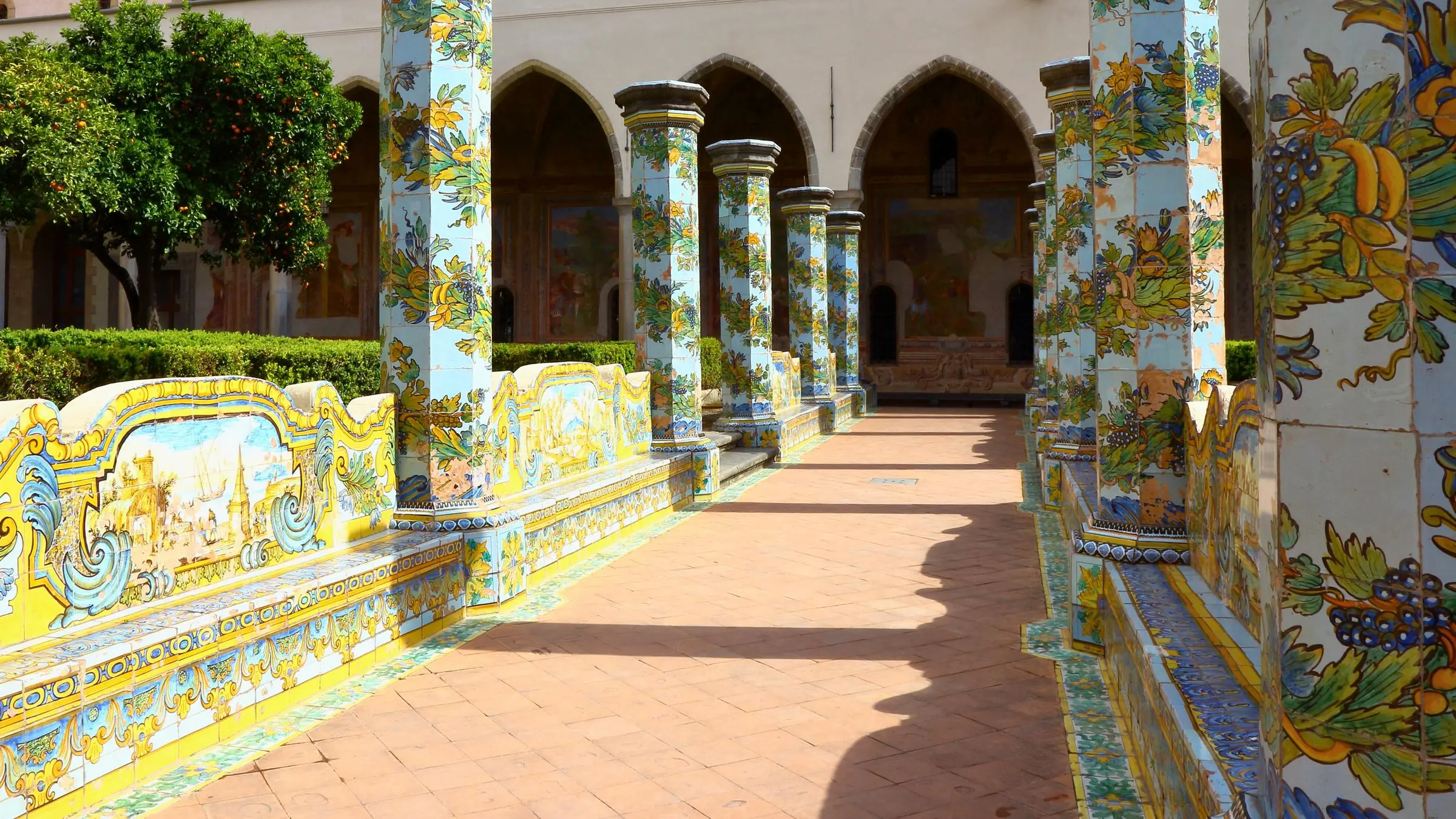
Lining these walkways are 72 octagonal pillars covered entirely in Majolica tiles crafted by artisans Donato and Giuseppe Massa. The tiles feature vibrant yellows, blues, and greens, depicting lemons, grapevines, and floral motifs that mirror the real citrus trees planted in the garden. Between the pillars are tiled benches showing scenes of 18th-century Neapolitan life—mythological figures, peasants, and maritime landscapes.
Conservation Rule: Do not sit on the tiled benches. There are plain stone benches provided around the perimeter of the garden if you want to sit and enjoy the atmosphere.
2. The 17th-Century Frescoes
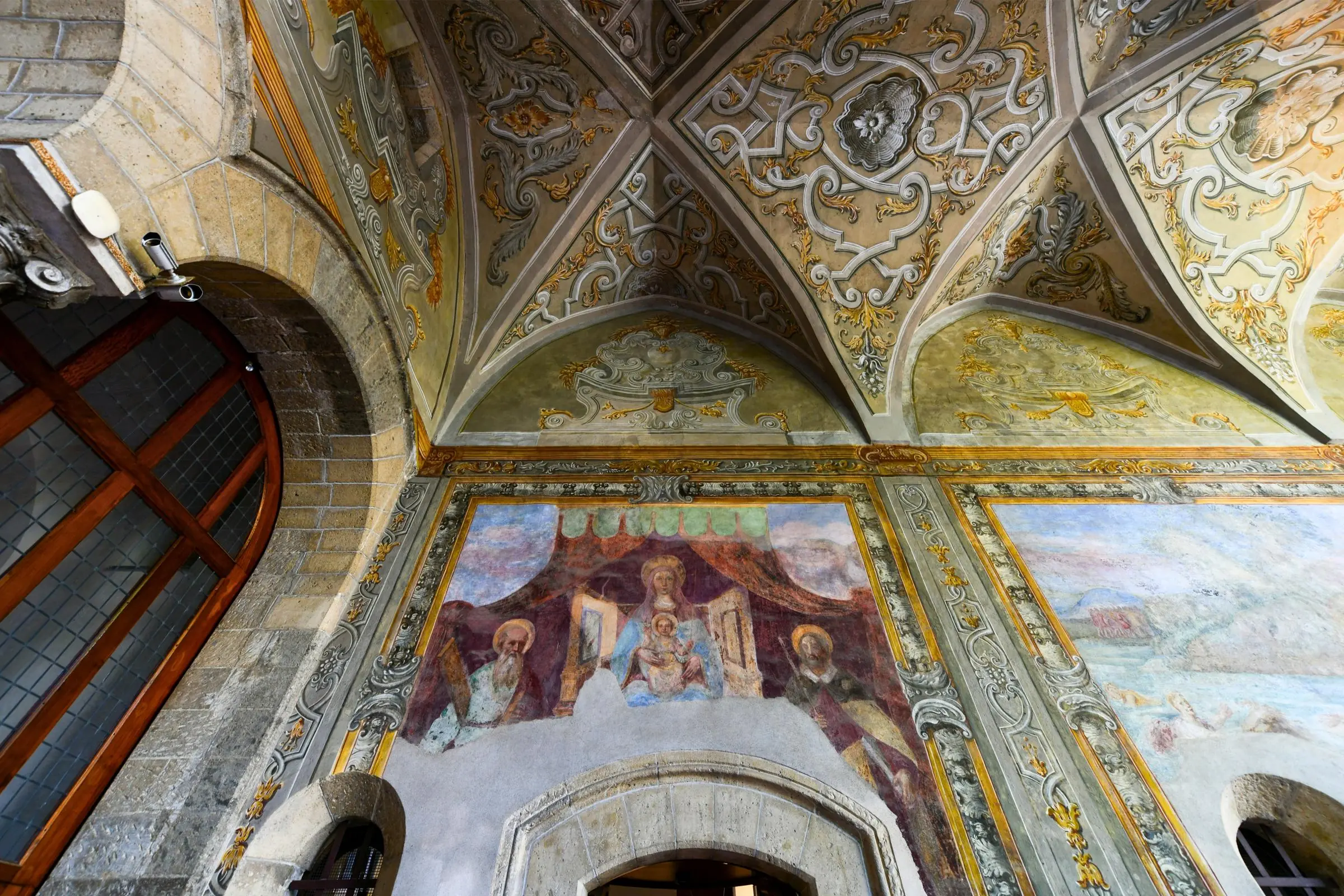
While the center of the cloister is bright and cheerful, the covered ambulatory (the arched walkway surrounding the garden) offers a completely different mood. The walls are covered in 17th-century frescoes depicting scenes from the Old Testament and the lives of Franciscan saints.
Though faded and damaged in places by time and the elements, these frescoes provide a somber, spiritual contrast to the playful Rococo tiles in the garden. Take a moment to walk the full perimeter; the natural light filtering through the Gothic arches illuminates different panels depending on the time of day.
3. The Austere Gothic Church Nave
When you walk into the main Church of Santa Chiara (entrance on the main piazza), you might be surprised by how empty it feels. Unlike the heavily gilded Gesu Nuovo Church directly across the square, Santa Chiara is a massive, unadorned space.
This is the result of a tragic history. On August 4, 1943, an Allied bombing raid hit the church, sparking a fire that burned for days and destroyed the lavish Baroque interior that had been added in the 18th century. When the church was rebuilt in the 1950s, restorers chose to return it to its original 14th-century Provençal Gothic style. The result is a soaring, peaceful nave characterized by simple stone walls, high stained-glass windows, and a flat timber roof.
4. The Royal Angevin Tombs
Because Santa Chiara was founded by King Robert of Anjou, it served as the royal pantheon for the Angevin dynasty. Behind the main altar in the church, you will find the towering tomb of King Robert himself. Created by the Florentine sculptors Giovanni and Pacio Bertini, it is one of the largest medieval funerary monuments in Italy.
The king is depicted twice: once lying in state, and once seated on his throne. Look closely at the surrounding chapels to find the tombs of other royals, including Charles, Duke of Calabria, and Mary of Valois. Miraculously, these heavy stone monuments survived the 1943 fire, though some still bear the scorch marks.
5. The Traditional Neapolitan Nativity Scene (Presepe)
Before you exit the ticketed cloister area, follow the signs to the Presepe room. Naples is famous for its Nativity scenes, and Santa Chiara houses a spectacular example from the 18th and 19th centuries.
Unlike standard nativities, a Neapolitan Presepe places the birth of Jesus right in the middle of bustling, contemporary Naples. Set against a backdrop of Roman ruins, you will see hundreds of handcrafted terracotta and wood figures depicting butchers, bakers, musicians, and tavern patrons going about their daily lives, completely oblivious to the holy event happening in their midst.
Keep Planning: If you love the craftsmanship of the Nativity scene, take a short walk to Via San Gregorio Armeno in the Centro Storico, a street entirely dedicated to artisan workshops building these figures year-round.
Photography Tips for the Majolica Tiles
The cloister is one of the most photographed spots in Naples, which means getting a clean shot requires a bit of strategy.
- Timing the Light: The cloister is open to the sky. At high noon, the wooden pergolas connecting the pillars cast harsh, striped shadows across the tiles. For even, soft lighting, arrive right when the complex opens (usually 9:30 AM) or visit in the late afternoon.
- Beating the Crowds: Tour groups generally arrive between 10:30 AM and 1:00 PM. If you want a photo down the long tiled walkways without people in the background, you must be there at opening time.
- Angles: Get low. Shooting slightly upward allows you to capture the tiled pillars framing the citrus trees and the sky, cutting out the modern walkway floor.
- Look for the Locals: The cloister is home to a few resident cats who frequently sleep on the stone walls or bathe in the sun near the tiles. They make excellent foreground subjects.
Logistics & Practical Tips
Getting There
Santa Chiara is located at Via Santa Chiara, 49/C, right off Piazza del Gesù Nuovo.
- Metro: Take Line 1 to Dante or Università. From either station, it is a flat, 5-to-7-minute walk to the complex.
- Walking: If you are already exploring the Sansevero Chapel or Naples Underground, Santa Chiara is less than a 10-minute walk away.
Tickets and Tours
The main church is free. The cloister, museum, and archaeological area require a ticket.
- Standard Entry: You can buy an entry pass online to skip the ticket desk line, which gets surprisingly long in the summer.
- Guided Tours: If you want to understand the layers of history (from the Roman baths beneath the complex to the 1943 bombings), a guided tour is highly recommended. Alternatively, there is a broader Downtown Walking Tour that includes entry to both Santa Chiara and the Veiled Christ.
Many visitors walk into the free main church, look around, and leave, thinking they have seen Santa Chiara. The cloister entrance is outside. Stand facing the main church doors, then walk down the path to your left. The ticket office for the cloister is located down this side alley.
How Long Do You Need?
Suggested Visit Pacing
⏱️ Total: 1 h 15 minThe Main Church
Start in the free Gothic church to see the Angevin tombs and appreciate the scale of the rebuilt nave.
The Majolica Cloister
Head outside to the ticketed entrance. Spend your time walking the tiled pathways and viewing the 17th-century frescoes.
The Presepe & Museum
View the traditional Nativity scene and quickly walk through the Museo dell’Opera to see surviving fragments from the 1943 fire.
Roman Archaeological Area
End your visit by looking down into the excavated 1st-century Roman thermal baths located at the back of the complex.
Where to Stay Nearby
Staying near Santa Chiara puts you in the absolute heart of the city, walking distance to the best pizzerias and major transit lines. The area around Piazza del Gesù Nuovo is vibrant, safe, and heavily pedestrianized.
Frequently Asked Questions
Is the Santa Chiara Cloister included in the Campania Artecard?
Yes, the Monastero di Santa Chiara is usually included as an eligible site on the Campania Artecard. However, because it is run by a religious order rather than the state, check the current Artecard booklet upon purchase, as private site inclusions occasionally change.
Can you attend a mass at Santa Chiara?
Yes. The main church is an active place of worship. Masses are held daily (usually in the early evening, with multiple services on Sundays). During mass, tourist wandering and photography in the main church are heavily restricted.
Is the complex wheelchair accessible?
The main church is accessible. The cloister is mostly flat and accessible for wheelchairs, though some of the stone pathways in the ambulatory are uneven. The upstairs museum requires navigating stairs, and the Roman archaeological area is viewed from a raised walkway.
Are there restrooms inside the complex?
Yes, there are clean, well-maintained restrooms available for ticket holders inside the cloister area, located near the exit and the museum.
What is the dress code for Santa Chiara?
Because it is a religious complex, modest dress is required. Shoulders and knees should be covered. While staff are sometimes lenient in the outdoor cloister, you may be denied entry to the main church if you are wearing tank tops or short shorts. Bring a light scarf to drape over your shoulders in the summer.