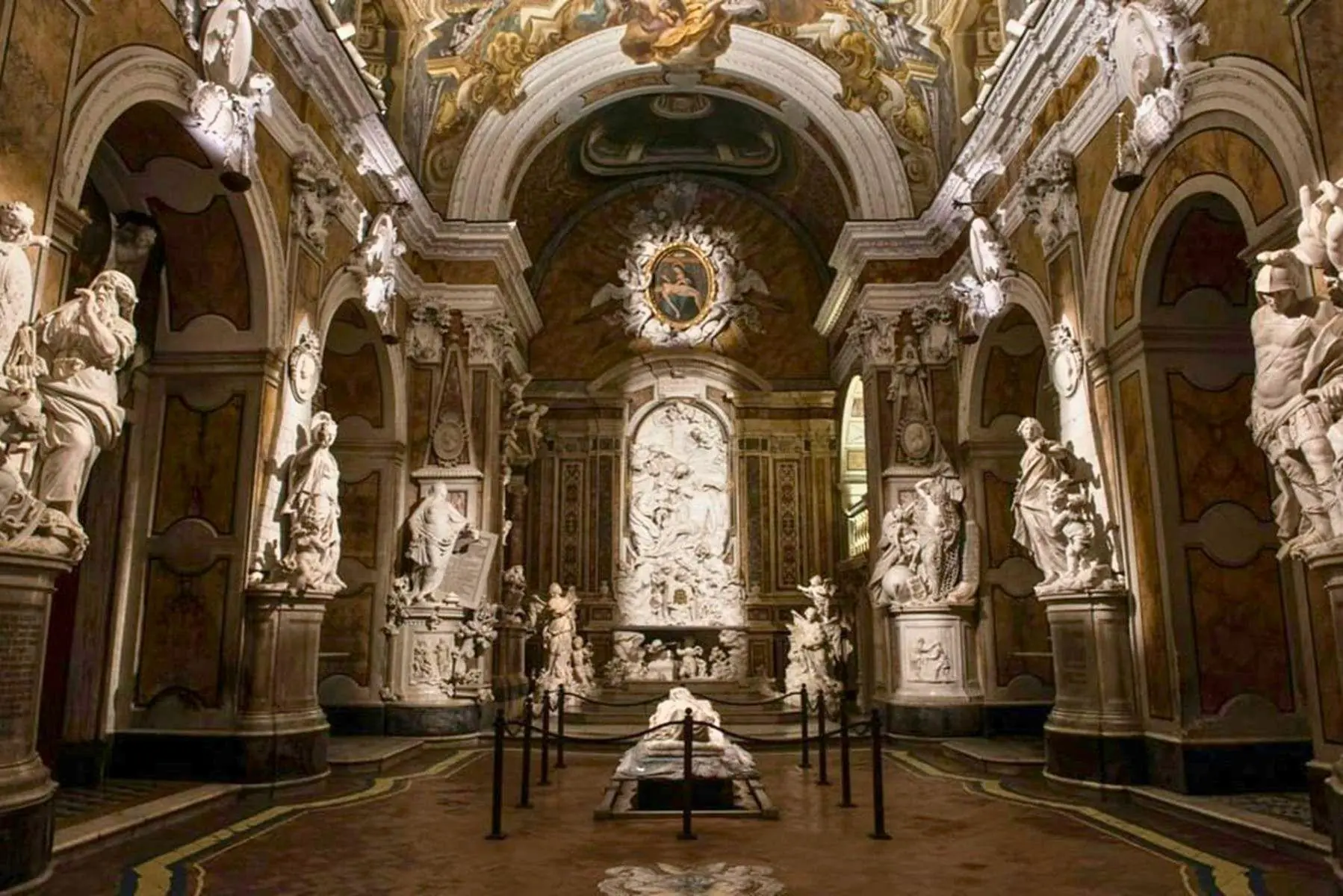
Tucked away in the narrow, shadowed alleys of Naples’ historic center, the Museo Cappella Sansevero (Sansevero Chapel) holds a concentration of artistic genius and macabre history that rivals any museum in Italy.
Originally built in 1590 as a private family shrine, the chapel was completely overhauled in the 18th century by Raimondo di Sangro, the 7th Prince of Sansevero. Raimondo was a brilliant, eccentric polymath—an inventor, alchemist, and Grand Master of the Neapolitan Freemasons. He commissioned the artworks inside this chapel to reflect his esoteric beliefs, resulting in a space that feels less like a traditional Catholic church and more like a Masonic temple of enlightenment.
Today, the chapel is famous primarily for one object: Giuseppe Sanmartino’s Veiled Christ. But as you will discover, the marble Christ is just the beginning of the mysteries housed within these walls.
The Ticket Reality: Read This Before You Plan
Let’s address the most critical logistical hurdle immediately: You cannot just walk up to the Sansevero Chapel and buy a ticket.
Because the chapel is small and the Veiled Christ is one of the most famous sculptures in Europe, capacity is strictly controlled. Tickets routinely sell out 3 to 4 weeks in advance, especially between April and October.
If you want to visit the chapel, you must book your entry well before you arrive in Naples. The official website releases tickets 30 days in advance, and they disappear quickly. If official tickets are sold out for your dates, your only reliable workaround is to book a guided tour that includes guaranteed skip-the-line entry.
How to Secure Your Visit
If you are planning your trip right now, here is how to handle your entry:
Sansevero Chapel Ticket & Guided Tour
- Guaranteed entry, even when the official site is sold out.
- Includes a knowledgeable local guide to explain the Masonic symbolism.
- Saves you the stress of refreshing the official website.
Downtown Tour with Veiled Christ
- Includes entry to the chapel.
- Also includes a guided walk through Spaccanapoli.
- Includes entry to the Santa Chiara Cloister.
Advice for Different Types of Travelers
If you are time-poor: Do not waste time trying to navigate the official ticket site if your trip is less than two weeks away. Book a skip-the-line guided tour immediately. The chapel itself only takes about 45 minutes to see, making it easy to fit into a packed itinerary.
If you are on a strict budget: Mark your calendar for exactly 30 days before your intended visit date. Go to the official Museo Cappella Sansevero website and purchase the standard €10 entry ticket. You must be punctual; if you miss your time slot, you will not be allowed in.
If you are visiting with children: Be aware that the crypt contains the “Anatomical Machines”—two skeletal figures with their entire circulatory systems exposed. While fascinating for adults and older teenagers, these can be genuinely frightening for young children. Prepare them in advance, or have one parent wait upstairs with the kids while the other visits the crypt.
Deep Dive: The 5 Masterpieces of Sansevero
The chapel is a dense, symbolic space. Every statue, floor tile, and fresco was placed with specific intent by Raimondo di Sangro. Here are the five highlights you need to focus on.
1. The Veiled Christ (Cristo Velato)
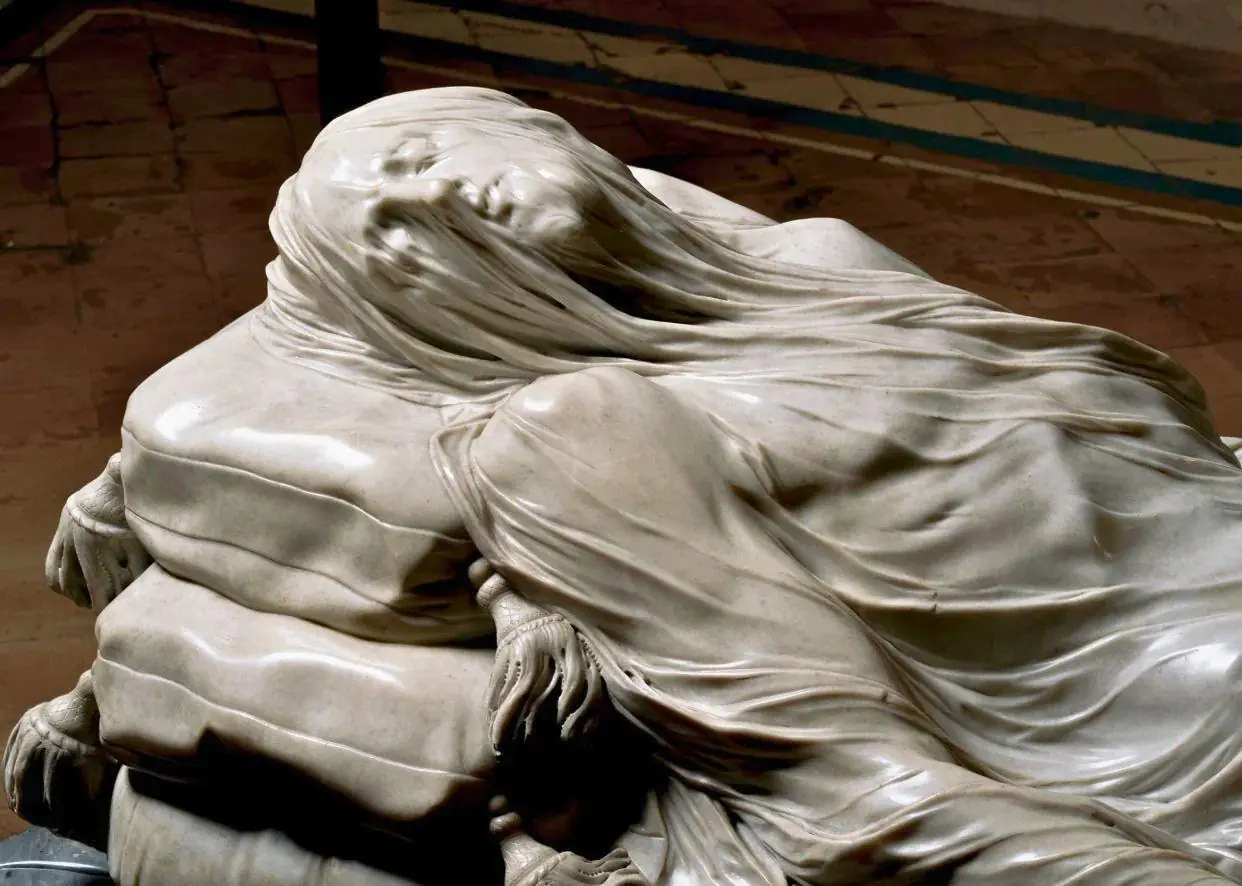
Created in 1753 by a young, relatively unknown Neapolitan sculptor named Giuseppe Sanmartino, the Veiled Christ sits in the center of the chapel. It depicts the dead Christ lying on a mattress, covered by a transparent shroud.
The illusion of the veil is so convincing—clinging to the facial features, the pierced hands, and the ribs—that a persistent legend claimed Raimondo di Sangro used his alchemical skills to teach Sanmartino how to “calcify” real fabric into marble.
This is a myth. The entire piece, including the veil, was carved from a single block of marble. Look closely at the details at the foot of the sculpture: the crown of thorns, the nails, and the pincers used to remove them are all rendered with astonishing realism.
2. Disillusion (Il Disinganno)
Located to the right of the altar, Francesco Queirolo’s Disillusion (1753-1754) is a technical marvel that rivals the Veiled Christ. It depicts a man struggling to break free from a thick, knotted net, aided by a winged spirit (representing human intellect).
The net is carved entirely from pumice stone. It is so delicate and complex that Queirolo had to polish it himself; his apprentices refused to touch it, terrified they would break the fragile marble ropes. The sculpture is an allegory for a man freeing himself from the “net” of sin and ignorance—a heavy nod to Masonic enlightenment.
3. Modesty (La Pudicizia)
Facing Disillusion on the left side of the altar is Antonio Corradini’s Modesty (1752). Dedicated to Raimondo’s mother, Cecilia Gaetani, who died when he was just one year old, the statue depicts a woman draped in a veil that clings tightly to her body.
Corradini was famous for his veiled figures, and his work here heavily influenced Sanmartino’s approach to the Veiled Christ. The broken plaque at the base of the statue symbolizes a life cut tragically short.
4. The Anatomical Machines (Macchine Anatomiche)
Descend the narrow stairs into the cavea (crypt), and the atmosphere shifts from artistic to macabre. Displayed in glass cases are the Anatomical Machines: the skeletons of a man and a pregnant woman, standing upright, with their entire arterial and venous systems perfectly preserved and wrapped around their bones.
For centuries, Neapolitans whispered that the Prince had injected his servants with a metallic compound while they were still alive, hardening their blood vessels. Modern scientific analysis has debunked the darkest parts of the legend. While the skeletons are genuine human bones, the “veins” are actually an incredibly intricate reconstruction made of beeswax, iron wire, and dyed silk, created by physician Giuseppe Salerno in the 1760s. Even as anatomical models, they are astonishingly accurate for their time.
5. The Ceiling Fresco: Glory of Paradise
While your eyes will naturally be drawn downward to the marble, do not forget to look up. The ceiling is covered by Francesco Maria Russo’s Glory of Paradise (1749).
What makes this fresco remarkable is not just the composition, but the chemistry. Raimondo di Sangro invented his own pigments for the painter to use. Over 250 years later, the fresco has never been restored, yet the blues, greens, and golds remain as vivid as the day they were painted.
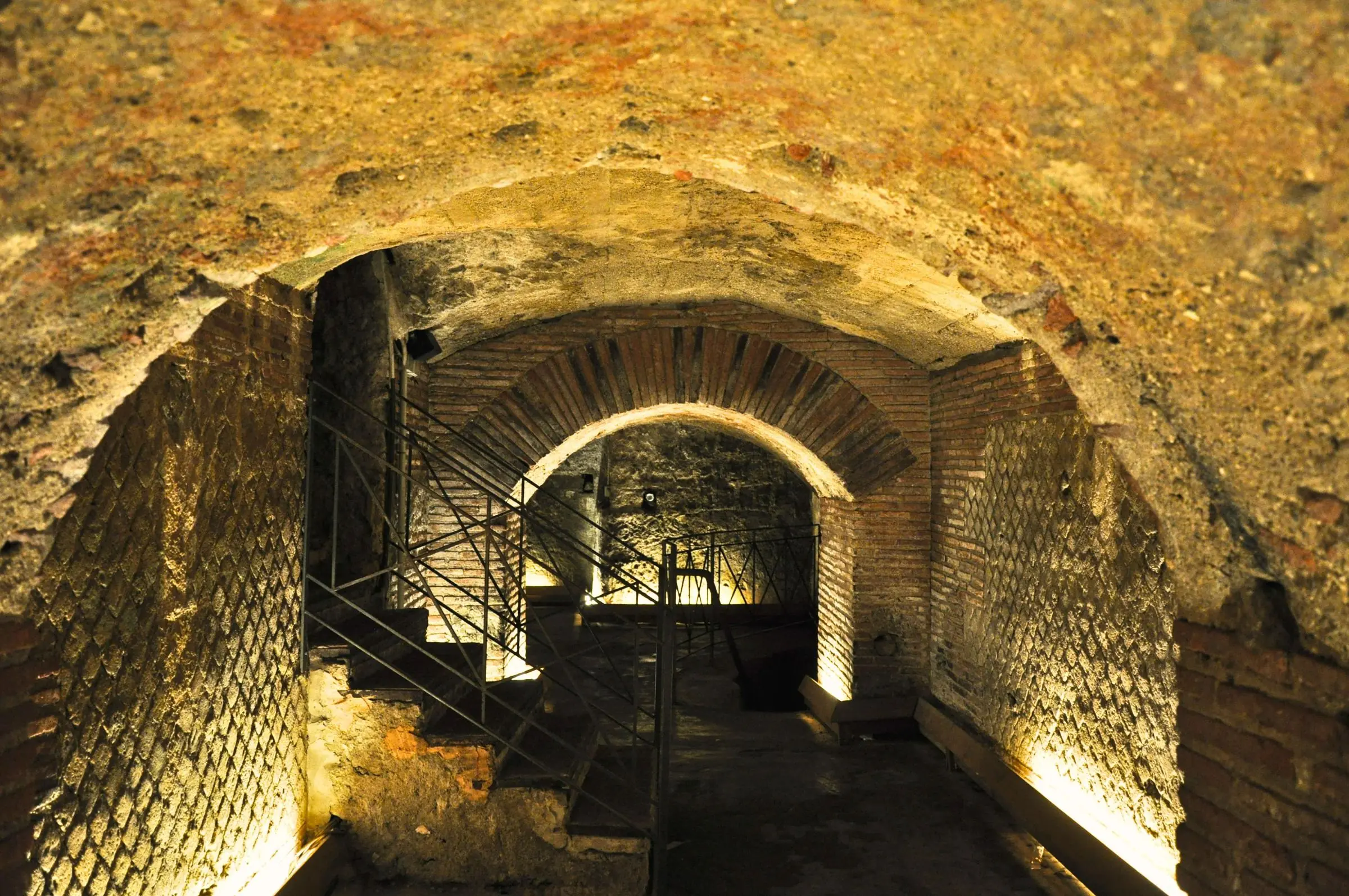
Keep Planning: If you are fascinated by the esoteric and hidden layers of the city, you should also book tickets for Naples Underground to explore the ancient aqueducts and bomb shelters beneath the streets.
Logistics & Local Tips
How to Get There
The chapel is located at Via Francesco de Sanctis, 19/21, just off Spaccanapoli (the main artery of the historic center).
- By Metro: Take Line 1 to either the Dante or Museo stations. From either stop, it is about a 10-minute walk through the pedestrian-heavy alleys.
- By Foot: If you are already exploring the Centro Storico, you will likely pass near it. It is just around the corner from Piazza San Domenico Maggiore.
Suggested Morning in the Centro Storico
⏱️ Total: 3 hBreakfast & Spaccanapoli
Start your morning with a sfogliatella and espresso at a cafe on Spaccanapoli. Walk the vibrant, narrow street as the city wakes up.
Sansevero Chapel
Arrive 10 minutes before your pre-booked time slot. Spend your time examining the Veiled Christ, the side sculptures, and the crypt.
National Archaeological Museum
Walk 15 minutes north to the National Archaeological Museum to see the Farnese Bull and the mosaics recovered from Pompeii.
Insider Tips for Your Visit
- Photography is Strictly Forbidden: Do not try to sneak a photo. The staff are vigilant, and you will be reprimanded loudly. Put your phone away and actually look at the art.
- The Audio Guide: If you manage to get a standard entry ticket without a human guide, pay the extra €3.50 for the official audio guide at the desk. The chapel has very little written signage, and without the audio guide, you will miss the Masonic symbolism entirely.
- Crowd Control: Because entry is strictly timed, the chapel rarely feels dangerously overcrowded. However, the space around the Veiled Christ can get tight. Walk the perimeter to see Disillusion and Modesty first, then step in to view the Christ when a gap opens up.
Where to Stay Nearby
Staying in the Centro Storico puts you within walking distance of the Sansevero Chapel, the best pizzerias, and the major underground tours. It is loud, vibrant, and exactly what you want from Naples.
Frequently Asked Questions
Can I buy tickets at the door for the Sansevero Chapel?
Practically speaking, no. While there is a ticket office, tickets sell out online weeks in advance. The ticket office is primarily for picking up pre-booked tickets or renting audio guides. Always book online before your trip.
How long does it take to visit the Sansevero Chapel?
The chapel is quite small. Most visitors spend between 30 and 45 minutes inside. This includes time to walk around the main floor and visit the Anatomical Machines in the crypt.
Is the Sansevero Chapel wheelchair accessible?
The main floor of the chapel, where the Veiled Christ, Disillusion, and Modesty are located, is wheelchair accessible. However, the crypt housing the Anatomical Machines is only accessible via a narrow, steep staircase.
Why are photos not allowed inside?
The museum enforces a strict no-photography policy to protect the artworks, maintain a respectful atmosphere, and keep the flow of visitors moving. Staff will intervene if they see you taking photos.
Are the Anatomical Machines made from real human bodies?
The bones are real human skeletons. However, the intricate network of veins and arteries is not real tissue; it is a highly accurate 18th-century medical model made from beeswax, iron wire, and silk.
What should I do if tickets are completely sold out for my dates?
If the official website is sold out, your best option is to check third-party providers for a guided tour that includes entry. Tour operators often secure blocks of tickets in advance.