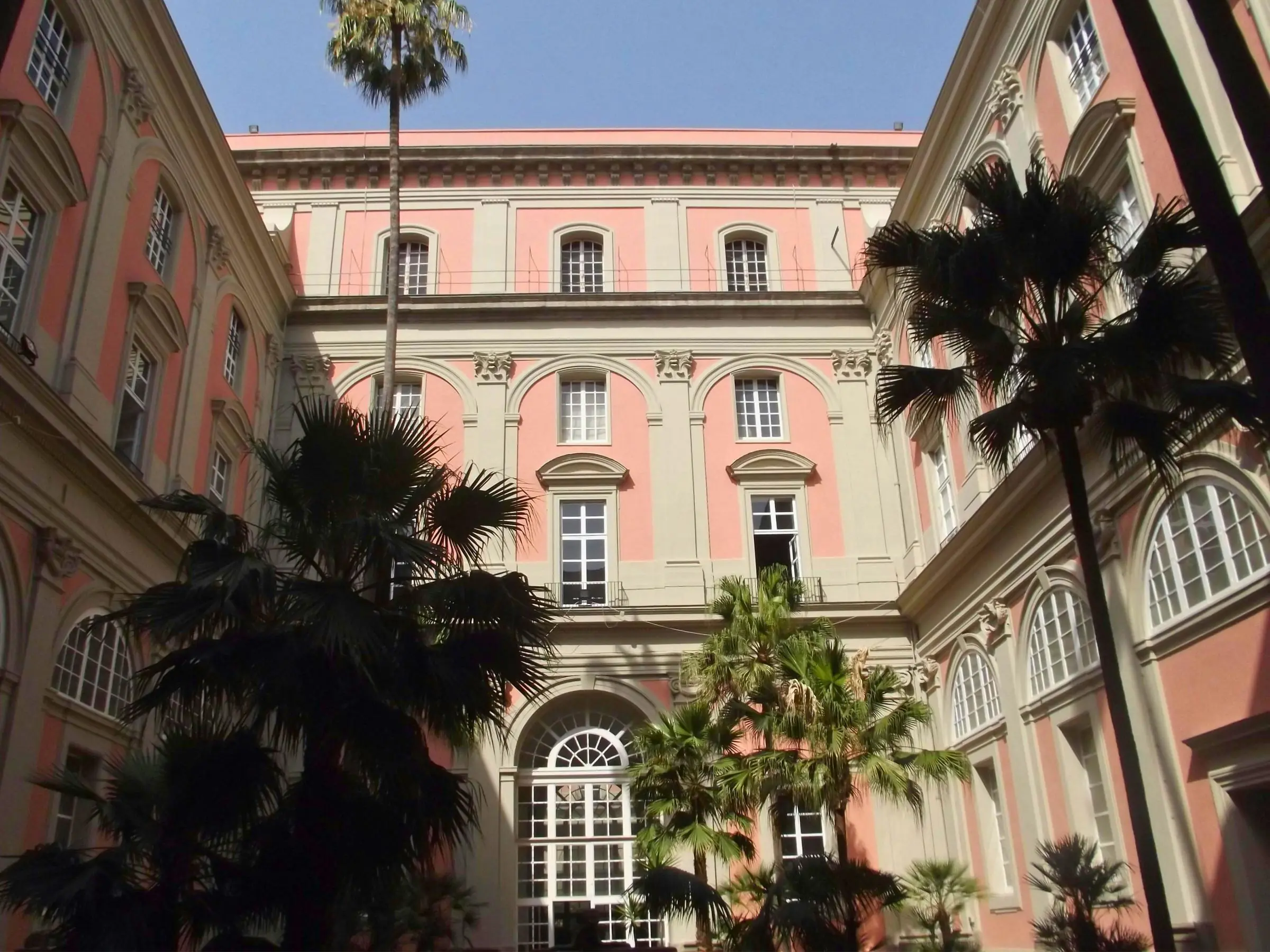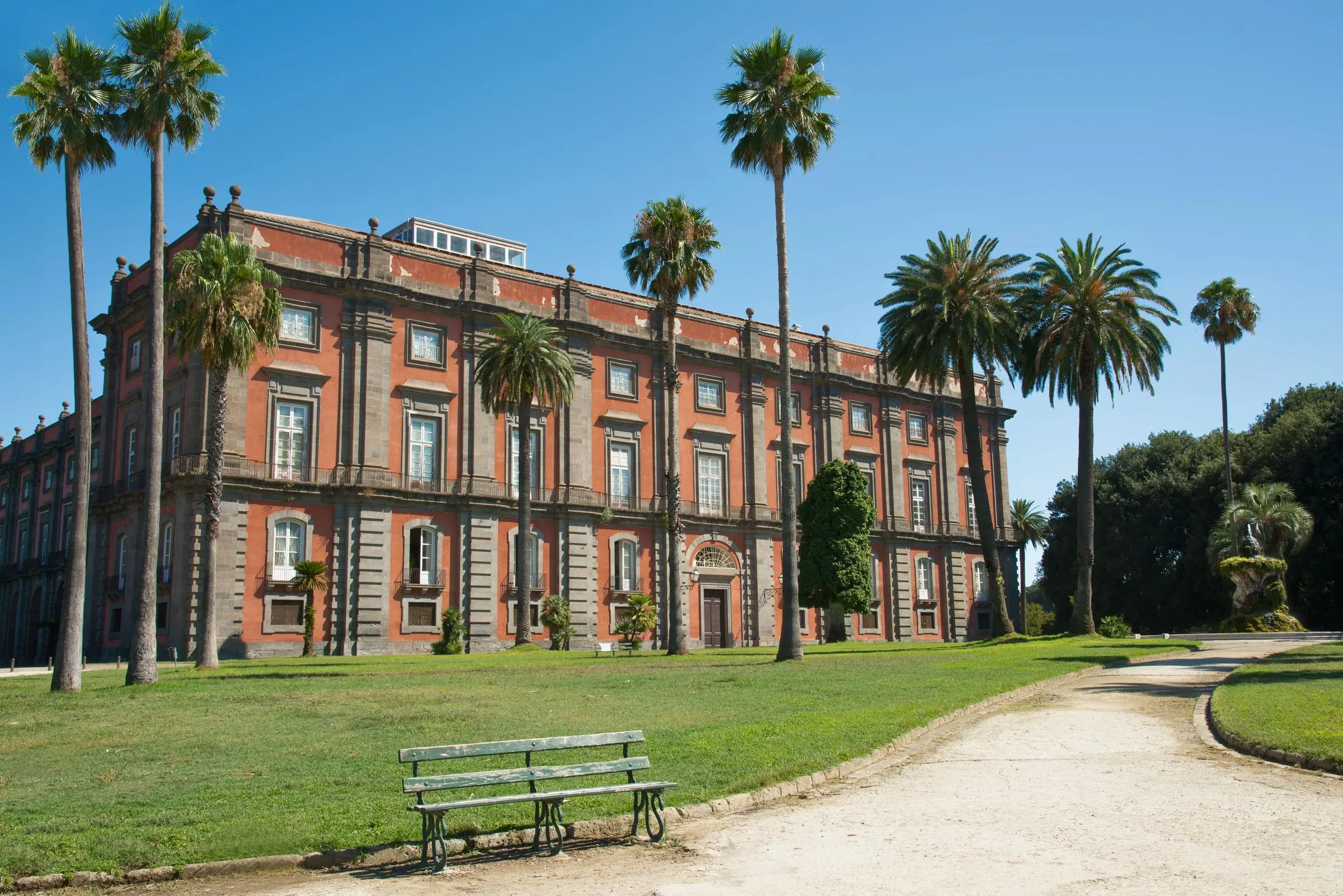
Perched high above the chaotic, scooter-filled streets of the historic center, the Capodimonte Museum (Museo di Capodimonte) feels like a different world. Built in 1738 by King Charles VII of Bourbon—initially just to house the massive art collection he inherited from his mother, Elisabetta Farnese—this grand red palace eventually became a royal residence and, today, one of Italy’s most significant art galleries.
Despite holding works by Titian, Raphael, Michelangelo, and Caravaggio, Capodimonte sees a fraction of the crowds that pack the Uffizi in Rome or even the National Archaeological Museum (MANN) down the hill. You can often stand alone in front of a Renaissance masterpiece here.
Because the museum is massive (spread across three sprawling floors) and located outside the immediate city center, visiting requires a bit of planning. Here is how to tackle the palace, the art, the surrounding English landscape park, and the slightly confusing bus ride to get there.
Who Should Visit (And How to Do It)
Capodimonte is vast. If you try to look at every single painting, you will burn out before you reach the second floor. Here is how to approach it based on your travel style:
- The Time-Poor Traveler: If you only have two hours, stick entirely to the First Floor (the Farnese Collection and the Royal Apartments) and make a quick targeted strike to the Second Floor specifically to see Caravaggio’s The Flagellation of Christ. Skip the contemporary art on the third floor.
- The Art Buff: Dedicate a full half-day (3 to 4 hours). Book a guided tour with an art historian to get the deep context behind the Farnese collection’s transition from Rome to Parma to Naples.
- Families with Kids: The museum itself might test the patience of younger children, but the Bosco di Capodimonte (the surrounding park) is completely free, massive, and perfect for running off energy. Bring a picnic from a local deli and sit on the grass.
- The Budget Traveler: If you plan to visit Pompeii, MANN, and Capodimonte, do not buy individual tickets. Buy the Campania Artecard, which covers your first two or three sites for free and provides up to a 50% discount on subsequent entries, plus public transit.
Because Capodimonte lacks the extensive English signage of more modernized museums, a guided tour is highly recommended if you want to understand the political and historical weight of the Bourbon and Farnese families.
5 Highlights of the Capodimonte Museum
The museum is logically divided by floor. The First Floor holds the Farnese Collection and the Royal Apartments. The Second Floor holds the Neapolitan Gallery (13th to 19th centuries) and the Tapestry collection. The Third Floor is dedicated to contemporary art.
Here are the specific highlights you should map your route around.
1. The Farnese Collection (First Floor)
When Charles of Bourbon became King of Naples, he brought his mother’s legendary family art collection with him. The Farnese Collection is the core of Capodimonte and occupies the entire eastern wing of the first floor.
You will find heavy hitters of the Italian Renaissance here. Do not miss Titian’s portraits, particularly his sensual Danaë and the psychologically intense Portrait of Pope Paul III. You’ll also find works by Raphael, Parmigianino, and El Greco. The collection is arranged roughly chronologically and by school, showing the evolution of Italian painting from the 15th to the 17th centuries.

2. Caravaggio’s ‘The Flagellation of Christ’ (Second Floor)
If there is one single painting people travel to Capodimonte to see, it is this. Located on the second floor in the Neapolitan Gallery, Caravaggio’s The Flagellation of Christ (1607) is a masterpiece of chiaroscuro (the dramatic contrast between light and dark).
Caravaggio painted this during his first stay in Naples while on the run from a murder charge in Rome. The painting is brutal, physical, and deeply emotional, with Christ bathed in a harsh, theatrical light while his torturers emerge from the shadows. It originally hung in the San Domenico Maggiore church before being moved here for preservation.
3. The Royal Apartments (First Floor)
Capodimonte wasn’t just a gallery; it was a home for the Bourbon, Bonaparte, and Murat dynasties, and later the House of Savoy. The Royal Apartments (Appartamenti Reali) take up the western wing of the first floor.
Walking through these rooms gives you a clear sense of 18th and 19th-century royal opulence. Highlights include the massive Ballroom (Salone delle Feste) with its neoclassical decor and glittering chandeliers, and the various royal bedrooms featuring original silk wall coverings, inlaid marble floors, and period furniture.
4. The Porcelain Parlor (Salottino di Porcellana)
Tucked away within the Royal Apartments is one of the most unusual and dazzling rooms in Europe. The Porcelain Parlor is exactly what it sounds like: a room where the walls, ceiling, and even the light fixtures are made entirely of Capodimonte porcelain.
It was originally created in 1757 for Queen Maria Amalia at the Royal Palace of Portici, but was carefully dismantled and moved to Capodimonte in 1866. The walls are covered in over 3,000 interlocking porcelain pieces featuring delicate chinoiserie designs—monkeys, exotic birds, and floral garlands. It is a staggering display of the craftsmanship that made the Capodimonte porcelain factory famous across Europe.
5. The Bosco di Capodimonte (The Royal Park)
After the sensory overload of the museum, step outside into the Bosco (woods). Covering 134 hectares, this is the largest green space in Naples. Charles of Bourbon originally designed it as a royal hunting reserve, laying out five long avenues radiating from the palace.
Today, it is a beautifully maintained English-style landscape park with ancient oak trees, statues, fountains, and sweeping views over the city and the Gulf of Naples. Entry to the park is completely free, making it a favorite weekend spot for locals.
Keep Planning: If you enjoy royal history, consider taking a day trip to the Royal Palace of Caserta, the Bourbons’ answer to Versailles, located just north of Naples.
Logistics: How to Get Up the Hill
Capodimonte is located on a hill north of the city center. Do not try to walk up from the historic center unless you are looking for a strenuous workout. The roads are steep, narrow, and often lack proper sidewalks.
Here are the best ways to reach the museum:
By Public Bus (The Standard Route)
The most common way to get to Capodimonte is by bus from the city center.
- Head to Piazza Dante or the Museo metro station (Line 1).
- Catch bus 168, C63, or the 3M (a dedicated museum minibus that runs between MANN, the Catacombs, and Capodimonte).
- Get off at the Capodimonte stop, which is right outside the Porta Grande (the main park gate).
Local Transit Reality: Naples buses are notoriously affected by traffic. The 3M minibus is a great idea in theory, but it runs infrequently. If you see a 168 or C63 arrive first, get on it. You must buy your bus ticket before boarding at a Tabaccheria (tobacco shop) or newsstand, and validate it in the machine once on board.
By Taxi
If you are traveling with a group or simply want to avoid the bus wait, a taxi from the historic center to Capodimonte will cost roughly €12 to €15. Ask the driver to use the meter (“Con il tassametro, per favore”).
The Catacombs Connection
If you are visiting the Catacombs of San Gennaro, you are already halfway up the hill. The exit of the catacombs leaves you near the Basilica of Incoronata Madre del Buon Consiglio. From there, it is a much shorter, manageable walk (about 10-15 minutes) up to the museum gates.
Tickets and Tours
You can buy standard entry tickets at the door, but lines can form during peak summer months or on free entry days (the first Sunday of the month).
Campania Artecard (3-Day)
- Includes free entry to your first 2 sites (use it for Pompeii and Capodimonte)
- Up to 50% off subsequent sites
- Unlimited public transport (including the bus to Capodimonte)
Capodimonte Skip-the-Line + Guide
- Skip-the-line entry ticket included
- 2-hour guided tour of the highlights
- Expert context on the Farnese and Bourbon history
Suggested 2-Hour Itinerary
If you want to see the best of the museum without getting museum fatigue, follow this efficient route:
The Capodimonte Highlights Route
⏱️ Total: 2 hThe Farnese Masterpieces
Start on the First Floor, heading right into the Farnese wing. Focus on the Titian room (Room 2) to see Danaë and Pope Paul III, then move through to see the works by Raphael and Parmigianino.
The Royal Apartments & Porcelain Parlor
Cross over to the western wing of the First Floor. Walk through the Ballroom and keep an eye out for Room 52—this is where you’ll find the dazzling Porcelain Parlor.
Caravaggio on the Second Floor
Head upstairs to the Second Floor (Neapolitan Gallery). Navigate directly to the Caravaggio room to view The Flagellation of Christ. Take your time here; the lighting is designed to highlight the painting’s dramatic shadows.
Coffee and the Park
Exit the museum and grab an espresso at the cafe near the courtyard. Spend your last 30 minutes walking down the central avenue of the Bosco di Capodimonte to take in the views over the city.
Where to Stay Near Capodimonte
Staying right next to the museum isn’t generally recommended for first-time visitors, as it isolates you from the evening energy and dining scene of the city center.
Instead, stay in the Centro Storico (near Piazza Dante or Museo metro stations) or the Sanità district (Rione Sanità). Both areas give you easy access to the buses heading up the hill to Capodimonte, while keeping you close to the best Neapolitan pizza at night.
Frequently Asked Questions
Is the Capodimonte Museum air-conditioned?
Yes, the museum is air-conditioned, making it an excellent escape during the sweltering Naples summer afternoons. However, some of the older, larger rooms on the first floor can still feel a bit warm on peak days.
Are there places to eat inside the museum?
There is a basic cafeteria inside the museum courtyard serving coffee, pastries, and light sandwiches. It is fine for a quick rest, but for a proper meal, you are better off heading back down the hill to the Sanità neighborhood or the historic center.
Is the park safe to visit?
Yes, the Bosco di Capodimonte is very safe and heavily used by local families, joggers, and dog walkers during the day. It closes at sunset, so you don’t need to worry about navigating it in the dark.
Can I take photos inside the museum?
Yes, non-commercial photography without a flash is permitted throughout the permanent collections, including the Farnese wing and the Caravaggio room.
How long does it take to walk from the Archaeological Museum (MANN) to Capodimonte?
Walking from MANN to Capodimonte takes about 35 to 45 minutes, but it is entirely uphill. Unless you are an avid walker looking for a steep hike, take the 168 or C63 bus from outside the Museo metro station instead.
Is Capodimonte included in the Campania Artecard?
Yes, the Capodimonte Museum is included in the standard Campania Artecard. If it is one of your first two sites visited on the 3-day pass, entry is completely free.