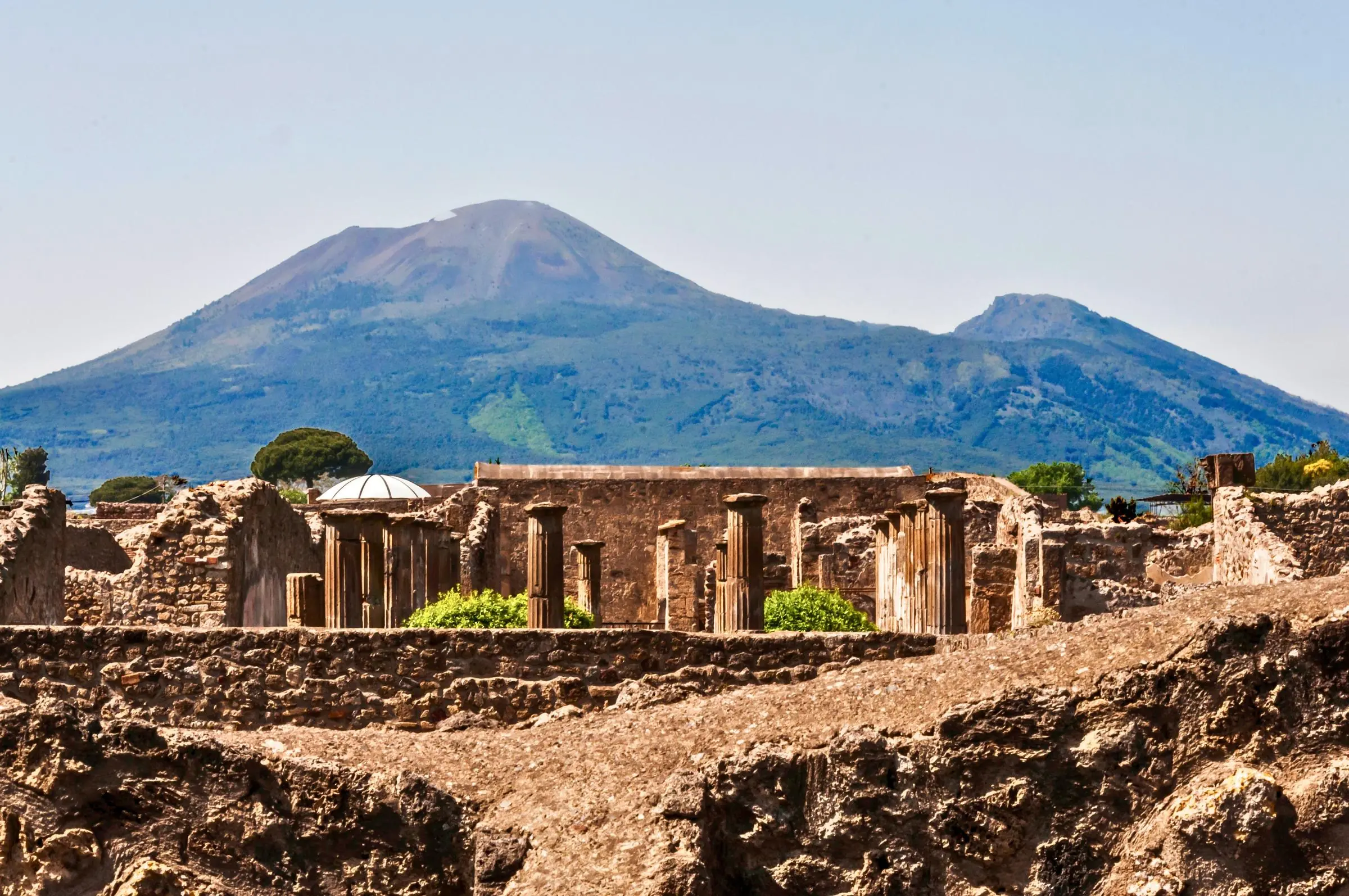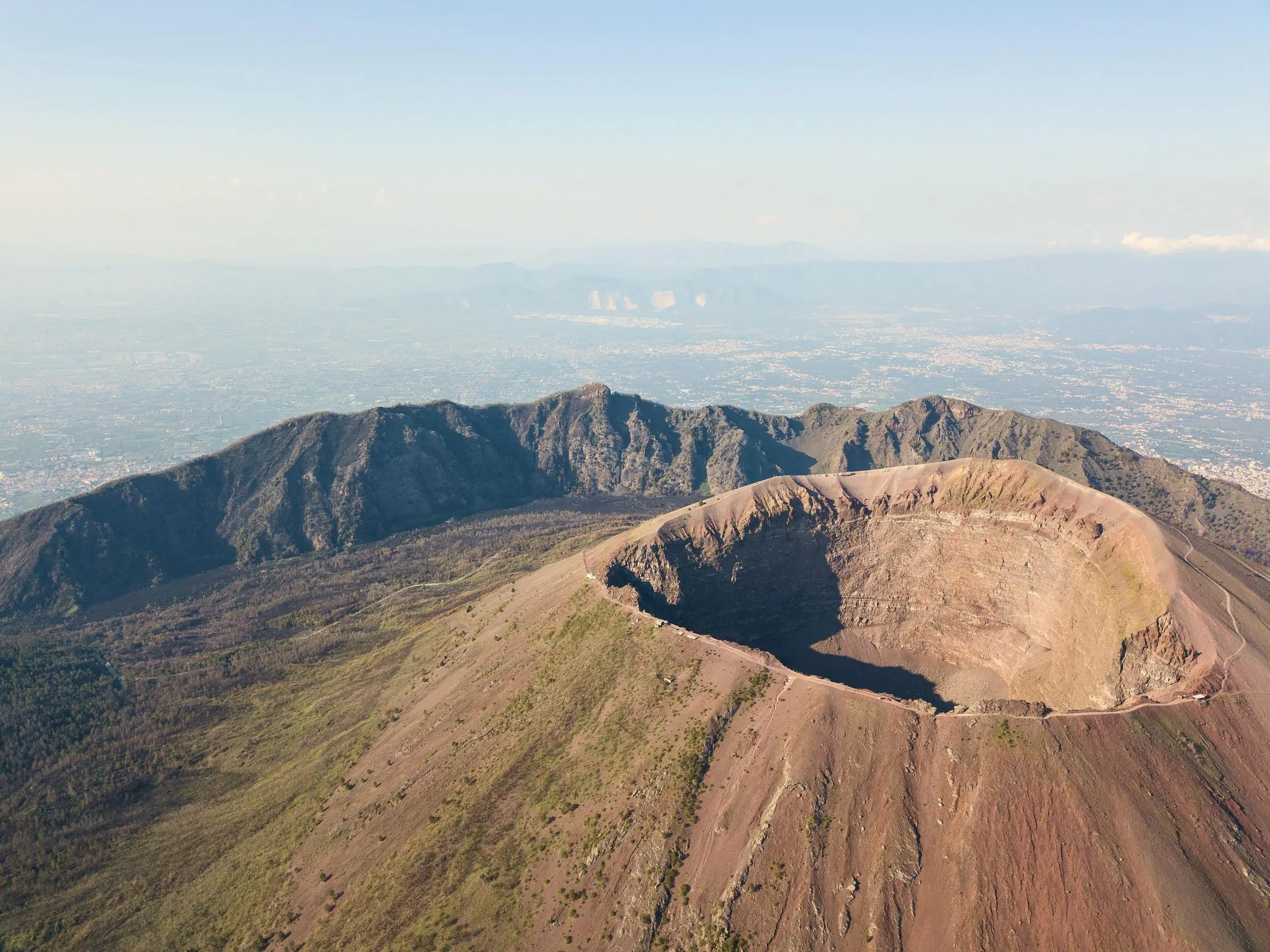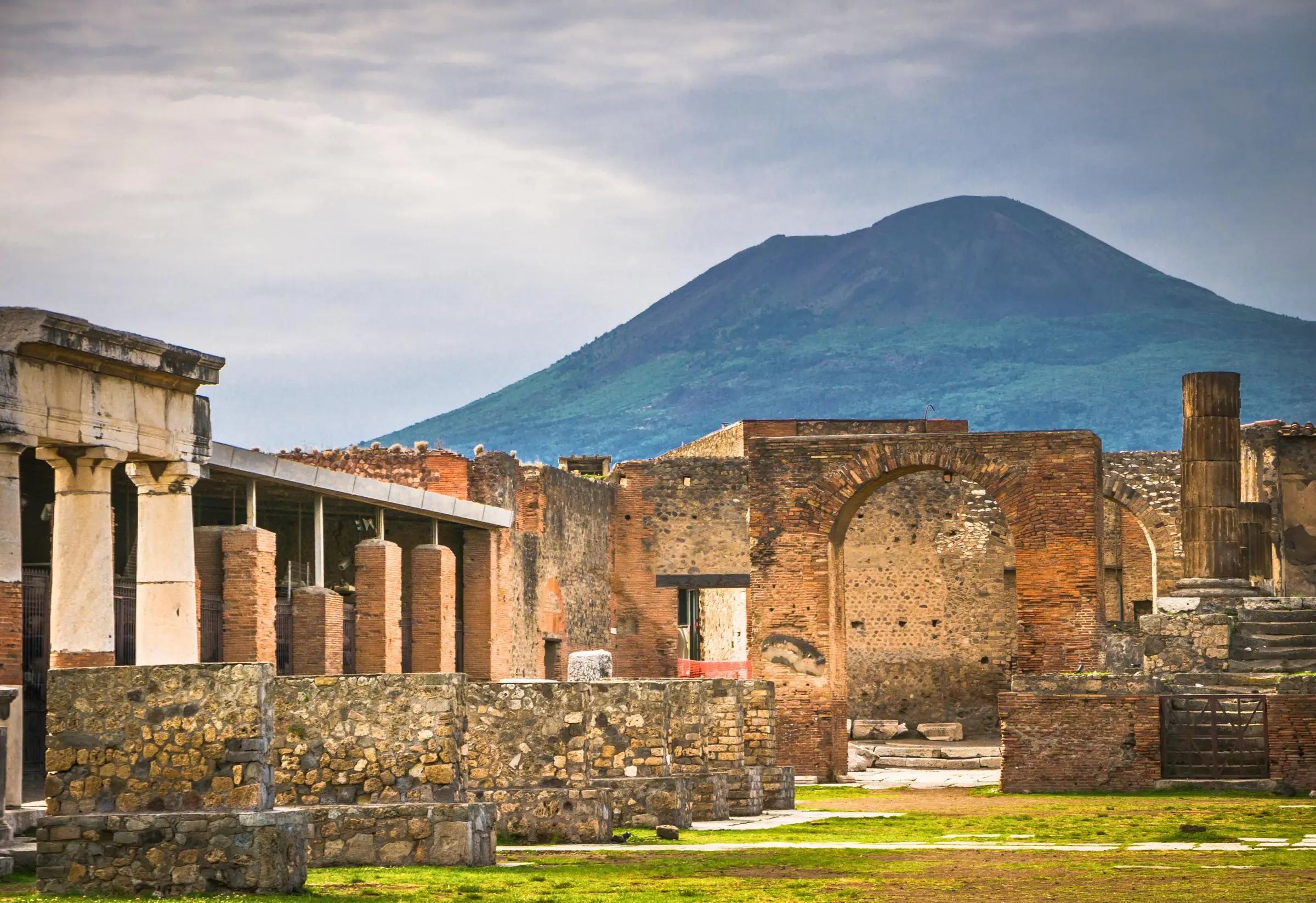
When Mount Vesuvius erupted in 79 AD, the wind blew the heavy pumice and ash south toward Pompeii. Herculaneum, a wealthy seaside resort town to the west, initially escaped the ash fall. But hours later, a 400°C (750°F) pyroclastic surge swept through the town, instantly killing anyone left behind.
This toxic cloud was followed by a massive flow of volcanic mud and debris that buried Herculaneum under 16 meters (50 feet) of solid rock. While Pompeii’s roofs collapsed under the weight of falling ash, Herculaneum’s buildings were filled from the ground up by the mud. This sealed the town in an oxygen-free tomb, carbonizing and preserving organic materials that completely disintegrated in Pompeii—including wooden beams, doors, ropes, food, and even papyrus scrolls.
Today, Herculaneum (modern-day Ercolano) offers a much more intimate, vertical, and vividly preserved look at ancient Roman life.
Is Herculaneum Right For Your Trip?
Travelers constantly debate whether to visit Pompeii or Herculaneum. Here is how to decide based on your travel style:
- For the Time-Poor: Herculaneum is compact. You can comfortably see the entire excavated site in 2 to 3 hours. Pompeii requires a minimum of 4 to 5 hours just to scratch the surface. If you are trying to combine ruins with a Mount Vesuvius hike in a single day, Herculaneum is the more realistic pairing.
- For Families with Children: Herculaneum is significantly easier to navigate. The site is smaller, there is more shade from the intact two-story buildings, and the ancient streets lack the massive, stroller-blocking stepping stones found in Pompeii.
- For the Budget-Conscious: Basic entry passes to Herculaneum are generally cheaper than Pompeii, and the site is a short, inexpensive train ride from central Naples.
Herculaneum vs. Pompeii
- Preservation: Intact second stories, original wooden doors, and vibrant frescoes.
- Scale: Easy to explore fully in 2.5 hours without exhaustion.
- Crowds: Receives a fraction of the tour bus crowds that flood Pompeii.
- Size: Only about 20% of the town has been excavated (the rest is under modern Ercolano).
- Iconic Sights: Lacks the massive amphitheaters and sprawling forums of Pompeii.
Tickets & Tour Logistics
While you can buy tickets at the gate, the queue in the summer months (June through September) is entirely exposed to the sun. Booking a skip the line ticket in advance allows you to walk straight to the turnstiles.
During peak season and on weekends, the ticket office line can take 30–45 minutes. Buy your digital ticket online to bypass the queue.
Ticket Options Compared
Herculaneum Fast Track Entry
- Direct entry at the turnstiles
- Explore at your own pace
- Does not include an audio guide
2-Hour Archaeologist Tour
- Skip-the-line entry included
- Led by a local archaeologist
- Crucial context for the unlabelled ruins
If you choose to explore independently, consider downloading the Herculaneum Audio Guide App before you arrive. The physical signage on site is minimal, and understanding what you are looking at requires context.
Getting to Herculaneum
Herculaneum is located in the modern town of Ercolano, roughly 20 minutes south of Naples.
By Train (The Easiest Way): Take the Circumvesuviana train from Napoli Piazza Garibaldi (located downstairs in Napoli Centrale).
- Line: Look for trains heading to Sorrento or Poggiomarino.
- Stop: Get off at Ercolano Scavi.
- Walk: Exit the station, walk straight down the hill on Via IV Novembre for about 700 meters (10 minutes). The entrance to the archaeological park is straight ahead at the bottom of the road.
Transit Safety: The Circumvesuviana train is notorious for pickpockets, especially on the crowded stretches between Naples, Herculaneum, and Pompeii. Keep your valuables zipped away and hold your bags in front of you. Read our Circumvesuviana train guide for more tips.
By Campania Express: From March to October, the Campania Express is a tourist-focused train that runs on the same tracks but guarantees air conditioning, guaranteed seating, and fewer stops. It costs slightly more but is much more comfortable.
5 Highlights You Cannot Miss
Herculaneum’s grid layout makes it easy to navigate. As you walk down the ramp into the ancient city, you are actually descending 16 meters below the modern street level. Here are the five most significant sites to prioritize.
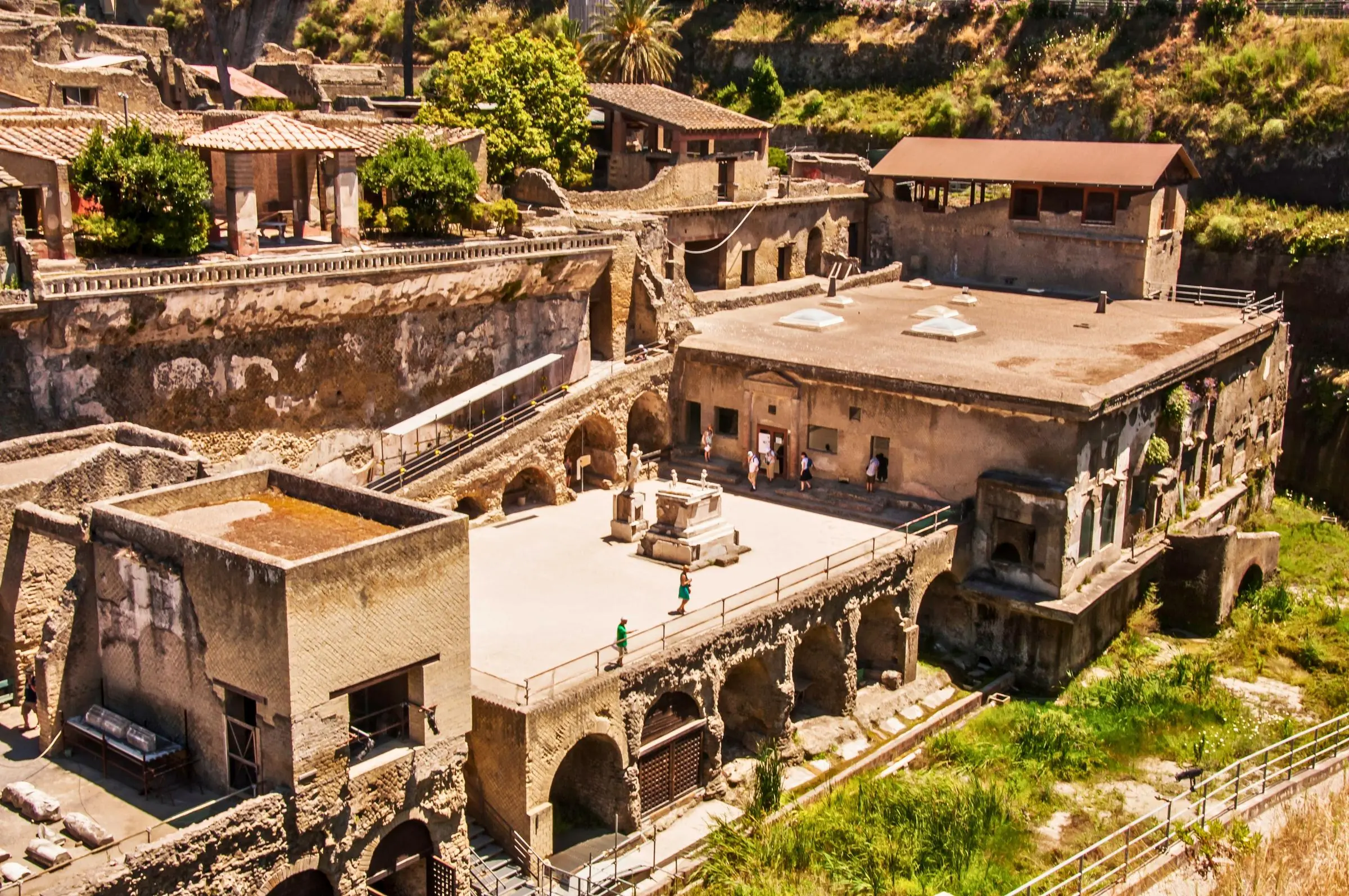
1. The Boat Houses (Fornici) and the Skeletons
For decades, archaeologists believed the residents of Herculaneum had successfully evacuated because very few human remains were found in the town. That changed in the 1980s when excavations reached the ancient shoreline. Inside the fornici (arched stone boat houses), they discovered the skeletons of over 300 people.
They had gathered on the beach, likely waiting for rescue by sea, when the 400°C pyroclastic surge hit. The heat was so intense that their brains boiled and their bones instantly blackened. Today, you can see replica skeletons in the exact positions they were found (the originals are in laboratories and the National Archaeological Museum). It is a haunting, sobering reminder of the human cost of the eruption.
2. The House of the Wooden Partition (Casa del Tramezzo di Legno)
This house perfectly illustrates Herculaneum’s unique preservation. In a typical Roman house, the atrium (public reception area) was separated from the tablinum (private office) by folding wooden doors. In Pompeii, these burned away. Here, the massive, carbonized wooden partition still stands in its original track, complete with its bronze hinges. Look closely at the wood grain—it has been perfectly preserved by the volcanic mud for nearly 2,000 years.
3. The Central Thermopolium
Romans rarely cooked in their own homes; instead, they ate at the thermopolium (ancient fast-food joints). Herculaneum has a brilliantly preserved example right in the center of town. You will see an L-shaped marble counter embedded with large terracotta jars (dolia). These jars held hot food, dried grains, and wine. The original wooden racks that held amphorae (wine jugs) were also found intact here.
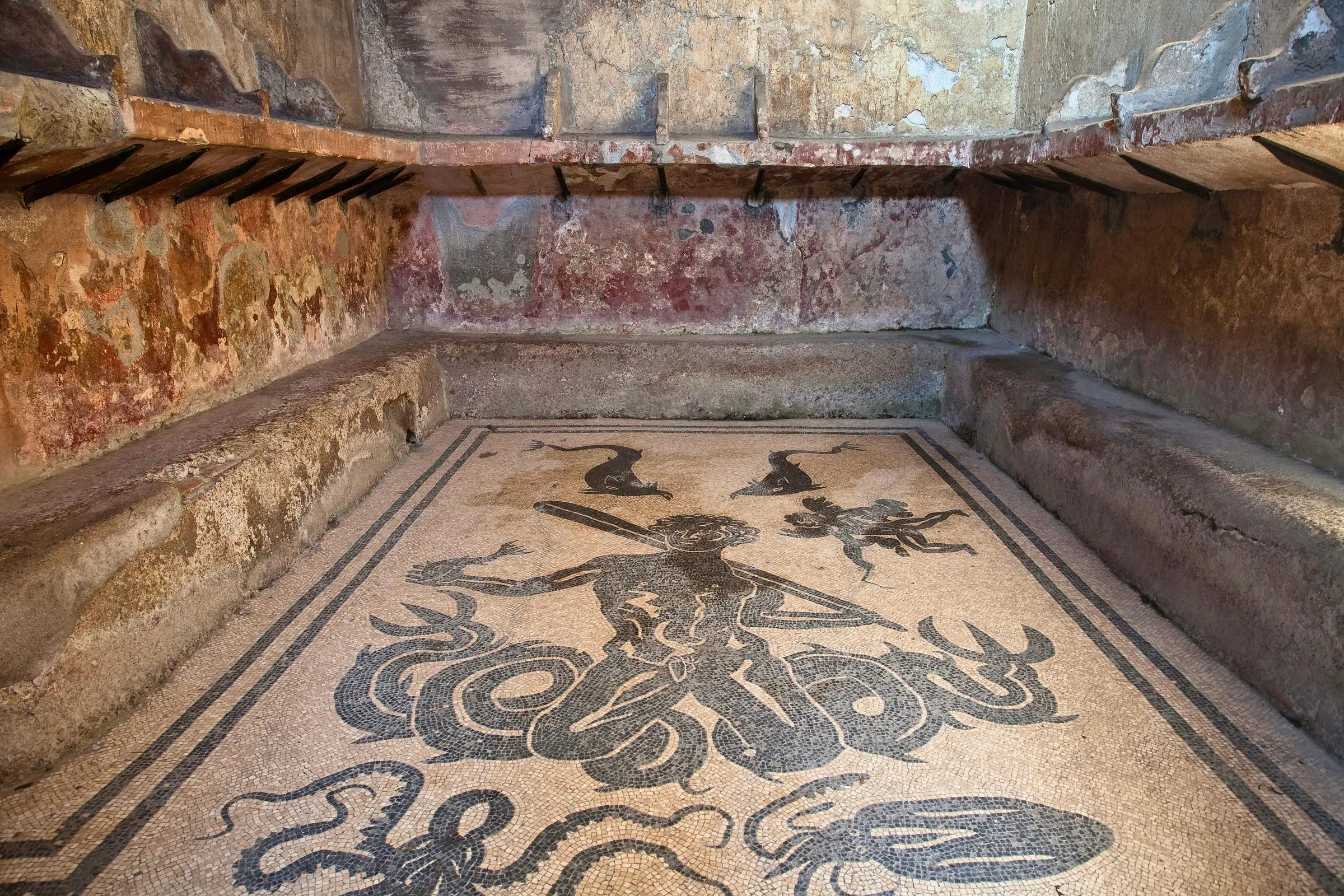
4. The Central Thermae (Thermal Baths)
The town’s public baths are remarkably intact. Divided into men’s and women’s sections, you can walk through the apodyterium (changing room), where the original marble benches and cubbies for clothing are still attached to the walls. The floors are covered in intricate black-and-white mosaics depicting Triton and sea creatures. Look up at the vaulted ceilings—the stucco fluting is nearly flawless.
5. The House of Neptune and Amphitrite
Named after the stunning glass-paste mosaic in its summer dining room (triclinium), this house belonged to a wealthy merchant. The mosaic depicts the sea god Neptune and his wife Amphitrite in vibrant blues, greens, and golds. The colors are so bright they look as though they were laid yesterday. Adjacent to the dining room is the owner’s shop, which is one of the best-preserved storefronts in the Roman world, complete with carbonized wooden shelves and a balcony.
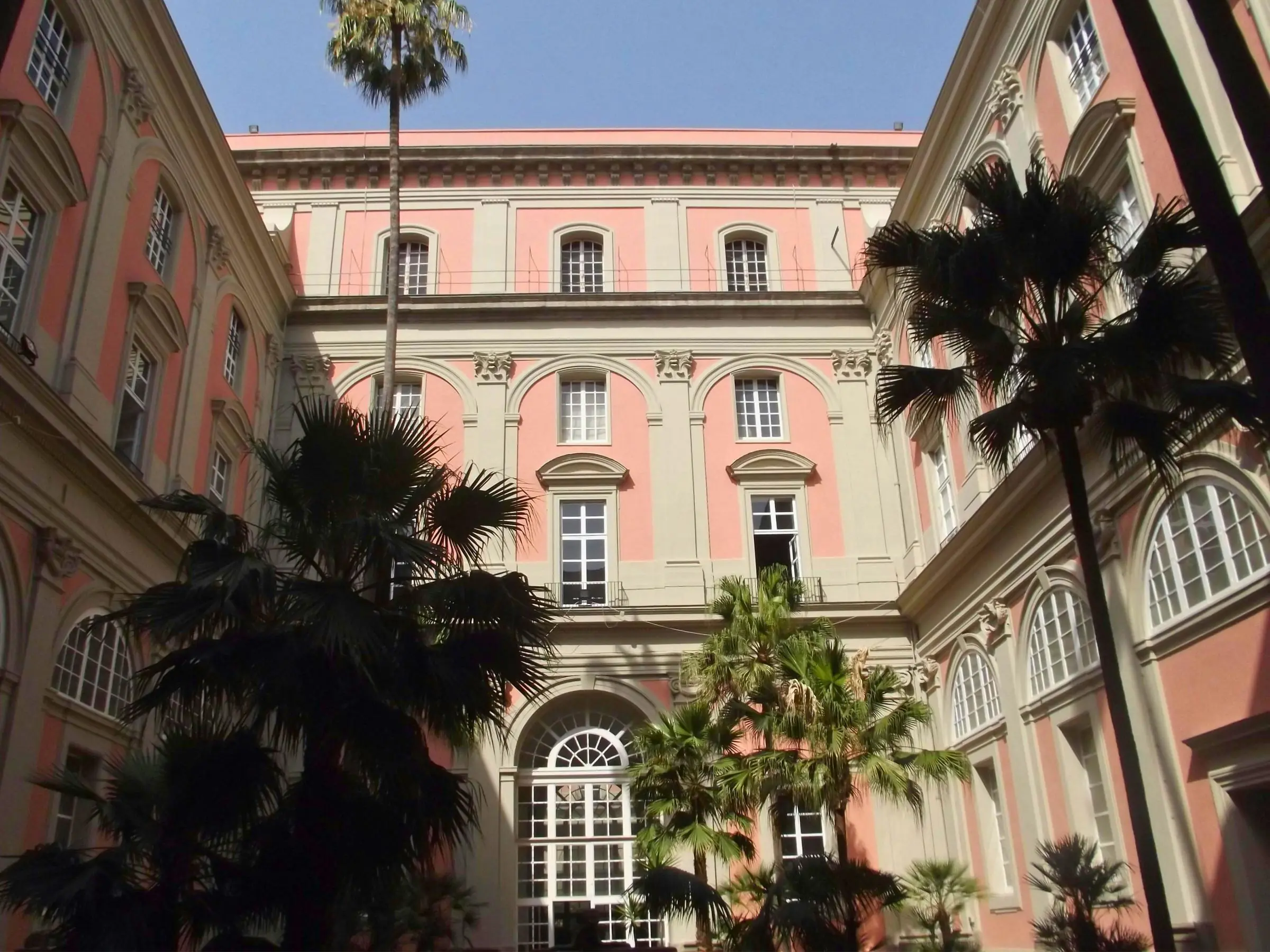
Keep Planning: If you are fascinated by the artifacts found here, you must visit the National Archaeological Museum (MANN) in Naples, where the original frescoes, statues, and jewelry from Herculaneum are kept.
Suggested 2-Hour Walking Route
Herculaneum Highlights Route
⏱️ Total: 2 hThe Descent and the Boat Houses
Walk down the modern ramp to the ancient shoreline. Start at the bottom to view the fornici (boat houses) and the skeletons before heading up into the town grid.
Cardo IV and the Baths
Walk up Cardo IV (the main vertical street). Stop at the House of the Relief of Telephus, then spend time exploring the Central Thermae (Baths).
Decumanus Maximus
Turn onto the main horizontal street. Visit the Central Thermopolium, the Hall of the Augustales (look at the massive frescoes), and the House of the Black Salon.
The Grand Houses
Head down Cardo V to see the House of Neptune and Amphitrite, the House of the Wooden Partition, and the House of the Deer (which features a terrace that once overlooked the sea).
"“We did Pompeii yesterday and Herculaneum today. Herculaneum was so much easier to digest. Seeing the actual wooden doors and the second stories of the houses made it feel like a real town, not just a foundation. Highly recommend the 2-hour guided tour to understand the context.”
"SSarah M.September 14, 2025 • ✓ GetYourGuide
Practical Local Tips
- Footwear: The ancient Roman streets are paved with large, uneven blocks of volcanic stone (basolato). Wear flat, comfortable sneakers. Sandals or heels will result in a twisted ankle.
- Water: Bring a refillable water bottle. There is a modern drinking fountain near the ticket office, but no facilities down inside the ruins themselves.
- Sun Protection: While there is more shade here than in Pompeii, the midday sun in July and August is brutal. Bring a hat and sunscreen.
- Luggage: If you are stopping at Herculaneum in transit between Naples and Sorrento, there is a free luggage storage room right at the ticket office.
- Accessibility: Herculaneum is difficult for wheelchair users due to the steep entry ramp and uneven ancient paving stones. However, there is a raised modern walkway that offers views over the site from above.
Where to Stay
Most visitors do not stay in modern Ercolano, as the town itself offers limited dining and nightlife options. The best strategy is to stay in central Naples or Sorrento and visit Herculaneum as a half-day trip.
If you want to be near the main train station in Naples for easy access to the Circumvesuviana, look for hotels near Piazza Garibaldi or the Centro Storico.
Frequently Asked Questions
How much time do I need for Herculaneum?
Most visitors spend between 2 and 2.5 hours exploring the site. Because it is much smaller than Pompeii, this is enough time to see all the major open houses and the boat houses at a relaxed pace.
Can I do Pompeii and Herculaneum in one day?
Yes, it is possible, but it makes for an exhausting day. They are on the same train line (Circumvesuviana). If you attempt this, do Pompeii right when it opens at 9:00 AM, have lunch, and tackle Herculaneum in the mid-afternoon. Alternatively, book a combined guided tour that handles the logistics for you.
Is there food available inside the ruins?
No. There are no cafes or vending machines inside the archaeological park. There are several tourist-focused cafes on Via IV Novembre (the street leading from the train station to the entrance) where you can grab a panino or a coffee before you enter.
Why is Herculaneum so far below the modern city?
The 79 AD eruption deposited 16 meters (about 50 feet) of volcanic material over the ancient town. Over the centuries, the modern city of Resina (later renamed Ercolano) was built directly on top of this new ground level. When you look up from the ruins, you will see modern apartments perched right on the edge of the excavation trench.
Are the skeletons real?
The skeletons currently visible in the boat houses are high-quality resin replicas placed in the exact positions the originals were found. The real bones were removed for scientific study and preservation, as exposure to the open air was causing them to deteriorate.
Do I need a guide for Herculaneum?
While not strictly mandatory, a guide is highly recommended. The ruins have very few informational plaques. Without an expert guide or a good audio guide, you will miss the subtle details—like the carbonized ropes, the lead pipes, and the specific functions of the rooms.
Ready to explore Herculaneum?
Compare fast-track entry tickets, audio guides, and small-group archaeologist tours to make the most of your visit to the buried city.