If you want to understand how Naples was built, you need to look at San Lorenzo Maggiore. Located at the exact geographic center of the ancient Greco-Roman city (on Piazza San Gaetano along Via dei Tribunali), this complex is a literal architectural layer cake.
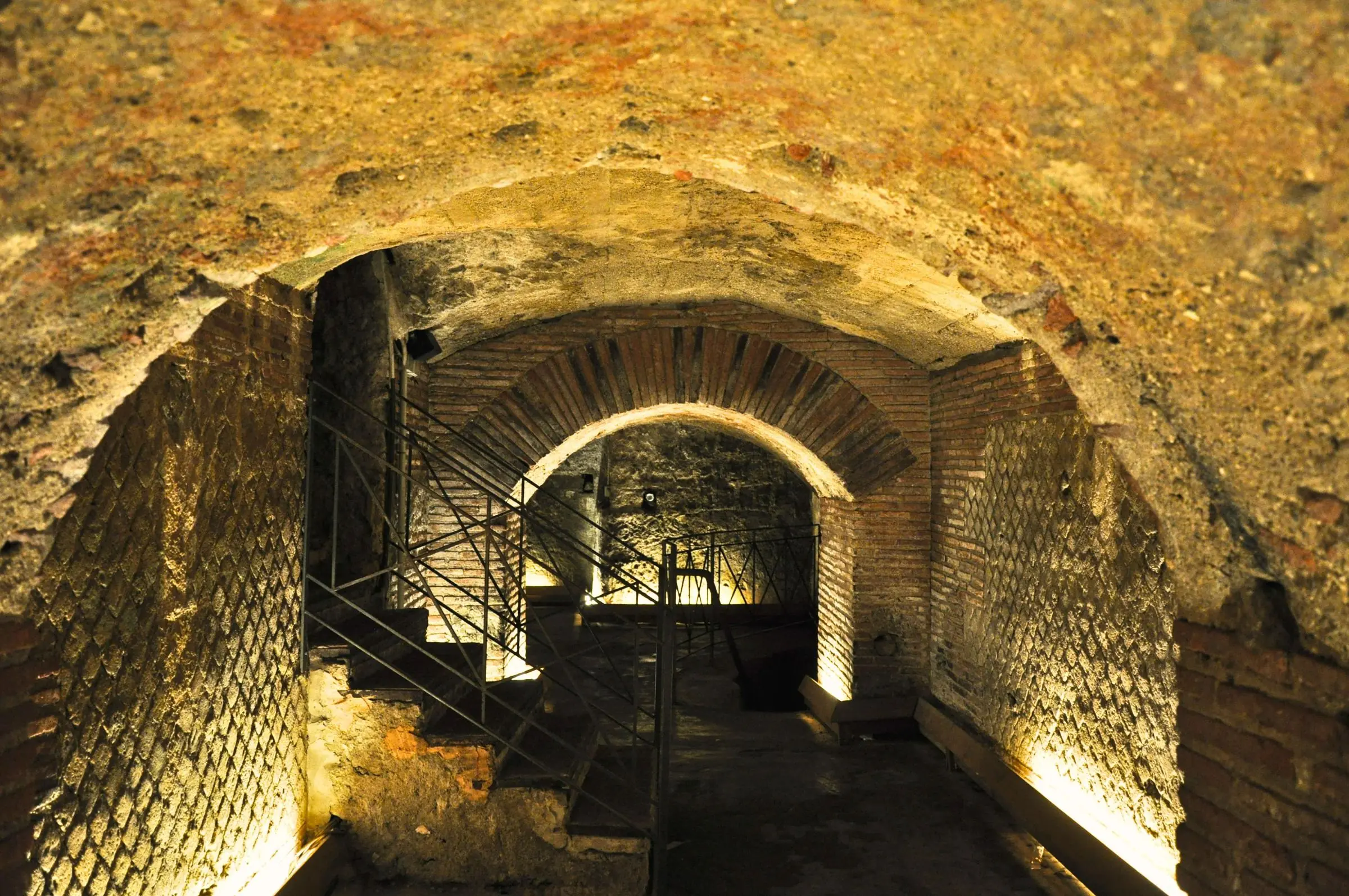
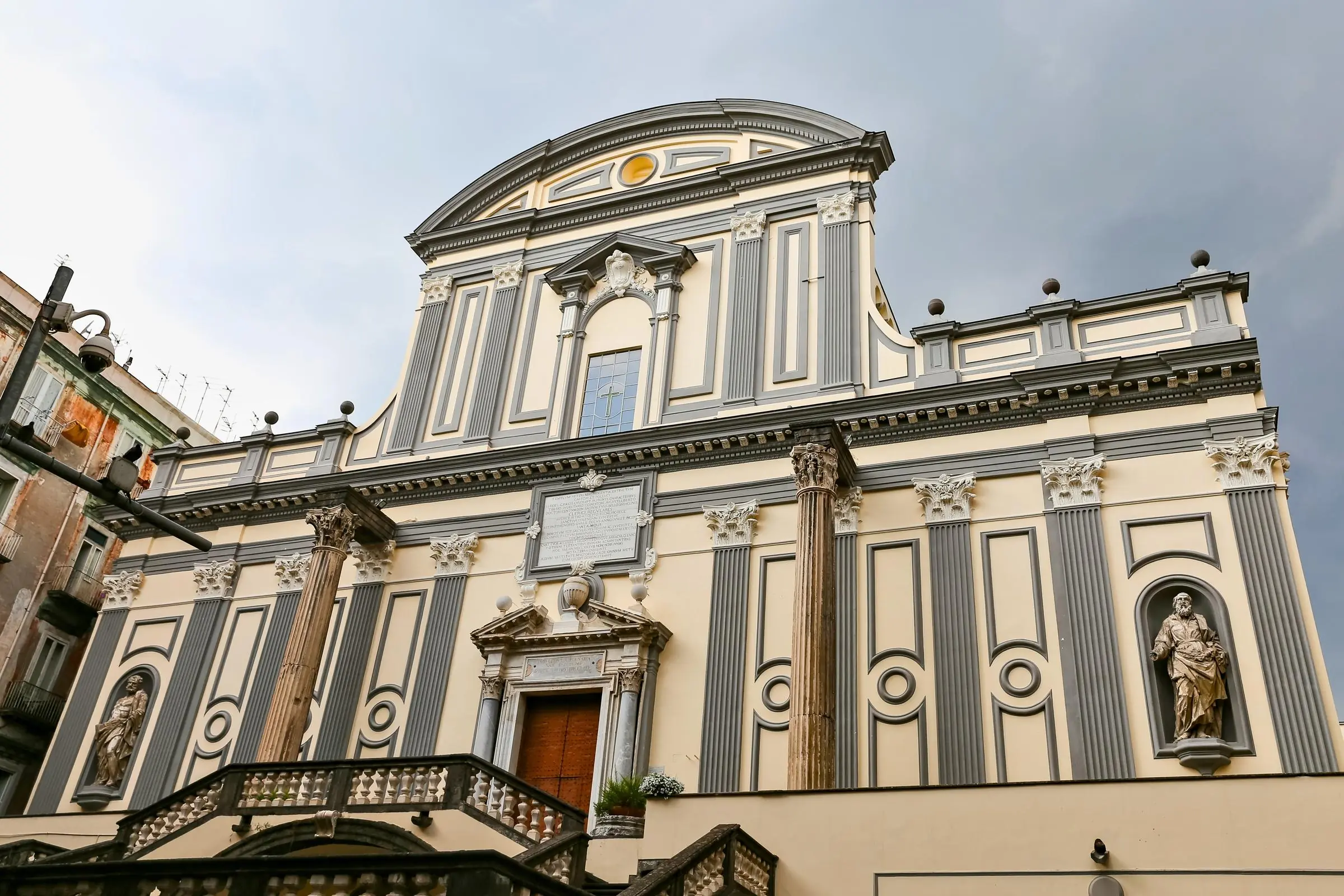
At street level, you have a monumental 13th-century French Gothic basilica with Baroque additions. But the real draw lies ten meters below the floorboards. When you walk down the stairs here, you aren’t just entering a basement; you are stepping onto a fully excavated Roman street, complete with storefronts, a bakery, and a marketplace known as the Macellum.
Unlike the sprawling ruins of Pompeii, which were frozen in time by volcanic ash, the Roman structures beneath San Lorenzo Maggiore were simply built over. As the city grew, the medieval builders used the sturdy Roman walls as the foundation for their new church.
Here is exactly how to navigate the five distinct highlights of the complex, how to secure entry tickets, and how this site differs from the famous Napoli Sotterranea just down the street.
Who Should Visit San Lorenzo Maggiore?
Because Naples has several underground sites, it helps to know if this specific complex fits your travel style.
- For History & Architecture Buffs: This is arguably the best site in the historic center to see the physical transition from the Roman era to the Middle Ages. The contrast between the Greco-Roman mud-brick walls below and the soaring Gothic arches above is stark and fascinating.
- For Families with Kids: If you want to show your kids ancient Roman ruins but don’t have time for a full day trip to the archaeological parks, this is a great alternative. The underground area is well-lit, spacious, and feels like a real street, making it much less intimidating for young children than the darker, narrower tunnel networks in the city.
- For the Time-Poor: You can comfortably see the church, the cloister, and the underground Roman market in about 60 to 90 minutes. It’s a highly efficient dose of history.
- Accessibility Note: The basilica and cloister are accessible, but the underground Roman market requires descending a flight of stairs. There is no elevator access to the archaeological level.
While the lines here rarely reach the chaotic lengths of the nearby Sansevero Chapel, the ticket desk can get bogged down by large tour groups in the mid-morning. Booking a skip-the-line entry ticket with an audio guide in advance saves you time and provides much-needed context for the ruins.
The 5 Highlights of the Complex
San Lorenzo Maggiore is technically three sites in one: a church, a museum/cloister complex, and an archaeological dig. Whether you are exploring independently or with a Complex of San Lorenzo Maggiore and archaeological area entry with audio guide, here are the five specific areas you should focus your time on.
1. The Gothic Soaring Apse
When you first walk into the basilica (which is free to enter), your eyes are immediately drawn upward. Built between 1270 and 1300 under the patronage of Charles I of Anjou, the church introduced French Gothic architecture to Naples.
The apse—the semi-circular area behind the main altar—is a masterpiece of this style. It features a soaring ribbed vault and an ambulatory (a walking path) surrounded by nine radiating chapels. This design is common in France but incredibly rare in southern Italy. Take a moment to stand at the altar and look up; the sheer verticality and the light pouring in through the tall, pointed windows provide a sharp contrast to the heavy, dark Baroque churches found elsewhere in the city.
2. The Magnificent Tomb of Catherine of Austria
Located in the ambulatory of the apse is the tomb of Catherine of Austria, the first wife of Charles, Duke of Calabria. She died in 1323, and her monument was carved by Tino di Camaino, a master sculptor from Siena who heavily influenced Neapolitan art.
The tomb is a striking piece of medieval sculpture. It is supported by four columns resting on lions, and the sarcophagus itself features intricate mosaics and detailed reliefs. It’s a prime example of how the Angevin dynasty brought top-tier artists from across Italy to decorate their new capital.
3. The Medieval Cloister
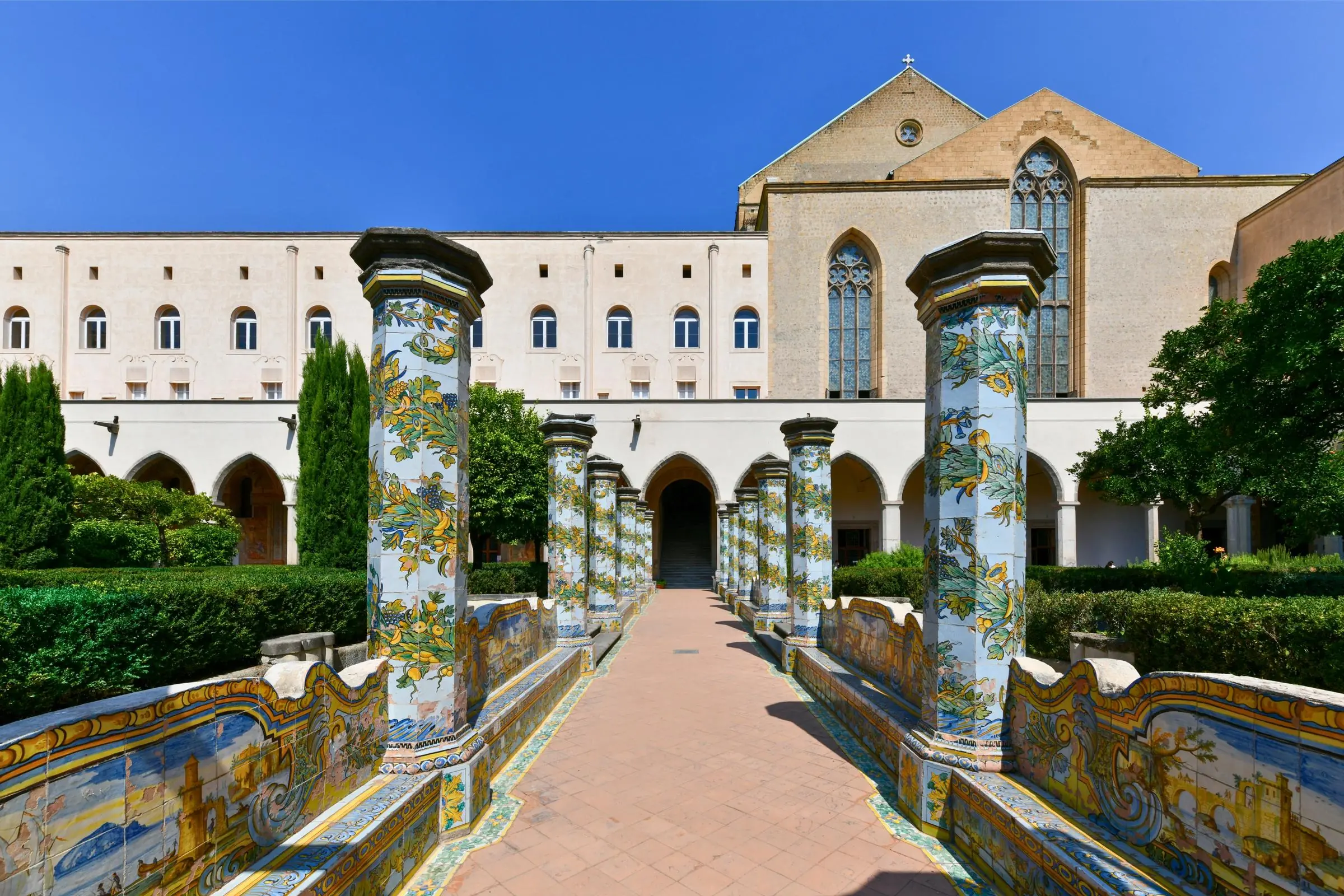
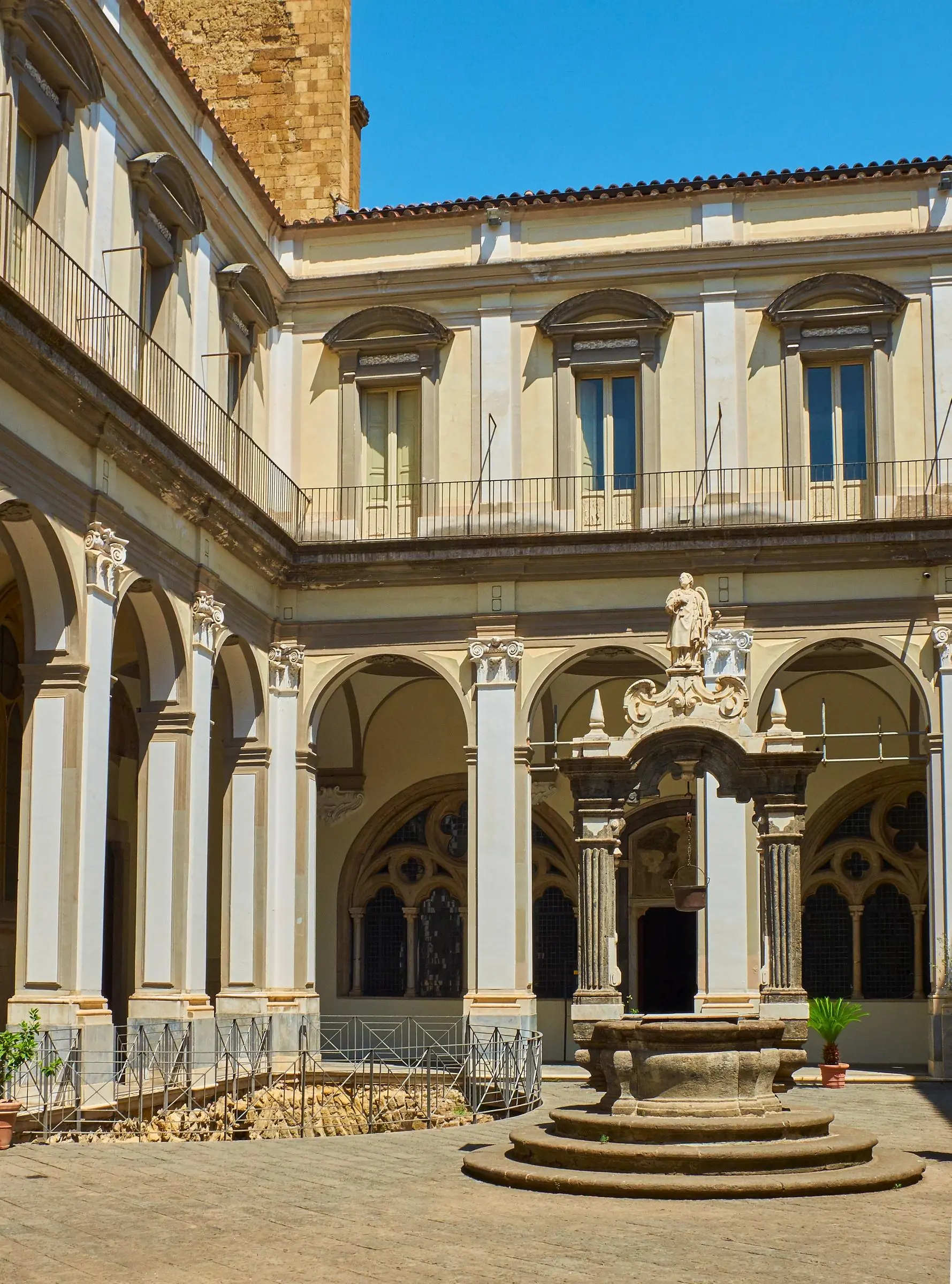
Before you head underground, you’ll pass through the monumental cloister. This peaceful, arcaded courtyard was the heart of the Franciscan monastery attached to the church.
Historically, this space was a major intellectual hub. The poet Petrarch lived in the adjacent convent in 1343, and it was in this very church that Giovanni Boccaccio supposedly first laid eyes on his beloved muse, Fiammetta, in 1336.
Off the cloister, peek into the Chapter House (Sala Capitolare) and the Refectory. Both rooms are covered in impressive, albeit faded, 14th-century frescoes that give you a sense of the monastery’s former wealth.
4. The Subterranean Roman Market (The Macellum)
This is the main event. Known officially as Neapolis Sotterrata (Buried Naples), the archaeological area sits about 10 meters below the cloister.
When you reach the bottom of the stairs, you are standing on a genuine Roman road (a cardo). To your right is the Macellum, the ancient covered market of Neapolis. You can clearly see the layout: a rectangular central courtyard that once housed a circular pavilion, surrounded by small, deep storefronts (tabernae).
Because the medieval church was built directly on top of these walls, the Roman structures were preserved rather than demolished. You can walk down the ancient street, look into the shops, and see the original mosaic floors and brickwork. It is a surreal experience to look up and realize that the massive stone arches above your head are holding up the floor of the Gothic church you were just standing in.
5. The Ancient Bakery and Laundry Shop Ruins
As you explore the tabernae along the Roman street, look closely at the details inside the shops. They aren’t just empty stone boxes; they hold the infrastructure of everyday Roman commerce.
- The Bakery (Pistrinum): You will find a shop featuring a large, brick-built oven that looks remarkably similar to the wood-fired pizza ovens used in Naples today. Nearby, you can spot the heavy stone millstones used to grind grain into flour.
- The Laundry (Fullonica): Further down the street, look for a shop containing several deep, interconnected stone vats. This was the ancient laundry and dyeing shop. Romans used a mixture of water and ammonia (often sourced from urine) to clean and dye fabrics in these vats.
- The Treasury (Aerarium): At the end of the street, you’ll find a reinforced structure believed to be the city’s treasury, where public funds were securely stored.
San Lorenzo Maggiore vs. Napoli Sotterranea
Because they are located less than a two-minute walk from each other on Via dei Tribunali, visitors constantly confuse San Lorenzo Maggiore (Neapolis Sotterrata) with Napoli Sotterranea (Naples Underground).
They are completely different experiences. If you have the time, do both—just be sure to secure a separate Naples Underground ticket for the WWII bomb shelters. If you have to choose, here is how they compare:
Which Underground Site Should You Choose?
San Lorenzo Maggiore (Neapolis Sotterrata)
- What it is: A buried Roman street and market complex.
- The Vibe: Architectural, well-lit, spacious, and historical.
- How you visit: Self-guided (audio guides available). You can move at your own pace.
- Best for: Architecture lovers, families with kids, and anyone prone to claustrophobia.
Napoli Sotterranea (Naples Underground)
- What it is: Ancient Greek aqueducts that were drained and used as WWII bomb shelters.
- The Vibe: Deep, dark, adventurous, and slightly eerie.
- How you visit: Mandatory guided tour only. Involves walking through very narrow, pitch-black tunnels holding a candle (though the narrowest parts are optional).
- Best for: Adventure seekers, WWII history buffs, and older teens.
Keep Planning: If you are fascinated by the subterranean layers of the city, read our complete guide to the Catacombs of San Gennaro in the Rione Sanità district.
Ticket Options and Logistics
San Lorenzo Maggiore is located at Piazza San Gaetano, 316. It sits right on Via dei Tribunali, the main artery of the historic center.
Getting There
- By Metro: Take Metro Line 1 to the Dante or Museo stations, or Metro Line 2 to Cavour. From any of these stops, it is about a 10 to 12-minute walk into the historic center.
- Walking: If you are exploring the Spaccanapoli area, simply head to Via dei Tribunali. The church is right next to the entrance for Napoli Sotterranea and across the small square from the Basilica of San Paolo Maggiore.
Ticket Breakdown
Entry to the main Gothic basilica is free. However, if you want to explore the cloister, the museum, and the underground Roman market, you will need a San Lorenzo Maggiore ticket.
San Lorenzo Maggiore Entry & Audio Guide
- Skip-the-line access to the cloister, museum, and underground.
- Includes a downloadable audio guide to explain the Roman ruins.
- Self-paced exploration.
Standard Entry Ticket
- Access to the underground and cloister.
- No audio guide included (informational plaques are present but brief).
- Good if you are rushing and just want to see the architecture.
Local Tip: The museum on the upper floors of the cloister contains some interesting artifacts and historic vestments, but if you are short on time, skip the upper floors and spend your energy in the underground market.
Where to Stay Nearby
Staying near San Lorenzo Maggiore puts you right in the beating heart of Naples. The Via dei Tribunali area is loud, vibrant, and packed with the city’s best pizzerias (including Sorbillo and Di Matteo). It is incredibly convenient for sightseeing, though it can be noisy at night.
Use the map below to find accommodations right in the historic center.
Frequently Asked Questions
How long does it take to visit San Lorenzo Maggiore?
Most visitors spend about 60 to 90 minutes exploring the complex. You’ll need about 15 minutes for the main church, 15 minutes for the cloister and chapter house, and 30 to 45 minutes to explore the underground Roman market.
Is the underground area claustrophobic?
No. Unlike the narrow tunnels of Napoli Sotterranea, the Neapolis Sotterrata beneath San Lorenzo Maggiore consists of wide, excavated Roman streets and open storefronts. The ceilings are high (supported by the church foundations above), and the area is well-lit and well-ventilated.
Do I need a guided tour for San Lorenzo Maggiore?
A live guide is not mandatory. You can explore the site entirely at your own pace. However, because the signage in the underground area can be sparse, booking an entry ticket that includes an audio guide is highly recommended to understand what you are looking at.
Is San Lorenzo Maggiore included in the Campania Artecard?
Yes, San Lorenzo Maggiore is typically included as an eligible site on the Campania Artecard. If you are using the pass, you can present it at the ticket desk for entry or a discounted rate, depending on which version of the card you hold.
Can I take photos in the underground market?
Yes, photography without flash is permitted throughout the complex, including the underground Roman market and the medieval cloister. The lighting in the underground area is actually quite good for photography.
Is the site wheelchair accessible?
The street-level basilica and the main cloister are accessible to wheelchair users. Unfortunately, the underground Roman market can only be reached by descending a flight of stairs, making the archaeological area inaccessible for those with severe mobility impairments.