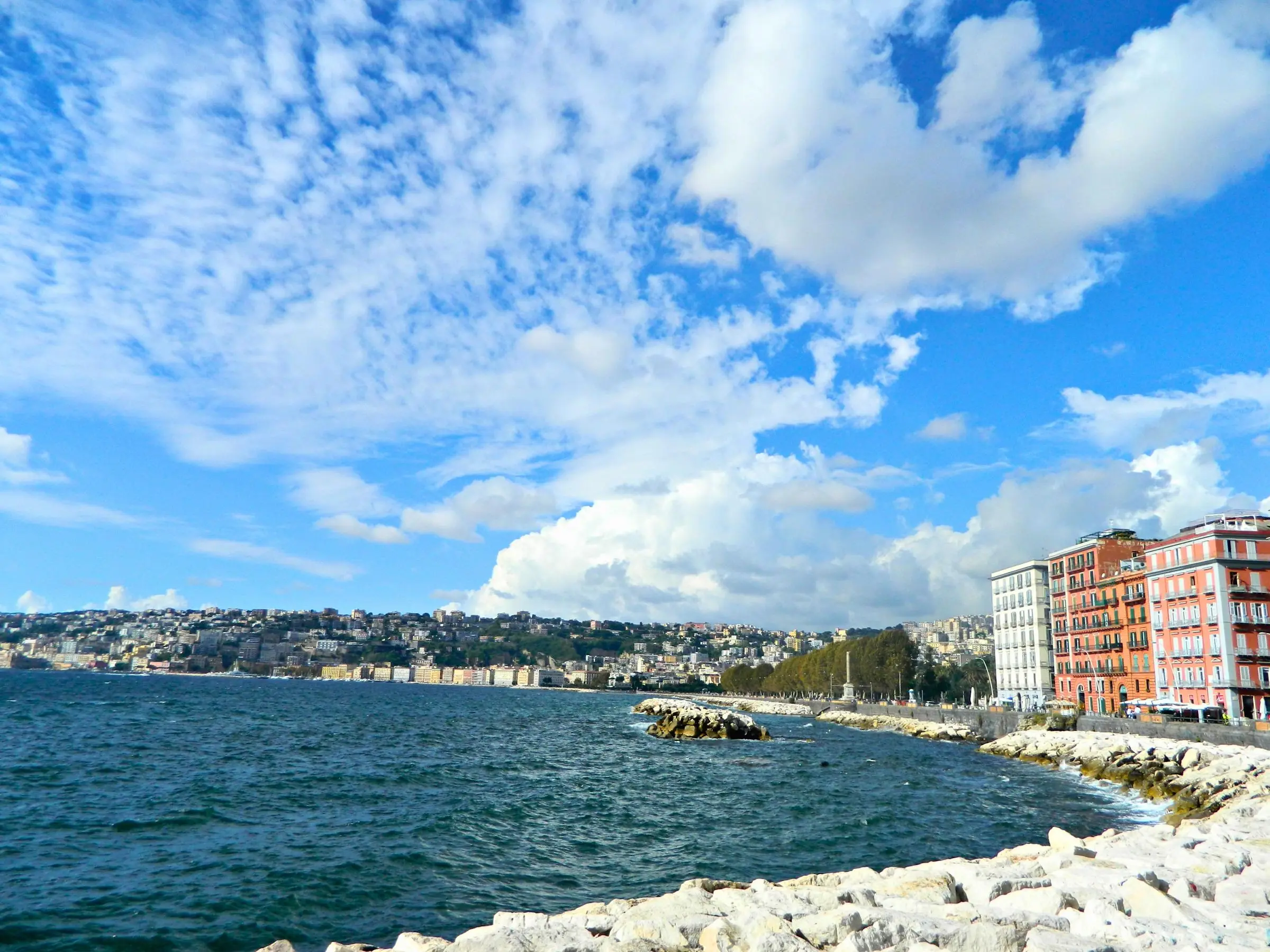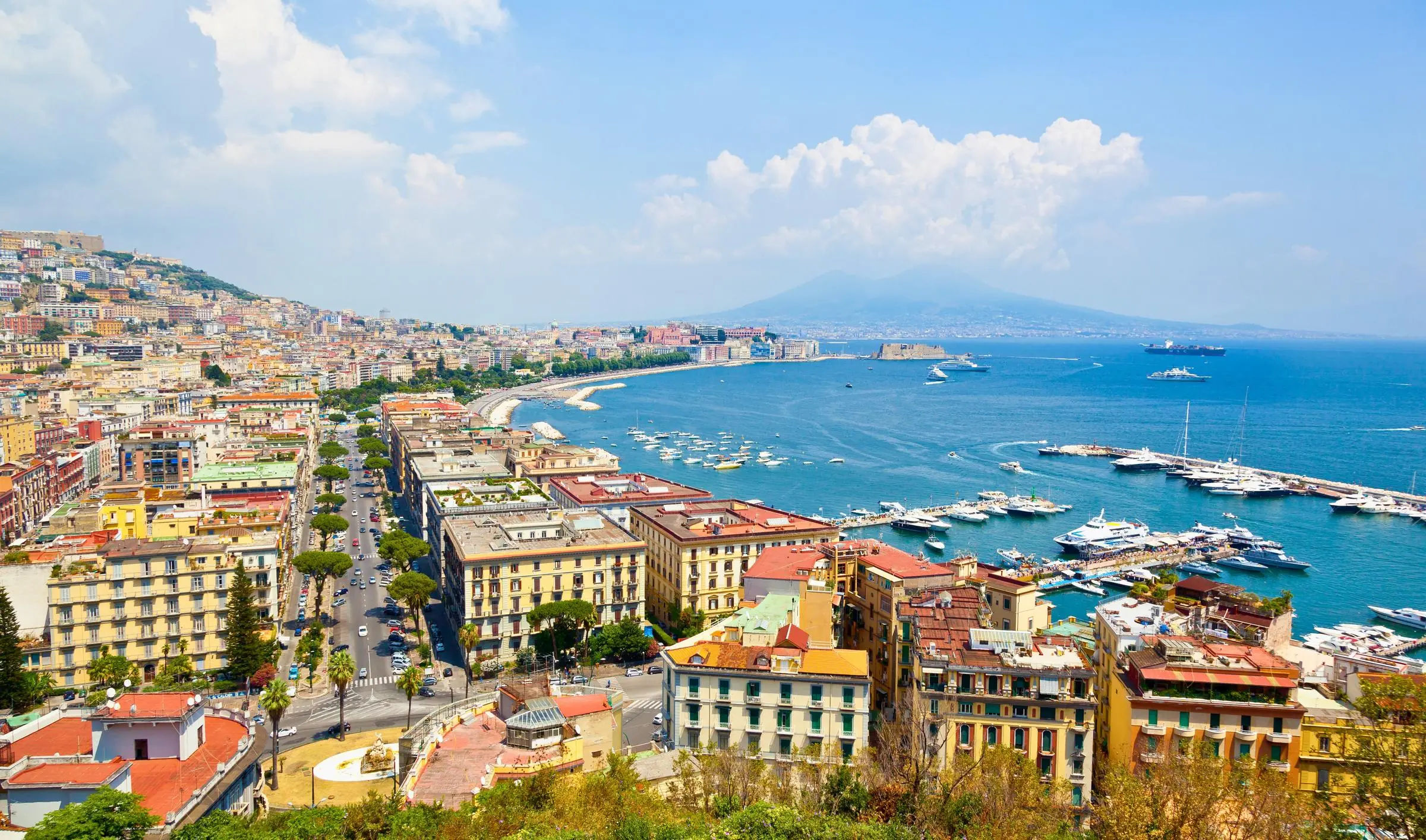
The ancient Greeks named this promontory Pausilypon, which translates to “respite from worry.” Two thousand years later, the name still fits. Rising sharply from the western edge of the Bay of Naples, Posillipo Hill is the city’s wealthiest and most exclusive residential district.
While the Centro Storico is defined by narrow alleys and chaotic energy, Posillipo is defined by space, sea breezes, and pine trees. Tree-lined avenues wind past gated villas, diplomatic residences, and high-end seafood restaurants clinging to the cliffs. Because the hill faces south and west, it is universally acknowledged by locals as the best place in the city to watch the sunset.
Visiting Posillipo requires a bit more effort than walking the downtown grid. The roads are steep, public transit is limited to a few key bus lines, and the best coastal spots require descending long flights of stairs. This guide breaks down the logistics of visiting the hill’s five major highlights so you can plan a seamless afternoon away from the crowds.
Who Should Visit Posillipo?
Posillipo is a large, sprawling district. Depending on your travel style, you will want to approach it differently.
- For the Time-Poor: If you only have a few hours, skip the deep archaeological dives. Take a taxi or the Hop-on Hop-off bus up to Parco Virgiliano an hour before sunset, enjoy the views, and then head down to the Marechiaro waterfront for a seafood dinner.
- For Budget Travelers: Walking the viewpoints is entirely free. The marine park at Gaiola is also free to enter, though you must secure a reservation in advance. Taking the local Bus 140 costs less than two euros and provides a scenic, albeit bumpy, ride along the coast.
- For Families: Parco Virgiliano is excellent for children. It features wide, paved paths, playgrounds, and plenty of grass. However, think twice before bringing a stroller down to Gaiola or Marechiaro; the steep, uneven stairs make it a grueling physical workout.
5 Highlights of the Posillipo Hill
1: Parco Virgiliano
Located at the very tip of the Posillipo promontory, Parco Virgiliano is a terraced public park built in the 1930s. It is laid out in a series of concentric rings that climb to a central plateau.
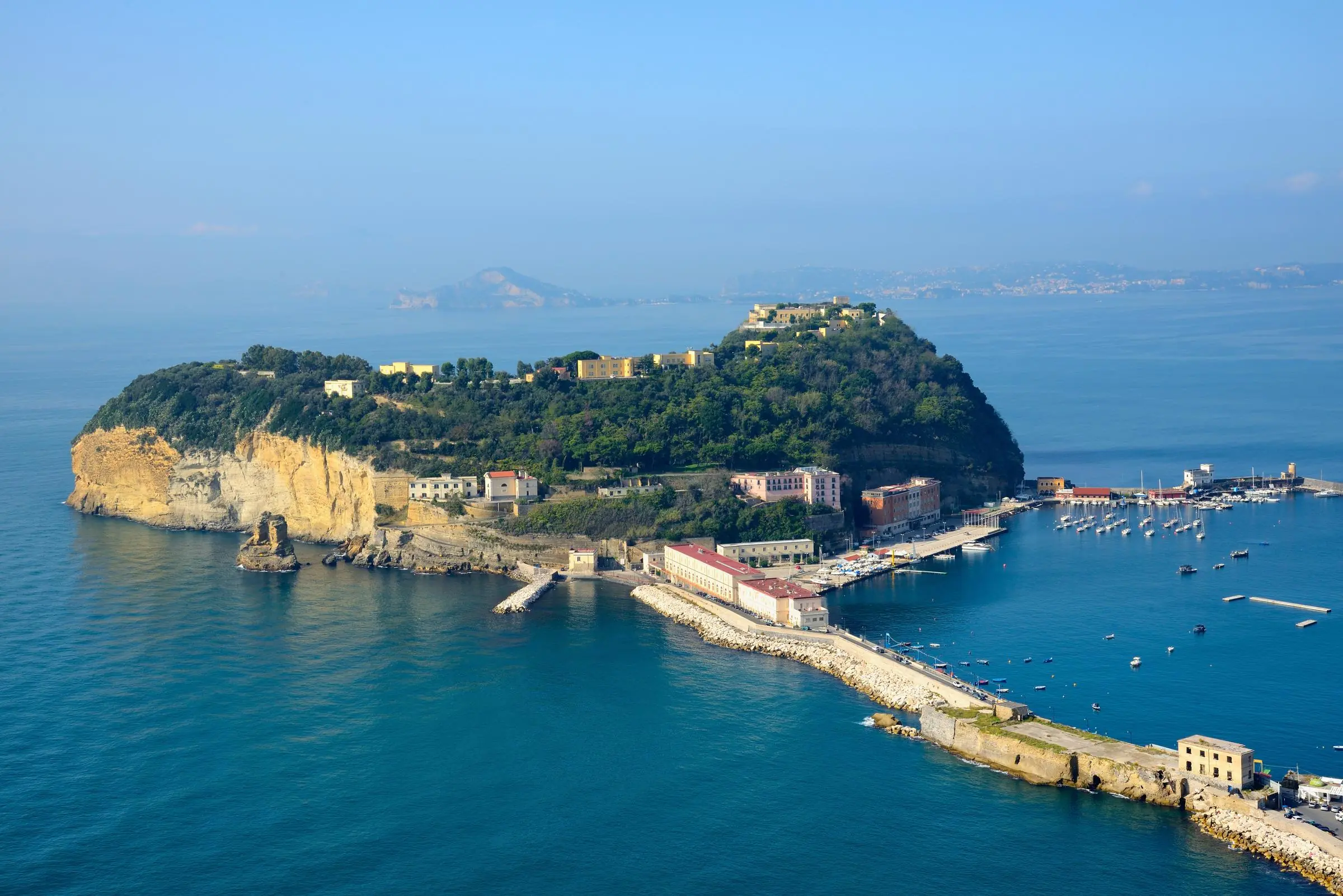
Because the park sits on the absolute edge of the landmass, it offers 360-degree views. From the eastern terraces, you look back over the Bay of Naples toward Mount Vesuvius and the Sorrento Peninsula. From the western and southern terraces, you look out over the Phlegraean Fields, the island of Nisida (connected to the mainland by a bridge but closed to the public), and the islands of Procida, Ischia, and Capri.
Local Tip: The park is highly exposed to the elements. Even on a warm summer day, the sea breeze at the top can be chilly. Bring a light jacket if you plan to stay for sunset. The park closes at sunset, and the guards will actively herd people toward the gates as the sun goes down, so arrive at least an hour prior.
2: The Submerged Ruins of Gaiola
At the base of the hill lies the Parco Sommerso di Gaiola (Submerged Park of Gaiola). This marine protected area preserves the flooded ruins of ancient Roman villas that have slipped into the sea due to bradyseism (volcanic ground movement).
The focal point is the Isola della Gaiola, two tiny islets connected by a narrow, picturesque bridge. Local legend dictates that the island is cursed, as a long string of former owners—from wealthy industrialists to heirs of the Fiat empire—suffered financial ruin, premature death, or family tragedy after purchasing it. Today, it belongs to the Campania region.
To protect the fragile ecosystem, access to the Gaiola beach and marine park is strictly capped. You cannot just show up. You must book a free entry slot in advance through the official Gaiola Marine Park website. Slots open weekly and vanish within hours during the summer.
If you cannot secure a beach slot, the best way to see the ruins is from the water. You can book a kayak tour that launches from nearby Baia delle Rocce Verdi or join a snorkeling boat tour that skirts the edge of the protected zone.
3: Seiano Cave & Pausilypon
Just up the road from the Gaiola descent is the entrance to one of Naples’ most impressive feats of ancient engineering: the Grotta di Seiano (Seiano Cave).
This is not a natural cave, but a 770-meter-long tunnel carved straight through the tufa rock of Posillipo Hill by the Romans in the 1st century BC. It was commissioned by Marcus Vipsanius Agrippa to connect the wealthy villas of Posillipo with the ports of Puteoli (modern-day Pozzuoli) and Baiae.
Walking through the dimly lit, echoing tunnel takes about 15 minutes. At the end, you emerge into the sunlight at the Pausilypon Archaeological Park. Here, you can explore the sprawling ruins of the imperial villa of Publius Vedius Pollio, including a 2,000-seat Roman theater built directly into the cliffside overlooking the sea.
Entry Logistics: The entrance to the Seiano Cave is located at Discesa Coroglio 36. You generally cannot walk through the tunnel unescorted; you must join one of the scheduled guided tours run by the park’s archaeological staff. Check their official site for current tour times.
4: The Exclusive Seaside Villas
As you travel along Via Posillipo, you will catch glimpses of massive, historic villas clinging to the cliffs. Most are heavily gated and guarded, but their architecture defines the neighborhood’s character.
- Palazzo Donn’Anna: Located at the beginning of Posillipo, this massive, unfinished 17th-century palace rises directly out of the water. It is a private residential building, but you can view its dramatic, decaying arches from the adjacent Bagno Elena beach club or from the water.
- Villa Rosebery: This neoclassical estate is one of the three official residences of the President of the Italian Republic. It is closed to the public except for a few specific weekends a year (usually during the FAI Spring Days).
- Villa Volpicelli: Famous among Italians as the exterior filming location for the long-running soap opera Un Posto al Sole, this fortress-like villa features a distinctive cylindrical tower.
Because high walls block the view from the street, the only way to truly appreciate these estates is from the sea. Booking a sunset boat aperitif or a coastline boat tour offers unobstructed views of the architecture and the private coves below.
5: Elite Waterfront Restaurants at Marechiaro
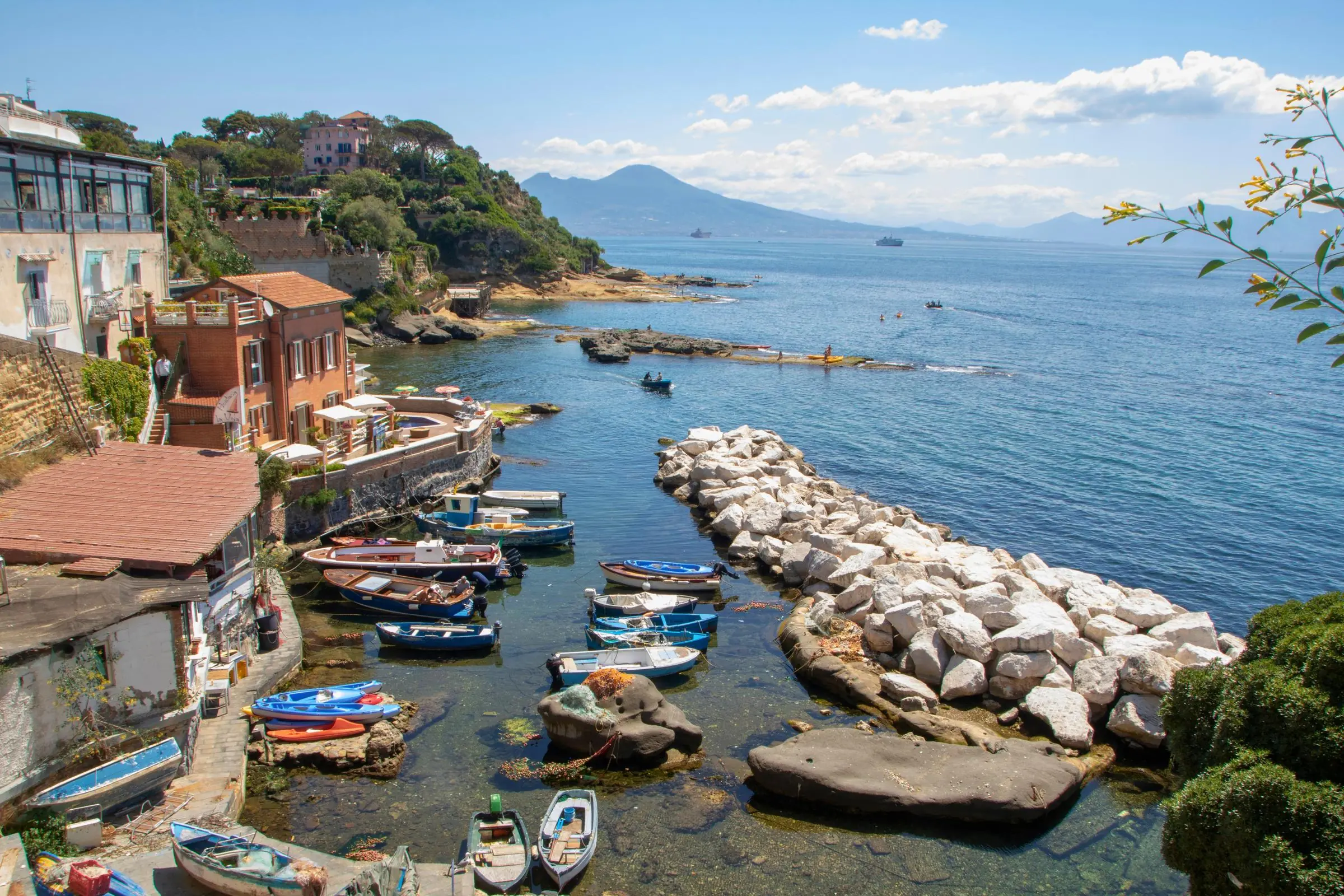
Marechiaro is a small fishing village tucked into a cove on the Posillipo coast. In the 1960s, it became the epicenter of Naples’ La Dolce Vita, attracting Hollywood stars and European royalty.
The village is famous for the Fenestrella di Marechiaro (the little window of Marechiaro), which inspired a famous Neapolitan song. Today, the cove is home to a cluster of high-end seafood restaurants, most notably Trattoria da Cicciotto and Al Faretto.
Dining here is an event. You are paying for the atmosphere—tables set on wooden platforms directly over the water, the sound of waves, and views of Vesuvius.
Logistics for Marechiaro: To reach the restaurants, you must walk down the steep Discesa Marechiaro from the main road (Via Posillipo). Taxis can navigate the narrow road down to the village square, but traffic bottlenecks are severe on summer evenings. If you drive, parking is handled by aggressive valets who will charge a premium.
Logistics: How to Get to Posillipo
Posillipo’s geography makes it slightly isolated from the rest of Naples. There is no Metro station on the hill.
The Lifeline: Bus 140
The most practical way to travel the length of the neighborhood is Bus 140.
- The Route: It starts near Piazza Vittoria (near the Lungomare), travels through Mergellina, and then grinds its way up the winding Via Posillipo, terminating near the top of the hill at Capo Posillipo.
- The Reality: The 140 is a standard city bus. It is cheap, but it gets caught in the same traffic as everyone else. On a Sunday afternoon in July, the road becomes a parking lot as locals head to the beach clubs.
Funicolare di Mergellina
This funicular railway connects the Mergellina waterfront to the upper residential streets of Posillipo (terminating at Via Manzoni). It is a fast way to get up the hill, but Via Manzoni is still a long, steep walk from coastal highlights like Marechiaro or Gaiola.
Taxis
Taxis are the most convenient way to reach Parco Virgiliano or Marechiaro, especially if you are traveling with a group or returning late at night. Ensure the driver uses the meter, or agree on a fixed fare before getting in.
Keep Planning: If you enjoy the upscale atmosphere of Posillipo, consider spending time in the neighboring district of Chiaia, known for its high-end shopping and elegant wine bars.
Where to Stay Near Posillipo
Staying in Posillipo means trading downtown convenience for peace, quiet, and spectacular views. It is ideal for returning visitors, couples seeking a romantic retreat, or travelers with a rental car (provided the hotel offers parking). If it is your first time in Naples and you want to see the major museums, staying here will result in a lot of daily transit time.
Frequently Asked Questions
Is Posillipo safe for tourists?
Yes, Posillipo is one of the safest and wealthiest neighborhoods in Naples. Violent crime is exceptionally rare. However, standard urban precautions apply—do not leave valuables visible in parked cars, especially near the beach access points.
How do I book access to Gaiola beach?
Access must be booked through the official Parco Sommerso di Gaiola website. Slots are released weekly and are completely free. You must bring a photo ID matching the name on your reservation to enter.
Can you walk from Mergellina to Posillipo?
You can walk up Via Posillipo from Mergellina, and the views are beautiful, but it is a long, continuous uphill climb along a road with narrow (and sometimes missing) sidewalks. It is better to take Bus 140 up the hill and walk back down.
Are the Posillipo villas open to the public?
Generally, no. Palazzo Donn’Anna and Villa Volpicelli are private residences. Villa Rosebery is a presidential estate and only opens its gates to the public a few days a year, typically during the FAI (Fondo Ambiente Italiano) Spring Days.
What is the best time to visit Parco Virgiliano?
Late afternoon, about 90 minutes before sunset. This gives you time to walk the terraces in the daylight, find a spot facing west toward Procida and Ischia, and watch the sun drop into the sea.
Are there public beaches in Posillipo?
Yes, but they are small and rocky. The free beach at Gaiola requires booking. There is a small free beach area near Palazzo Donn’Anna (Spiaggia delle Monache), but it fills up by 9:00 AM in the summer. Most locals pay to enter private lidi (beach clubs) like Bagno Elena or Rocce Verdi.