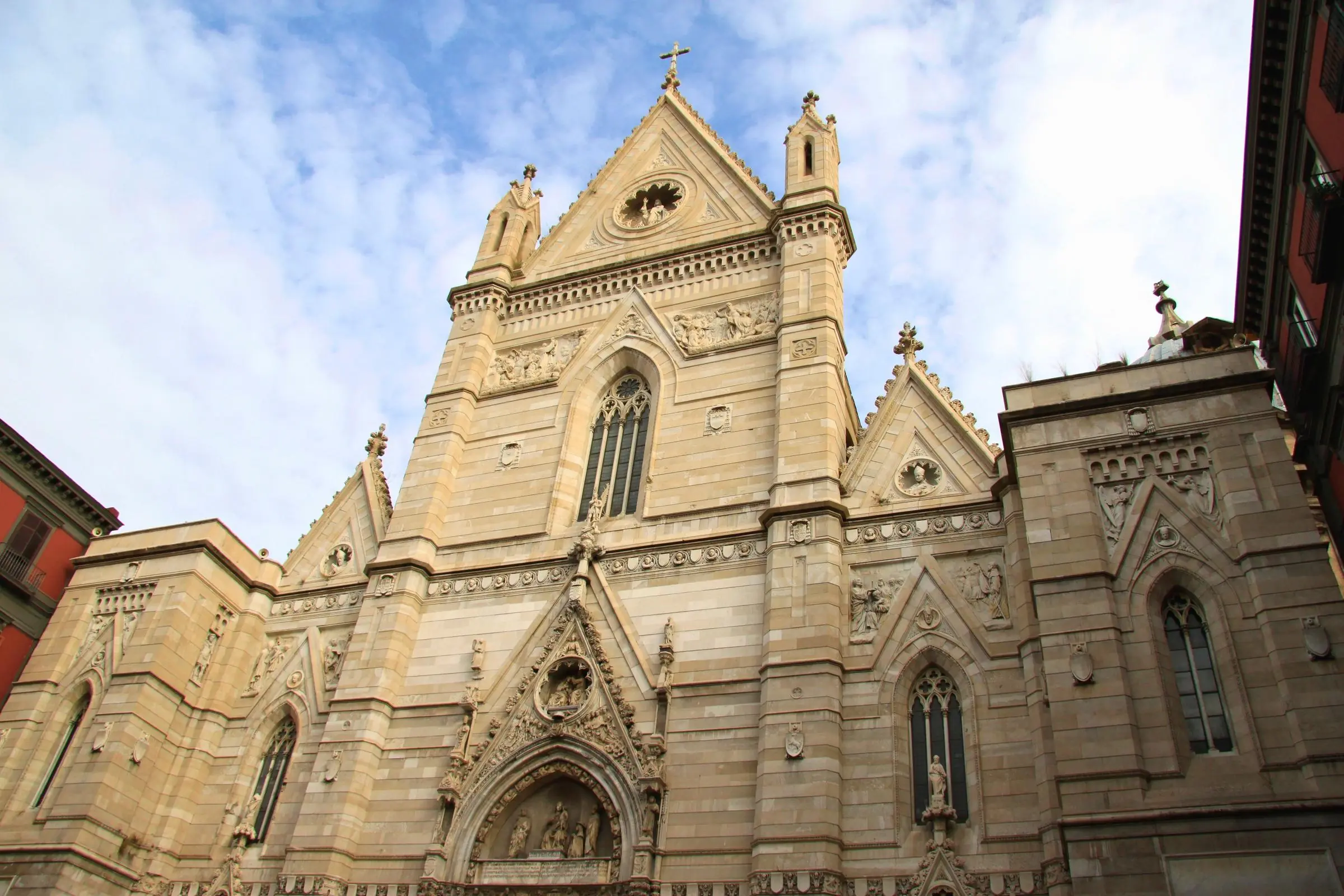
The Duomo di Napoli is not just a building; it is the emotional and spiritual barometer of the city. Officially named the Cathedral of the Assumption of Mary, locals simply know it as the home of San Gennaro (Saint Januarius), the patron saint of Naples.
Built over the ruins of two earlier Christian basilicas (and a Roman temple to Apollo before that), the cathedral you see today is a layered timeline of Neapolitan history. Its late 19th-century Neo-Gothic facade, designed by Enrico Alvino, hides a 13th-century Angevin Gothic core, which in turn houses Renaissance crypts and lavish Baroque chapels.
Whether you are here to admire the art, descend into the paleochristian baptistery, or try to understand the city’s deep devotion to a vial of coagulated blood, this guide breaks down exactly how to navigate the complex.
How to Plan Your Visit
The Cathedral complex is divided into free areas (the main nave, the Royal Chapel, and the crypt) and paid areas (the Baptistery and the adjacent Museum of the Treasure of San Gennaro).
Like many churches in southern Italy, the main Cathedral strictly closes for a few hours in the middle of the day (typically 1:30 PM to 2:30 PM). Plan your visit for the morning or late afternoon.
Audience Advice
- Time-Poor: If you only have 30 minutes, stick to the main nave and the Royal Chapel of the Treasure of San Gennaro (located halfway down the right aisle). Both are free to enter and contain the most visually striking elements.
- Budget Travelers: You can see the vast majority of the Cathedral’s architecture, including the crypt and the Royal Chapel, without spending a euro.
- Families: Older children are usually fascinated by the story of the “miracle blood” and the descent into the crypt. If you have a stroller, note that while the main nave is accessible, the crypt and baptistery require navigating stairs.
5 Highlights of the Cathedral
1. The Royal Chapel of the Treasure of San Gennaro
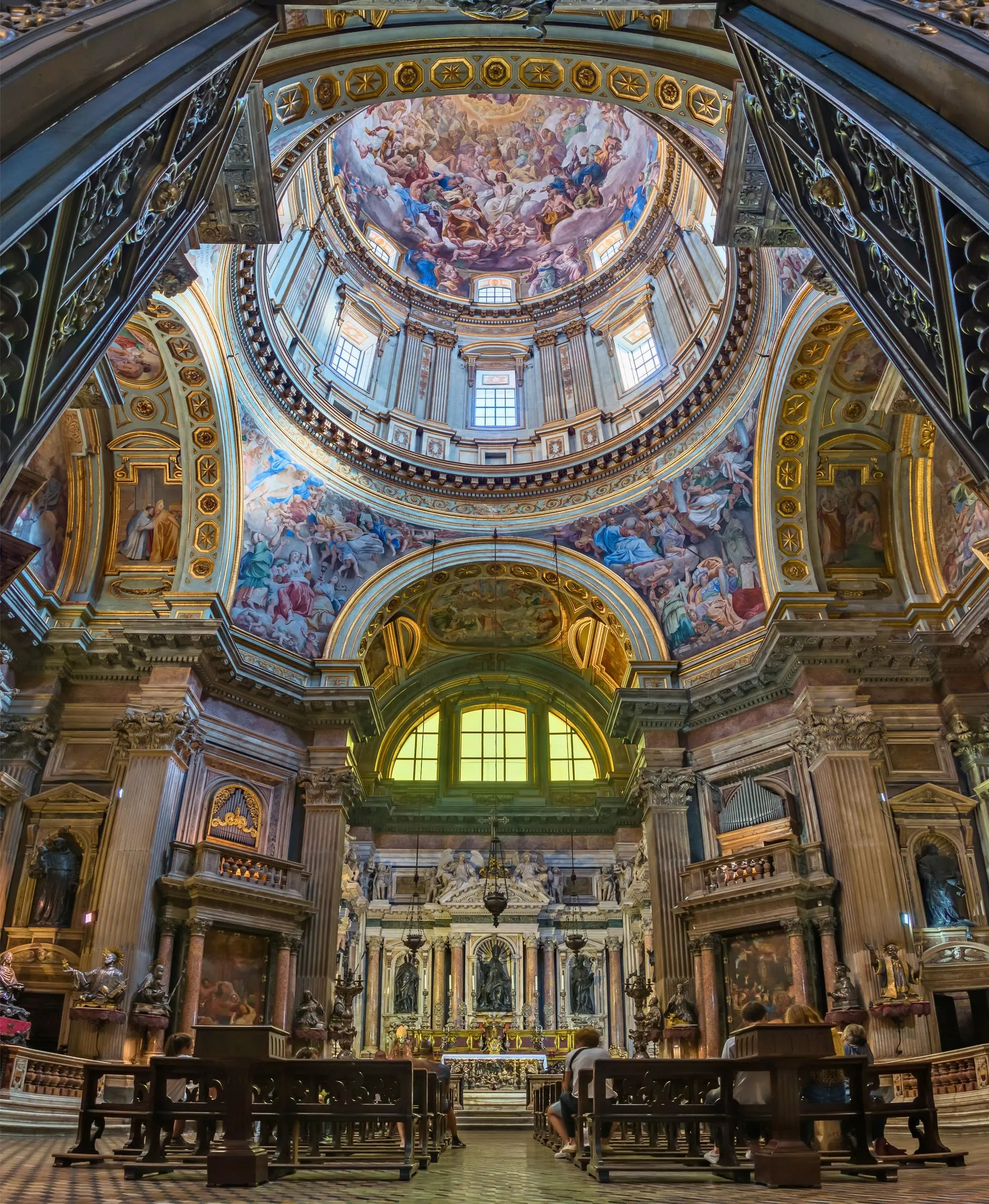
Located off the right aisle, this chapel is a masterpiece of Neapolitan Baroque art. Interestingly, it does not belong to the Catholic Church; it belongs to the people of Naples, managed by a secular committee called the Deputation.
The chapel was built in the 17th century to fulfill a vow made by the city during a devastating plague. Behind the massive brass gates designed by Cosimo Fanzago, you will find an explosion of marble, silver, and frescoes. The altar houses the silver bust of San Gennaro, which contains the saint’s skull.
2. The Vials of the Saint’s Blood & The Miracle
The most famous artifacts in the Cathedral are two small, sealed glass ampoules containing the coagulated blood of San Gennaro, martyred in 305 AD.
Three times a year—the first Saturday in May, September 19 (his feast day), and December 16—the archbishop brings the vials out to the public. The city waits with bated breath for the blood to liquefy. If it melts, it is a sign that the saint is protecting the city. If it remains solid, tradition dictates that disaster (earthquakes, plagues, or war) is imminent. The scientific explanation involves thixotropy (a substance that becomes fluid when shaken), but for Neapolitans, it remains a deeply respected matter of faith.
3. The Baptistery of San Giovanni in Fonte
Accessed through the older Basilica of Santa Restituta (which is attached to the left aisle of the Cathedral), this is the oldest baptistery in Western Europe, dating back to the 4th century—predating even the Lateran Baptistery in Rome.
For a small entry fee, you can walk into this paleochristian space. Look up at the vaulted ceiling to see the surviving fragments of 4th-century mosaics depicting the night sky, birds, and early Christian symbols.
4. The Crypt (Succorpo di San Gennaro)
Directly beneath the main altar lies the Succorpo, a Renaissance crypt designed by Tommaso Malvito in the early 1500s. Commissioned by Cardinal Oliviero Carafa, this elegant, marble-clad space features Ionic columns and a beautifully carved statue of the kneeling Cardinal. The crypt holds the bones of San Gennaro (excluding his skull, which is kept in the Royal Chapel upstairs).
5. The Assumption Frescoes
While the Cathedral’s architecture is predominantly Gothic, its ceiling tells a different story. The nave features a stunning, gilded coffered ceiling from the 17th century, housing paintings that depict episodes from the life of Christ and the Virgin Mary. In the Royal Chapel, look up to see the spectacular dome fresco of Paradise by Giovanni Lanfranco, and the surrounding copper panels painted by Domenichino.
Tickets and Tours
Entry to the main Cathedral, the Royal Chapel, and the Crypt is free. However, to fully understand the wealth and history of San Gennaro, you should visit the adjacent Museum of the Treasure of San Gennaro and the Baptistery.
The Treasure Museum holds one of the richest collections of jewelry and silver in the world—rivaling the Crown Jewels of England—all donated by kings, popes, and commoners over centuries.
Treasure of San Gennaro + Audio Guide
- Skip-the-line entry to the Treasure Museum
- Includes a comprehensive digital audio guide
- Access to the world’s richest collection of silver and jewels
San Gennaro + Filangieri Museum
- Entry to the Treasure of San Gennaro
- Entry to the nearby Filangieri Civic Museum
- Great for art and history enthusiasts
If you want to understand the Cathedral within the broader context of the city’s history, consider booking a guided walking tour of the Centro Storico that includes the Duomo.
Logistics: Getting There & Around
Address: Via Duomo, 147, 80138 Napoli NA, Italy.
By Metro: The easiest way to reach the Cathedral is via Metro Line 1. Get off at the Duomo station. From there, it is a straight, slightly uphill 10-minute walk north along Via Duomo. Alternatively, you can get off at Museo or Cavour stations and walk down through the historic center.
Dress Code: This is an active place of worship. Guards at the door will turn you away if your shoulders or knees are exposed. Bring a scarf or shawl to wrap around your shoulders if you are visiting during the hot summer months.
A Morning on Via Duomo
⏱️ Total: 2 hEnter the Cathedral
Arrive early to beat the tour groups. Walk the main nave, head down into the Crypt, and admire the Gothic arches.
The Royal Chapel & Baptistery
Spend time in the Royal Chapel of San Gennaro, then pay the small fee to enter the 4th-century Baptistery of San Giovanni in Fonte.
Museum of the Treasure
Exit the main church and enter the adjacent Museum of the Treasure of San Gennaro to see the famous Mitre (adorned with 3,964 precious stones).
Keep Planning: If you are exploring the historic center, the Cathedral pairs perfectly with a visit to the nearby San Lorenzo Maggiore or the famous Sansevero Chapel.
Local Tips for Visiting
- Avoid September 19th (Unless You Want Chaos): The Feast of San Gennaro is a massive, crowded, emotional event. If you want to quietly admire the architecture, do not go on this day. If you want to experience raw Neapolitan culture, get there by 7:00 AM to secure a standing spot.
- Look for the Blood Phial Tracker: Outside the Royal Chapel, there is often a small sign or indicator showing whether the blood is currently in a liquid or solid state.
- Coffee Break: After your visit, walk a few blocks down to Via dei Tribunali or Spaccanapoli. Grab an espresso at Bar Nilo, which features its own quirky “shrine” to Diego Maradona.
- Combine with the Artecard: If you are using the Campania Artecard, check the current booklet, as the Treasure Museum is frequently included as a discounted or free option.
Where to Stay Nearby
Staying near Via Duomo puts you right on the edge of the historic center, making it easy to walk to major sights while remaining close to transit links. The area is bustling during the day but quiets down significantly at night compared to the chaotic Quartieri Spagnoli.
FAQ
Is entry to the Naples Cathedral free?
Yes, entry to the main Cathedral, the Crypt of San Gennaro, and the Royal Chapel of the Treasure of San Gennaro is completely free. You only need to buy tickets if you wish to enter the Museum of the Treasure of San Gennaro or the Baptistery of San Giovanni in Fonte.
When does the blood of San Gennaro liquefy?
The miracle is expected to occur three times a year: the Saturday before the first Sunday in May, September 19th (the Saint’s feast day), and December 16th. The vials are displayed to the public on these days.
What is the dress code for the Duomo?
As an active Catholic church, modest dress is required. Shoulders and knees must be covered for both men and women. Hats should be removed upon entering.
How long does it take to visit the Cathedral?
If you are only walking through the free sections (the nave, chapel, and crypt), 30 to 45 minutes is sufficient. If you plan to visit the Treasure Museum and the Baptistery, allow for 1.5 to 2 hours.
Is the Cathedral wheelchair accessible?
The main nave and the Royal Chapel are accessible to wheelchair users. However, the Crypt (Succorpo) and the ancient Baptistery require navigating stairs and are not accessible.
Can I take photos inside?
Yes, photography without flash is permitted in the main Cathedral and the Royal Chapel. However, photography is generally restricted inside the Museum of the Treasure of San Gennaro.
For official mass times and religious event schedules, consult the Archdiocese of Naples official website. For more on the city’s ancient roots, read our guide to Naples Underground.