Right in the middle of the chaotic Centro Storico, next to the Basilica of San Paolo Maggiore in Piazza San Gaetano, sits an unassuming doorway with a blue sign reading Napoli Sotterranea.
This is the entrance to the official Naples Underground.
Beneath the scooter-filled streets lies a 40-meter-deep labyrinth that spans 2,400 years of urban history. What started as a Greek quarry became a Roman aqueduct, a medieval dumping ground, and eventually, a World War II air-raid shelter that saved thousands of lives. Today, it is one of the city’s most popular historical sites.
Because you can only visit on a guided tour, planning ahead is necessary. The line for walk-up tickets often snakes down Via dei Tribunali, baking in the midday sun. Here is exactly what to expect down in the dark, how to bypass the ticket queues, and how to decide if the narrow tunnels are right for you.
Naples Underground operates strictly by guided tour, and groups are capped. If you show up without a ticket between April and October, you will likely wait over an hour just to be assigned a time slot later in the day.
Is Naples Underground Right For You?
Descending 136 steps into a subterranean cave system isn’t for everyone. Before you book your tickets, consider the physical realities of the space.
Who should visit (and who should skip it)
Highly Recommended
- WWII Historians: The remnants of life in the air-raid shelters are preserved exactly as they were left in 1943.
- Families with older kids: The candle-lit tunnel section feels like an Indiana Jones adventure.
- Summer visitors: The underground stays a constant 16°C (61°F), offering a massive relief from the July heat.
Skip It or Modify
- Severe Claustrophobia: You are 40 meters underground. While the main caverns are huge, the psychological weight of the rock above bothers some.
- Mobility Issues: There are 136 steep, uneven stairs to get down, and 136 to get back up. There is no elevator.
- Toddlers in strollers: Strollers cannot be taken down the stairs or through the narrow passages.
The Claustrophobia Test: The tour includes a specific section through a pitch-black, shoulder-width tunnel lit only by faux candles. This section is 100% optional. The guide will stop before entering and allow anyone who wishes to skip it to wait in a large, well-lit cavern. If you are on the fence, skip it—it is a tight squeeze and you cannot easily turn around once you start.
5 Highlights of the Underground Tour
The standard Naples Underground guided tour lasts about 90 minutes to two hours. It covers two distinct areas: the main subterranean aqueduct system, and a separate Roman Theater located a short walk down the street.
Here is what you will see.
1. The Greco-Roman Aqueducts
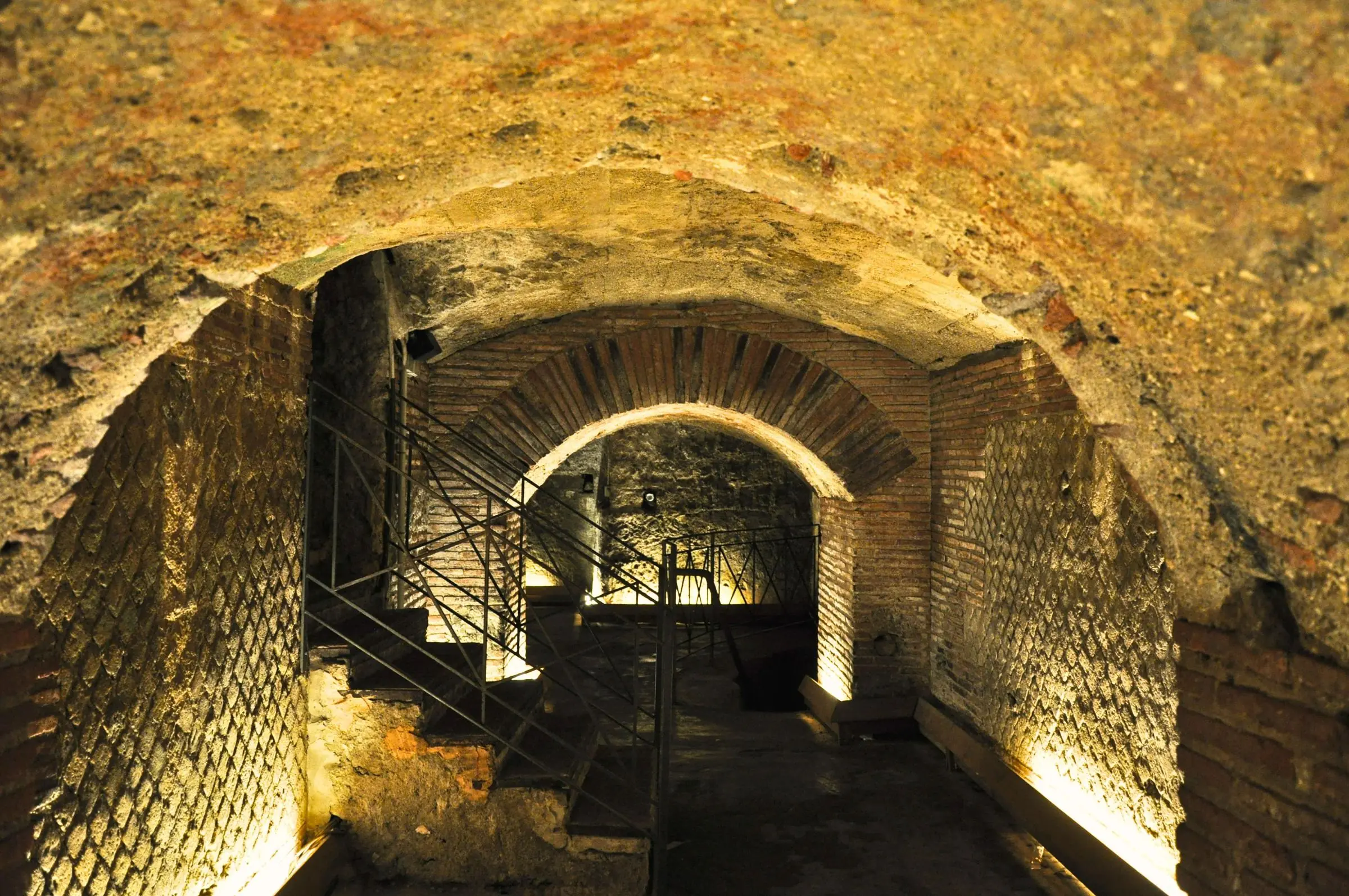
The tour begins with a descent down 136 steps. You will emerge into massive, vaulted caverns carved from yellow tuff stone. In the 4th century BC, the Greeks extracted this stone to build the city walls and temples of Neapolis above.
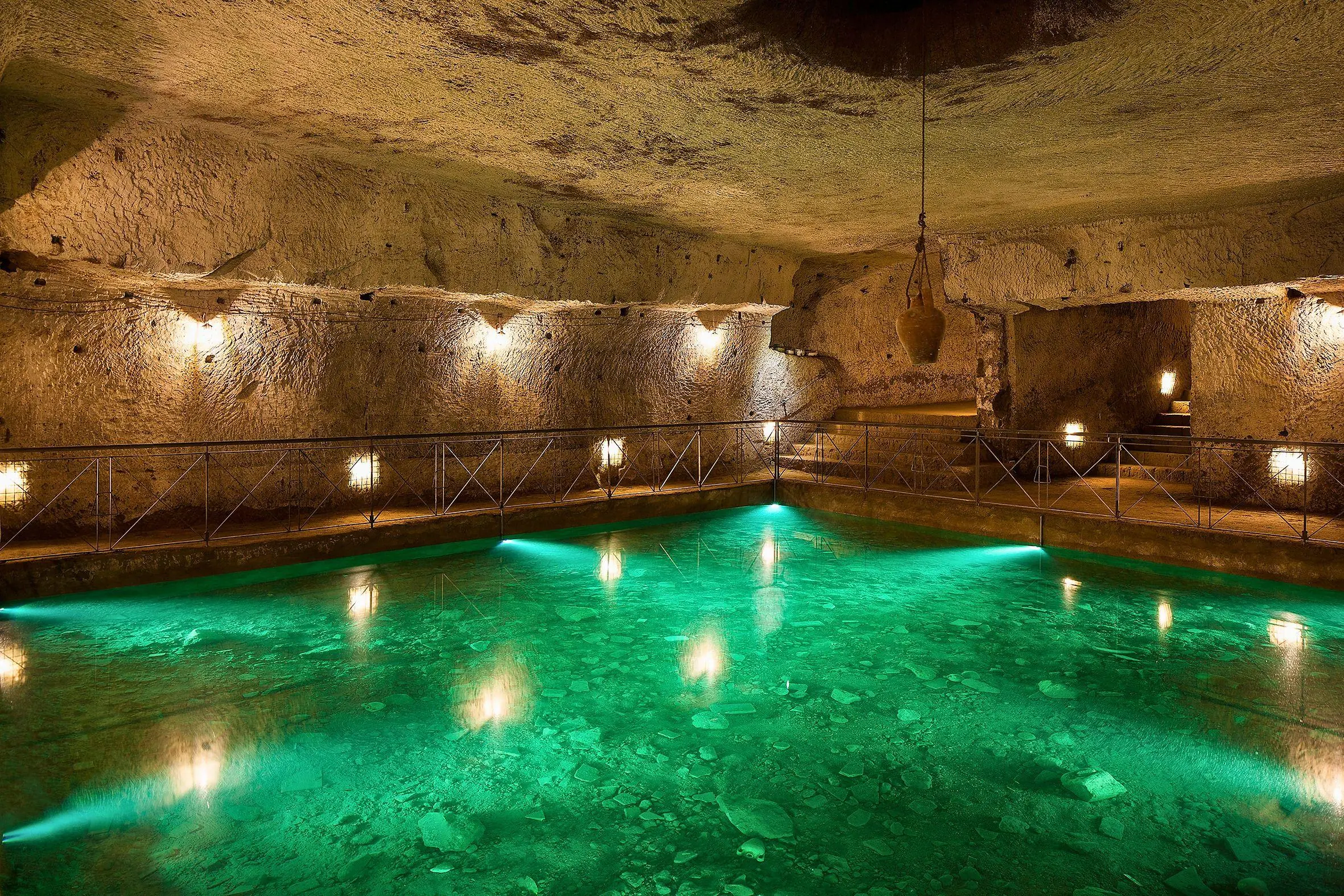
Centuries later, the Romans repurposed these empty quarries into a massive aqueduct system. They coated the porous tuff walls with cocciopesto (a waterproof plaster) and flooded the chambers, creating a water supply that served the city until a cholera outbreak forced its closure in 1885. You can still see the water lines on the walls and the vertical shafts where citizens used to drop buckets down from their courtyards.
2. WWII Air-Raid Shelters
When Allied bombing began in 1942, Naples was hit harder than almost any other Italian city. The government quickly reopened the dry aqueducts, installed rudimentary stairs, and wired them for electricity to serve as air-raid shelters.
As you walk through the caverns, you will see the heartbreaking remnants of the thousands of Neapolitans who lived down here for months at a time. Rusting children’s toys, abandoned beds, and graffiti sketching out caricatures of Mussolini and Hitler remain untouched on the walls. It is a stark, sobering look at civilian survival.
3. The Narrow Candle-Lit Tunnels
About halfway through the underground portion, the guide will hand out small electric candles (or ask you to use your phone flashlight). This is the entrance to the narrow tunnels.
These passages were dug by the pozzari (well-diggers) who maintained the aqueducts. They are incredibly narrow—in some places, you have to walk sideways—and completely unlit. The passage takes about 5 to 10 minutes to navigate and opens up into stunning, water-filled cisterns that look like underground lakes.
(Reminder: As mentioned above, you can wait in the main cavern if you do not want to squeeze through).
4. The Hypogeum Botanical Garden
In one of the damp, dimly lit caverns, you will suddenly find patches of bright green basil and rosemary growing under LED lamps. This is the Hypogeum Gardens project.
Because the underground environment is protected from acid rain, smog, and temperature fluctuations, researchers use these caverns to study how plants grow in extreme environments. It’s a surreal sight to see thriving Mediterranean herbs 40 meters below the sunless surface.
5. The Buried Roman Theater (Nero’s Dressing Room)
After you climb the 136 stairs back to the surface, the tour isn’t over. The guide will lead your group out of Piazza San Gaetano and down a typical Neapolitan alleyway, stopping at what looks like a normal basso (a ground-floor street apartment).
Inside, the guide will slide a bed aside to reveal a wooden trapdoor.
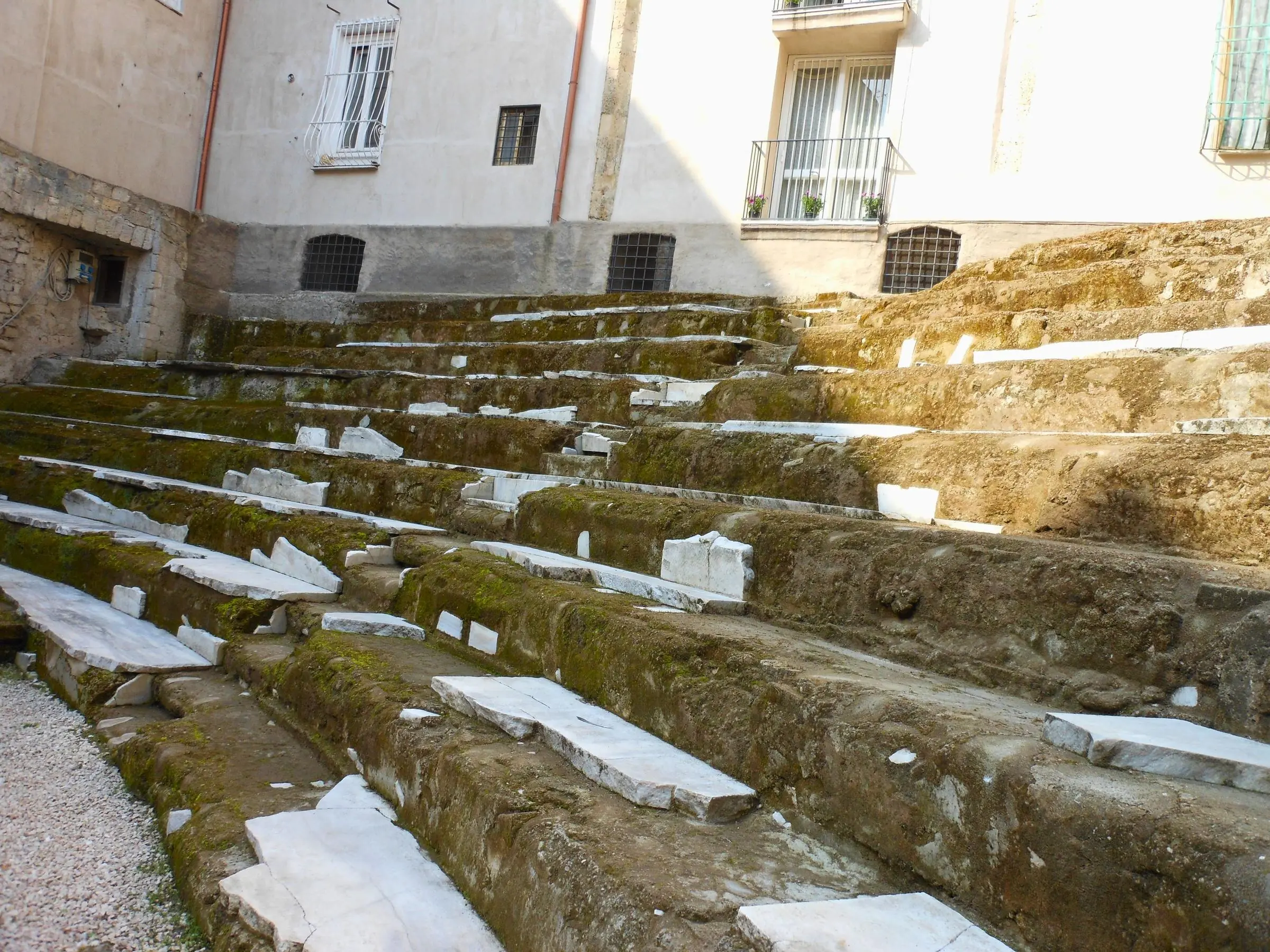
Down this hatch lies the ruins of the Roman Theater of Neapolis, where Emperor Nero famously performed in 64 AD. Over the centuries, the city simply built over the theater. Today, the ancient arches and brickwork are literally holding up the modern apartments above. You will walk through the theater’s corridors, which are wedged directly beneath the living rooms of current Neapolitan residents.
Ticket Options & Logistics
Because you cannot wander the tunnels alone, your ticket is tied to a specific guided tour time. Tours run frequently, but English tours fill up faster than Italian ones.
Naples Underground: Skip The Line + Tour
- Guaranteed entry time slot
- Official 90-minute guided tour (English or Italian)
- Includes the Roman Theater trapdoor access
- Bypasses the walk-up ticket queue
Naples: Museums & Underground City Card
- Includes Naples Underground entry
- Includes National Archaeological Museum (MANN)
- Includes Capodimonte Museum
- Best if you plan to visit all three sites in 48 hours
Tour Times and Languages
- English Tours: Generally depart every hour on the hour (e.g., 10:00 AM, 11:00 AM) from 10:00 AM to 6:00 PM. During peak summer months, they often add half-hour slots.
- Italian Tours: Depart every hour on the half-hour (e.g., 10:30 AM, 11:30 AM).
- Arrival: Even with a skip-the-line ticket, arrive 15 minutes before your scheduled time. The meeting point in Piazza San Gaetano is chaotic, and you need time to check in with the staff holding clipboards near the door.
Practical Tips for Your Visit
- Bring a light layer: The temperature underground is a constant 16°C (61°F) with high humidity. If you are visiting in August, the initial blast of cool air feels amazing, but you will be shivering by the end of the 90-minute tour. Bring a light sweater.
- Wear sensible shoes: The tuff stone floors are uneven, damp, and occasionally slippery. Leave the heels and slick-soled sandals at the hotel. Sneakers are highly recommended.
- Use the restroom beforehand: There are no toilets once you descend the 136 steps. Use the facilities at a cafe on Via dei Tribunali before joining the queue.
- Watch your head: If you are over 6 feet tall, you will need to duck frequently in the connecting corridors.
Keep Planning: If you are fascinated by subterranean history, Naples has several other underground sites. Read our guide comparing the Galleria Borbonica (a massive 19th-century military tunnel) and the Catacombs of San Gennaro (early Christian burial grounds).
How to Get to Piazza San Gaetano
The entrance to Napoli Sotterranea is located at Piazza San Gaetano, 68, right on Via dei Tribunali (the famous “Pizza Street”).
- By Metro: Take Metro Line 1 to Dante or Museo stations. From either, it is about a 10 to 12-minute walk into the historic center. Alternatively, take Metro Line 2 to Cavour.
- Walking: If you are already exploring the Centro Storico, just walk down Via dei Tribunali. You will find the square right next to the San Lorenzo Maggiore church.
- Landmark: Look for the statue of San Gaetano in the small square. The entrance is a small doorway on the left side of the square (if you are facing the San Paolo Maggiore church stairs).
Don’t get confused: There are multiple “underground” tours in Naples. If you want the famous Roman Theater trapdoor and the candle-lit tunnels, you must go to the Piazza San Gaetano entrance. Do not confuse this with the Neapolis Sotterrata (which is the excavated Roman market underneath the San Lorenzo Maggiore church right next door).
Where to Stay Nearby
Staying in the Centro Storico puts you within a five-minute walk of the Underground, the Sansevero Chapel, and the best pizzerias in the city. Use the map below to find accommodations near Piazza San Gaetano.
Frequently Asked Questions
How long does the Naples Underground tour take?
The official guided tour takes approximately 90 minutes to 2 hours. This includes the time spent in the main aqueduct/shelter system and the 20-minute visit to the Roman Theater down the street.
Is Naples Underground safe for people with claustrophobia?
It depends on the severity. You are 40 meters underground, but the main caverns are massive, vaulted spaces with high ceilings. However, the optional “candle-lit tunnel” section is extremely tight and pitch black. You can completely skip this narrow section and wait in a large, open cavern while the rest of the group goes through.
What is the difference between Napoli Sotterranea and Galleria Borbonica?
Napoli Sotterranea (Piazza San Gaetano) focuses on ancient Greek/Roman aqueducts and WWII civilian shelters, featuring narrow tunnels and a buried Roman theater. The Galleria Borbonica (Bourbon Tunnel) near the Royal Palace is a massive 19th-century military escape route filled with vintage cars and impounded motorcycles. Both are excellent, but Borbonica is much wider and better for severe claustrophobia.
Can I visit Naples Underground without a guide?
No. For safety and navigation reasons, you can only enter the underground system with an official guide. Tickets must be booked for a specific tour time.
Is the underground wheelchair or stroller accessible?
No. Access to the main underground requires descending and ascending 136 steep, uneven stairs. There is no elevator, making it inaccessible for wheelchairs, walkers, or strollers.
Is it cold down in the tunnels?
Yes, the temperature remains a constant 16°C (61°F) year-round, with high humidity (around 90%). Even if it is 35°C (95°F) outside in August, you will likely want a light sweater or jacket while underground.