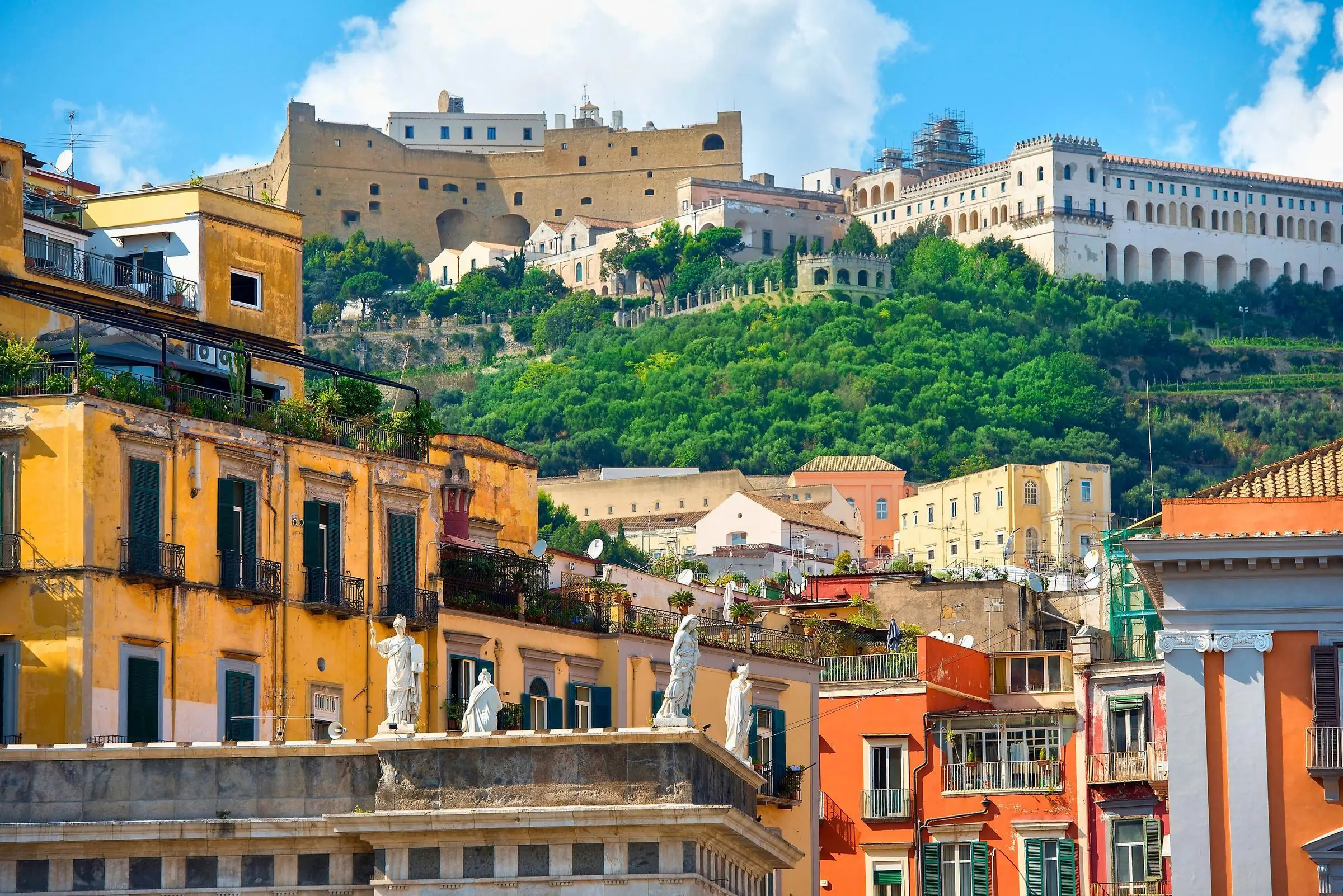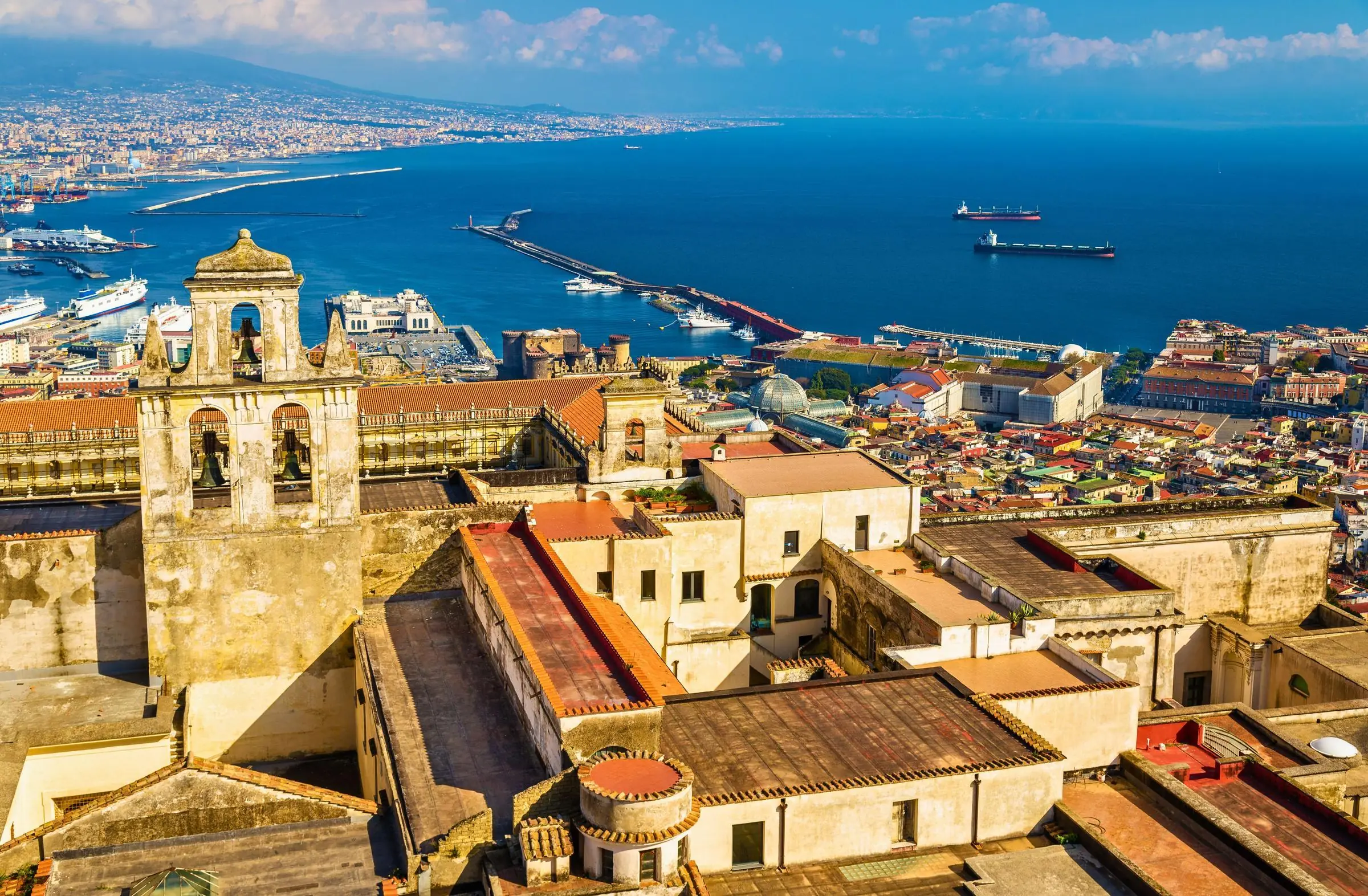
If you look up from almost anywhere in the historic center of Naples, you will see two massive structures dominating the Vomero hill. The fortress is Castel Sant’Elmo, and the sprawling, elegant complex sitting just below it is the Certosa di San Martino.
Founded in 1325 by Charles, Duke of Calabria, this former Carthusian monastery was heavily expanded and redecorated in the 17th century under the direction of architect Cosimo Fanzago. Today, it serves as the National Museum of San Martino. While many visitors flock straight to the National Archaeological Museum, those who make the trip up the hill to the Certosa are rewarded with one of the most complete examples of Neapolitan Baroque architecture, a world-famous Nativity scene, and views that stretch all the way to Mount Vesuvius.
Here is exactly how to plan your visit, what to look out for in the museum’s vast collections, and how to navigate the logistics of getting up the hill.
Is the Certosa di San Martino Right for You?
Because the complex is large and requires a slight detour from the Centro Storico, it helps to know how to approach it based on your travel style.
- For Art & Architecture Lovers: This is a non-negotiable stop. The church interior is a masterclass in commesso marmoreo (Florentine mosaic or marble inlay) and features frescoes by heavyweights like Jusepe de Ribera and Giovanni Lanfranco. If you want deep context, a guided tour with an art historian is highly recommended.
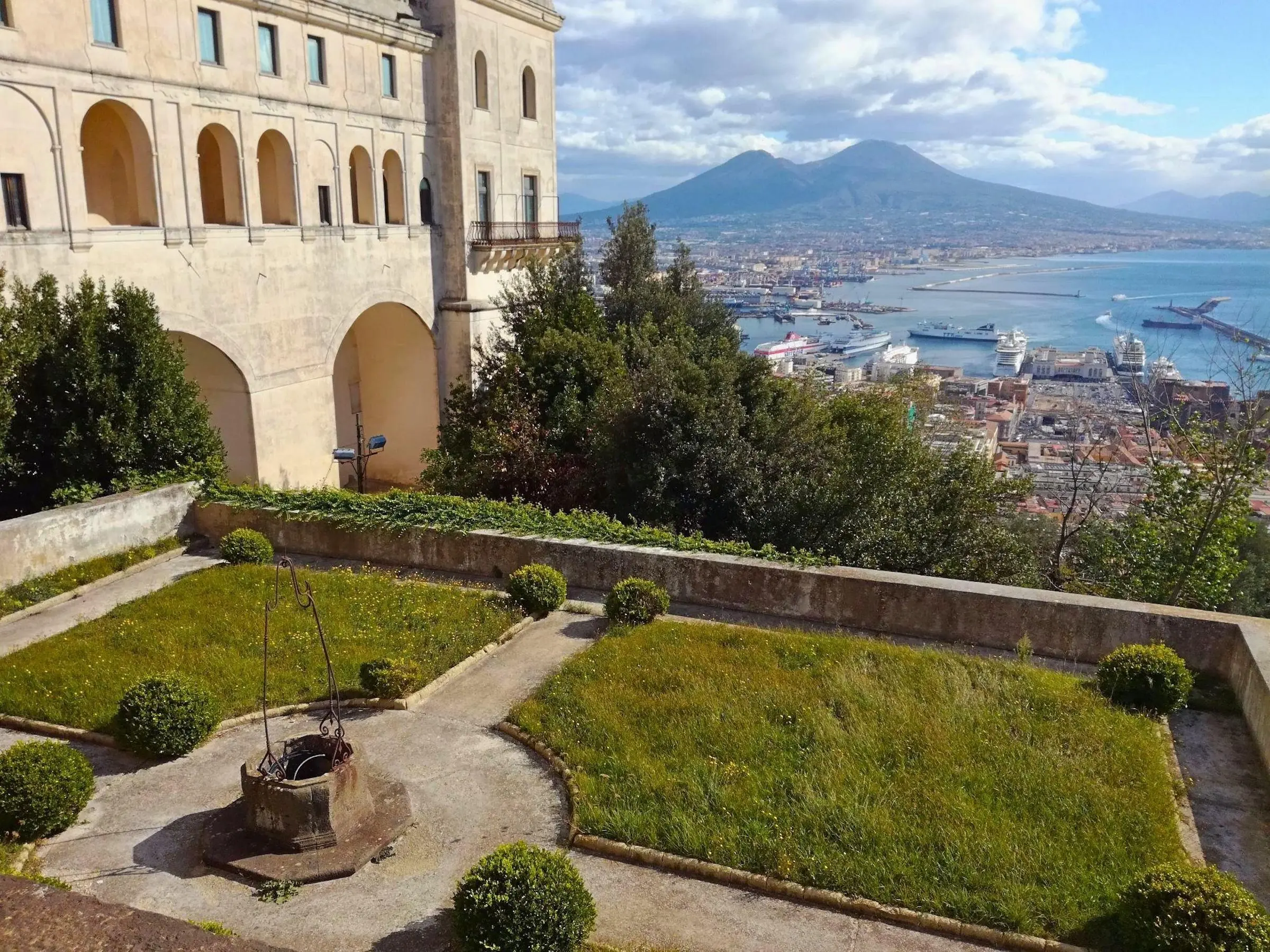
- For View Seekers: If you just want a great photo of the Bay of Naples, the terraced gardens here offer a slightly lower, but arguably more framed and romantic perspective than the roof of Castel Sant’Elmo next door.
- For Families: Kids might get bored in the painting galleries, but they generally love the Carriage Museum, the historic naval boats, and the massive, highly detailed Nativity scene (Presepe Cuciniello).
- For the Time-Poor: If you only have an hour, skip the upper floor painting galleries. Focus entirely on the Church interior, the Great Cloister, the Presepe, and the garden viewpoint.
How to Get There (Logistics & Transit)
The Certosa sits in the Vomero neighborhood, which is elevated high above the main city. Do not try to walk up from the historic center unless you are looking for a serious cardiovascular workout.
By Funicular (Recommended): Naples has three funicular railways that connect the lower city to Vomero. This is the fastest and most scenic way to get there.
- Funicolare di Montesanto: Take this from the Montesanto station (near the Spanish Quarters) to the top station, Morghen. From Morghen, it is a relatively flat 10-minute walk down Via Tito Angelini to the monastery gates.
- Funicolare Centrale: Take this from Piazzetta Augusteo (near Via Toledo) to Piazza Fuga. From there, it’s about a 15-minute walk, involving some escalators and a slight uphill grade.
The entrance to the Certosa di San Martino is literally right next to the ticket office for Castel Sant’Elmo. It makes complete logistical sense to visit both on the same afternoon. You can easily book a combined guided tour to cover both sites efficiently.
Walking Down (The Pedamentina): While walking up is exhausting, walking down is a classic Naples experience. The Pedamentina di San Martino is a historic staircase comprising over 400 steps that begins right outside the monastery gates and zig-zags all the way down to the Quartieri Spagnoli and Spaccanapoli. The views on the descent are spectacular, but the stairs can be uneven and slippery when wet.
The 5 Highlights of the Certosa
The museum is divided into several sections. It is easy to get turned around in the long corridors, so keep an eye out for the directional signs pointing to these five specific areas.
1. The Spectacular Baroque Church
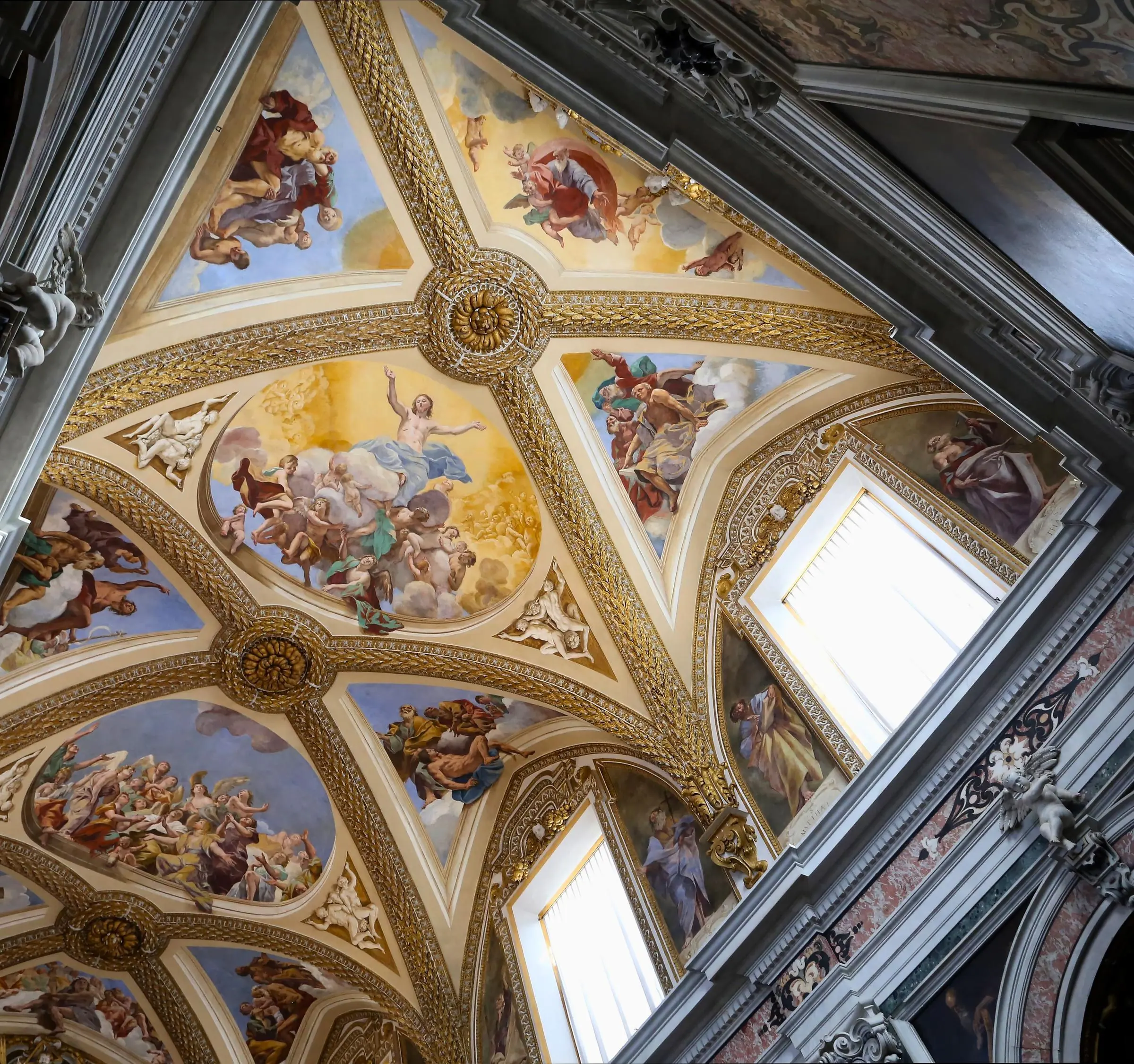
You enter the church through the Pronao (porch) and step into a space that is almost overwhelming in its detail. Cosimo Fanzago spent decades transforming the austere Carthusian church into a jewel box of Neapolitan Baroque.
Look closely at the walls: what appears to be painted patterns is actually intricate marble inlay. The floor is a geometric masterpiece, and the ceiling vault features Lanfranco’s Ascension of Christ. Don’t miss the Sacristy and the Treasury Chapel, which houses Ribera’s haunting masterpiece, the Pietà.
2. Presepe Cuciniello (The Great Nativity)
Neapolitans take their presepi (nativity scenes) very seriously, and this is the crown jewel. Donated to the museum in 1879 by Michele Cuciniello, this massive diorama is housed in a specially designed, dimly lit room in the former monastery kitchens.
It features over 160 human figures, 80 animals, and hundreds of miniature props. What makes Neapolitan nativities unique is that they don’t just depict Bethlehem; they depict 18th-century Naples. You will see butchers, bakers, tavern keepers, stray dogs, and musicians, all rendered with astonishing realism.
3. The Great Cloister (Chiostro Grande)
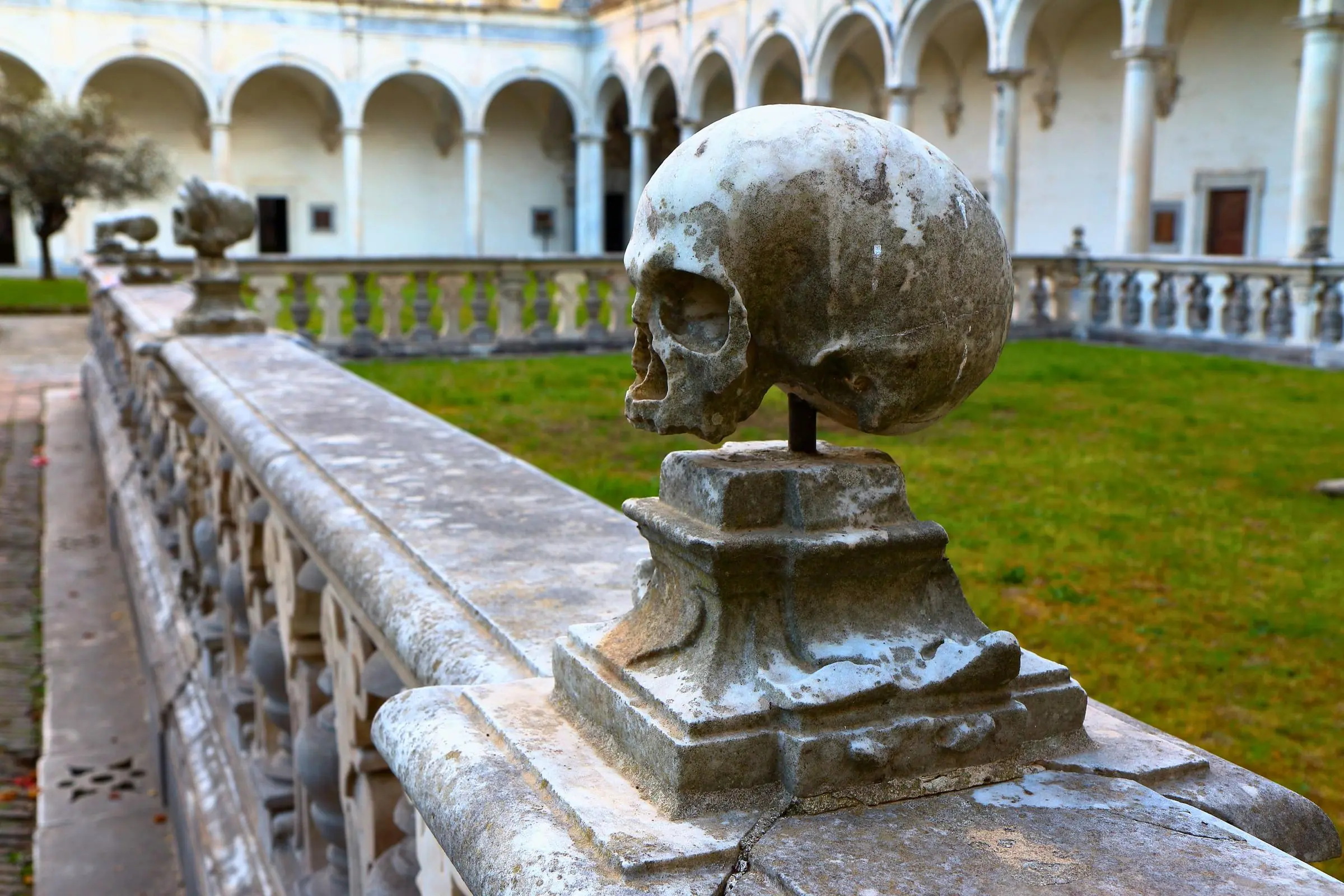
After the sensory overload of the church and the nativity, the Great Cloister offers a moment of profound peace. Also finalized by Fanzago, this large square is lined with Doric columns and features a central cemetery where the Carthusian monks were buried.
Look for the Skulls: Walk along the balustrade surrounding the central cemetery area. You will notice small, beautifully carved marble skulls resting on the railing—a stark Carthusian reminder of memento mori (remember that you must die).
4. The Carriage and Naval Museum
Located on the ground floor, this section is a hit with families. The carriage collection includes the spectacular, gilded carriage of King Charles III of Bourbon, alongside simpler, everyday carriages used by the Neapolitan elite.
Just past the carriages is the naval section, which houses two massive, ornate royal barges (the Lancia Reale) that were once rowed across the Bay of Naples by dozens of oarsmen.
5. The Terraced Gardens and Viewpoint
Follow the signs for the Giardini (Gardens) or Belvedere. The monks cultivated these terraced gardens for centuries, growing medicinal herbs and vegetables. Today, you can walk out onto the main terrace for an unobstructed, sweeping view of the city.
You can clearly see the straight line of Spaccanapoli cutting through the dense historic center, the modern skyscrapers of the Centro Direzionale in the distance, and the looming cone of Mount Vesuvius across the water.
Tickets, Tours, and Passes
Entry to the Certosa di San Martino is managed by the Italian Ministry of Culture. Tickets are generally affordable (around €6 to €8, depending on temporary exhibitions), but lines can form during peak summer months or on free entry days (the first Sunday of the month).
Campania Artecard (3-Day)
- Includes public transport (funiculars)
- First 2 sites are free (can use on San Martino)
- Discounts on subsequent sites
- Skip-the-line access at participating museums
San Martino & Sant'Elmo Guided Tour
- 2.5-hour guided experience
- Covers both the Monastery and the Castle
- Expert local guide
- Great for understanding the complex history
If you plan to visit multiple museums in Naples, we highly recommend reading our comparison of Naples city passes to see if the Artecard makes sense for your itinerary.
Where to Stay Nearby
If you prefer a quieter, more upscale atmosphere compared to the chaotic historic center, the Vomero neighborhood surrounding the Certosa is an excellent place to base yourself. It is full of tree-lined streets, excellent shopping, and great restaurants, and you can easily commute down to the city via the funiculars.
Keep Planning: For a deeper dive into the pros and cons of staying on the hill versus the historic center, check out our complete guide on Where to Stay in Naples.
FAQ
How much time do I need to visit the Certosa di San Martino?
To see the main highlights (the church, the nativity, the cloister, and the viewpoint), you should budget about 1.5 to 2 hours. If you want to explore the painting galleries on the upper floors and read all the informational plaques, allow for 3 hours.
Is the Certosa wheelchair accessible?
Partially. The main ground floor areas, including the Great Cloister, the Church, and the Carriage Museum, are accessible. However, some of the terraced gardens and upper-floor galleries require navigating stairs, and the cobblestones in the courtyards can be uneven.
Can I buy tickets at the door?
Yes, there is a ticket office at the entrance. However, during the busy summer season or on weekends, it is wise to arrive early or use a pass like the Campania Artecard to bypass the main ticket queue.
When is the best time of day to visit?
Late afternoon is spectacular. The crowds thin out, and the golden hour light hits the marble in the Great Cloister beautifully. Plus, you will be on the terraced gardens just as the sun begins to set over the Bay of Naples.
Is there a cafe or restaurant inside?
There are vending machines and a very small refreshment area, but no full-service restaurant inside the museum. However, the Vomero neighborhood just outside the gates has dozens of excellent cafes and trattorias. Walk 10 minutes toward Piazza Vanvitelli for plenty of dining options.
Are there informational plaques in English?
Yes, most of the major rooms and exhibits have informational panels in both Italian and English. However, the translations can sometimes be a bit dry, which is why many history buffs prefer to book a guided tour.
For official opening hours and unexpected closure notices, you can cross-reference the Italian Ministry of Culture website.